Clear Sky Science · en
Mismatch negativity-like responses in nitroglycerin-elicited migraine model
Why sound and migraine are linked
Many people with migraine find everyday sounds unbearably loud, yet the ears themselves often appear normal. This study explores what happens inside the brain, using rats with a chemically triggered migraine-like state, to see whether their brains handle sound differently and whether a simple electrical brain signal could serve as a window into migraine-related changes.
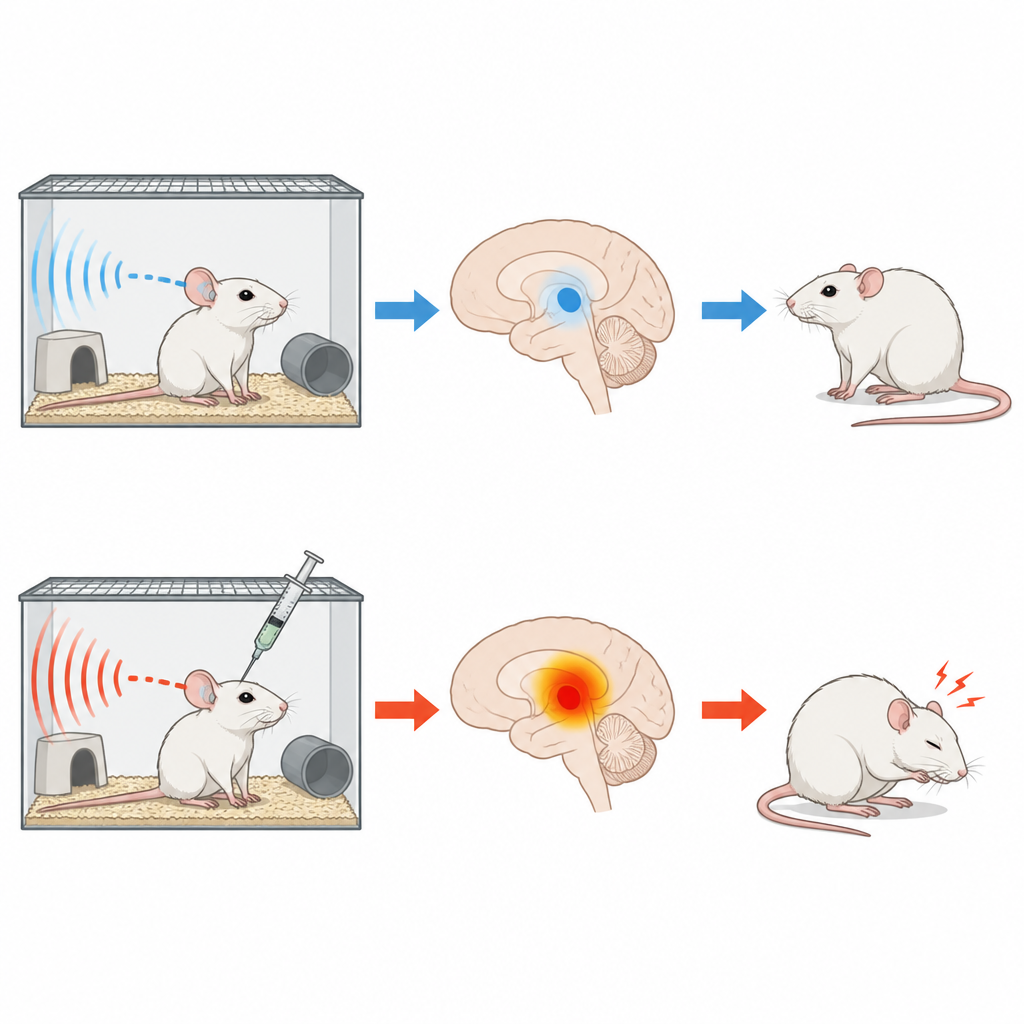
A brain signal that notices change
The researchers focused on a specific brain response to sound called mismatch negativity, or MMN. In simple terms, MMN is a tiny electrical ripple that appears when the brain detects that a sound is different from what it expects, even when the listener is not paying attention. In people with migraine, this signal tends to arrive earlier and with larger size, suggesting that the brain is processing sound more quickly and with greater reactivity. The team wanted to know whether a rat migraine model would show a similar pattern, which would make it a useful stand-in for human studies.
Creating a migraine-like state in rats
To mimic migraine, male rats were repeatedly given nitroglycerin, a drug known to trigger migraine attacks in people. A comparison group received only saltwater. Over several days, the nitroglycerin-treated rats moved less, groomed excessively, scratched their heads often, and showed facial expressions consistent with pain. Using a fine set of hairs known as von Frey filaments, the scientists measured how much pressure it took to make the animals withdraw a paw. In the treated rats, this mechanical threshold steadily dropped, meaning they became more sensitive to touch, while control rats stayed stable. This pattern indicated that the model successfully produced a state of ongoing, heightened sensitivity similar to chronic migraine.
Listening in on the brain
Once the pain-like state was established, a subgroup of rats from each condition underwent surgery to place small electrodes on the skull over the frontal brain region. Under light anesthesia, the animals heard a series of beeps in an "oddball" pattern, where most tones were identical and an occasional tone differed in pitch. By averaging many trials, the team extracted electrical responses to the standard and oddball tones, then subtracted them to reveal MMN-like waves. Both groups produced clear negative deflections typical of this signal, showing that the setup could reliably capture the brain’s automatic response to unexpected sounds.
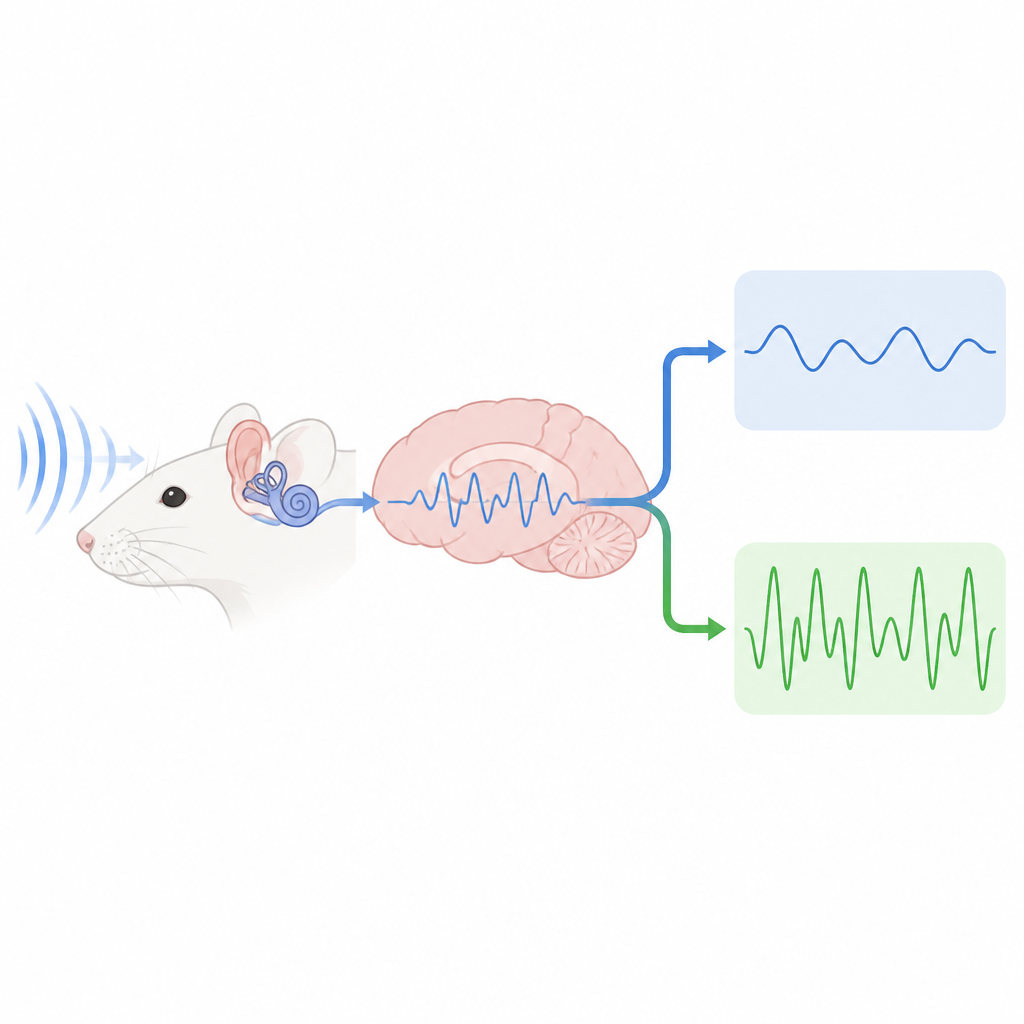
Faster and stronger responses in migraine-model rats
When the researchers compared the two groups across three recording sessions, important differences emerged. In rats given nitroglycerin, the MMN-like signal occurred earlier in time, indicating faster processing of sound changes. These shorter delays were most pronounced in the second and third sessions. At the same time, the size of the MMN-like signal tended to be larger in the migraine-model rats, reaching a clear difference by the third session. Control rats, in contrast, showed a gentle lengthening of timing and a slight drop in signal size over the sessions. Together with the touch-sensitivity findings, these electrical changes point to a brain that has become more excitable and more reactive to incoming sensory information.
What this means for understanding migraine
For a layperson, these findings suggest that migraine is not just about head pain but about a brain that is on high alert, particularly for sensory events like sounds. In this rat model, repeated nitroglycerin injections produced both increased sensitivity to touch and quicker, stronger brain reactions to changing tones, resembling patterns seen in people with migraine. Although the study used a small number of animals and the results are considered preliminary, they support the idea that MMN-like signals could become a helpful tool for tracking abnormal brain excitability in migraine research. In the long run, such measures may aid in testing treatments and in unraveling why everyday sounds can feel so overwhelming to those who live with migraine.
Citation: Li, X., Zhang, J., Liu, Q. et al. Mismatch negativity-like responses in nitroglycerin-elicited migraine model. Sci Rep 16, 14939 (2026). https://doi.org/10.1038/s41598-026-45645-4
Keywords: migraine, auditory processing, rat model, cortical excitability, mismatch negativity