Clear Sky Science · en
A brain–edge co-evolution framework for zero-trust real-time hot patching in power equipment
Why keeping the lights on needs smarter fixes
Modern power grids rely on thousands of small computers that must stay online even while their software is being repaired. A single mistake or delay during these repairs can trip protections, cut electricity to whole regions, or open the door to cyberattacks. This study explores a new way to update these critical devices in real time by combining human intuition, brain signals, and fast automated checks so that security patches arrive quickly without putting the grid at risk. 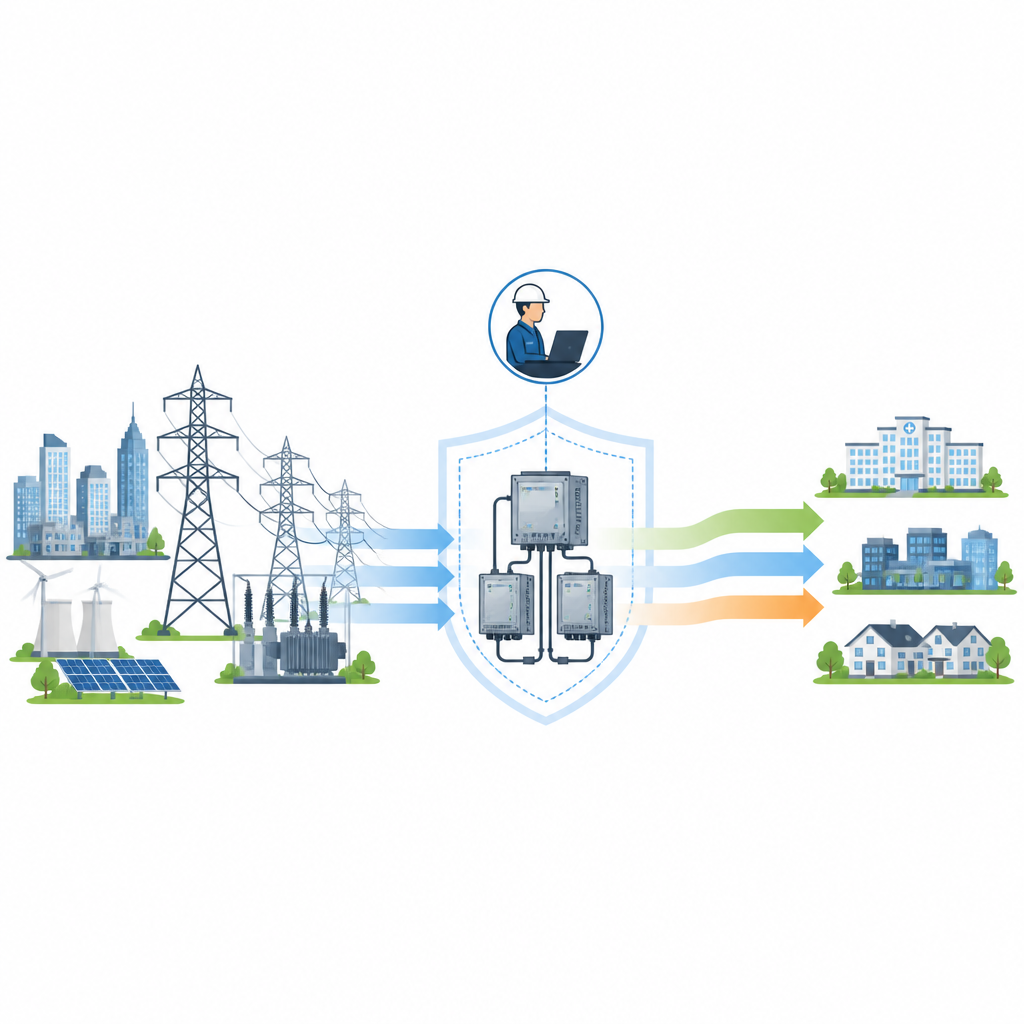
The hidden computers that guard the grid
Behind every substation and transmission line sit compact protection and control devices that act within milliseconds to stop faults and keep power flowing. Unlike data center servers, these boxes have tiny processors and memory, tolerate almost no delay, and cannot afford even brief downtime. Traditional security models insist on repeatedly checking every action, which adds precious milliseconds, and most hot patching tools assume more computing resources than these devices can spare. The result is a painful trade-off: either accept slower, safer patching or risk running known vulnerabilities on machines that protect entire communities.
When automated defenses are not enough
Fully automated patching sounds ideal but often struggles in complex industrial settings. Algorithms can misread noisy or unfamiliar conditions and either block safe updates or push through risky ones. At the same time, current methods rarely watch how the inner structure of a device behaves during an update. Small timing shifts, memory glitches, or tangled program paths can slowly nudge a system from orderly behavior toward chaos, much like a well-tuned engine that starts to rattle. Existing tools mostly look back at logs after the fact, rather than measuring this slide into disorder in real time and stepping in before something breaks.
Letting expert brains guide the machines
The researchers propose a brain–edge co-evolution framework that plugs human expertise directly into the decision loop. Maintenance experts wear a lightweight EEG headset while reviewing upcoming patches. The system extracts simple markers of attention and risk awareness from their brain waves and turns them into a numerical sense of trust for each patch. This human-derived risk signal is then blended with a streamlined security engine running on the field device, which performs rapid identity checks and policy decisions at the network edge. High-risk situations trigger stricter checks and more cautious actions, while clearly low-risk ones move through quickly, cutting wasted delay without removing safeguards.
Keeping order inside the device during live repairs
Alongside this human–machine teamwork, the framework watches how orderly the device remains throughout each hot patch. It introduces a multi-part score that tracks how stable key measurements are, how smoothly states evolve over time, and how closely the actual program flow matches the expected pattern. When this score drops too fast, the system treats it as an early warning that the device is drifting toward confusion. In response, it can slow, postpone, or roll back the patch before faults appear. The actual code replacement uses a compact mechanism that swaps functions in and out at the kernel level in a few milliseconds, allowing updates without stopping normal operations. 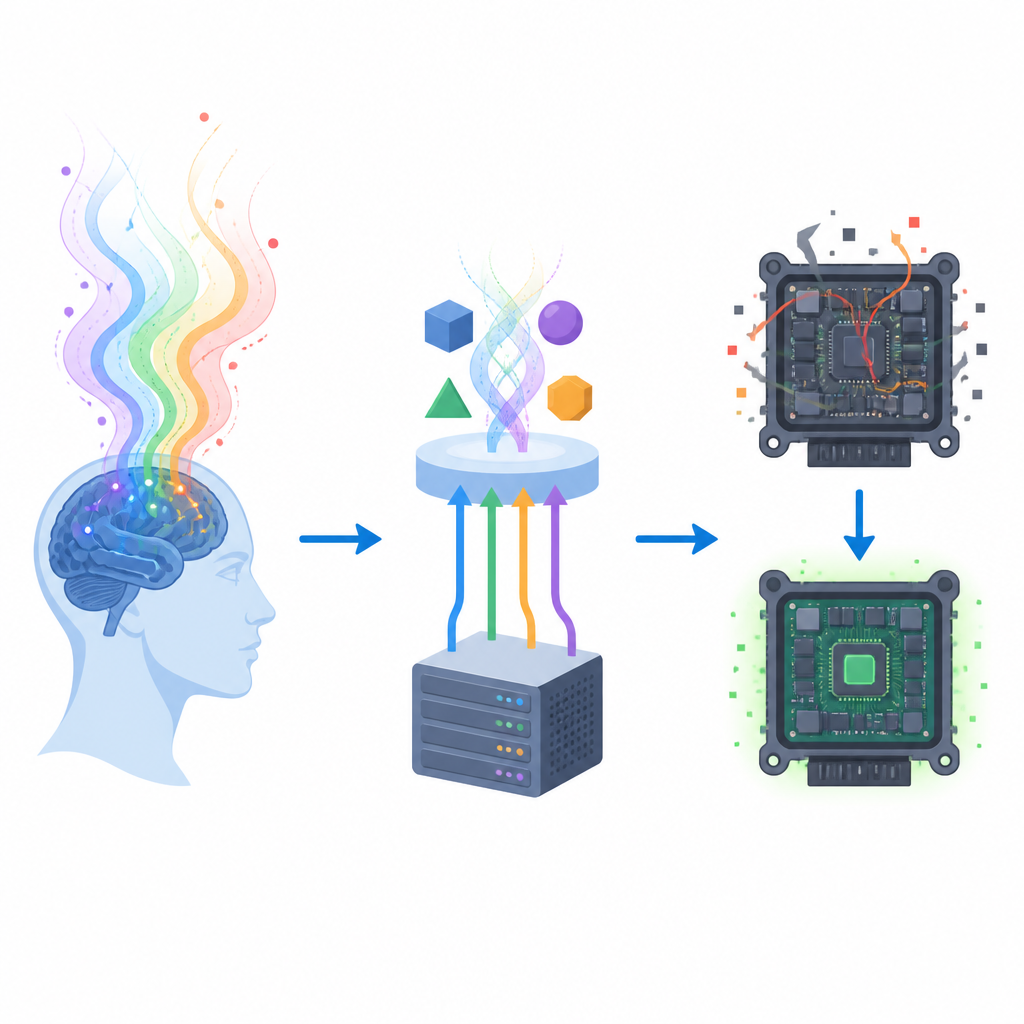
What the experiments revealed in practice
The team tested their approach both on a detailed power grid simulator and on real protection devices from industry. Across 1,200 hot patch operations, their framework cut decision time in high-risk situations to about 12 milliseconds, far below the delays seen with standard zero-trust setups. It also kept the chance of structural disorder very low and restored normal order quickly when problems did arise. Patching decisions were more often correct when guided jointly by expert brain signals and learning algorithms than by automated methods alone, and the protected devices maintained service availability above 99.99 percent with no patch-induced outages.
What this means for safer, smarter power systems
For a layperson, the key message is that the authors found a way to patch the digital guardians of the power grid as they run, without slowing them down or making them less safe. By letting expert brain activity gently steer fast automated checks, and by constantly measuring how tidy the device’s inner workings remain, the framework delivers quick security fixes while preserving stability. This moves critical power equipment closer to a future where updates are continuous, reliable, and much less likely to cause the very failures they are meant to prevent.
Citation: Zou, Z., Wang, B., Chen, T. et al. A brain–edge co-evolution framework for zero-trust real-time hot patching in power equipment. Sci Rep 16, 14869 (2026). https://doi.org/10.1038/s41598-026-45643-6
Keywords: power grid security, real-time patching, zero trust, brain computer interface, industrial control systems