Clear Sky Science · en
Spatial analysis of physical activity and ambient air pollution in Kuwait: a cross-sectional study
Why this study matters for everyday life
Many of us know that exercise is good for the heart and mind, but we may also worry about breathing dirty air while walking or jogging outside. This study from Kuwait asks a simple but important question for people living in big, car-heavy cities with dusty skies: does bad air make people less likely to be physically active, and if so, how strong is that link in a hot, desert nation built around oil production?
Life in a hot, dusty, car-dependent country
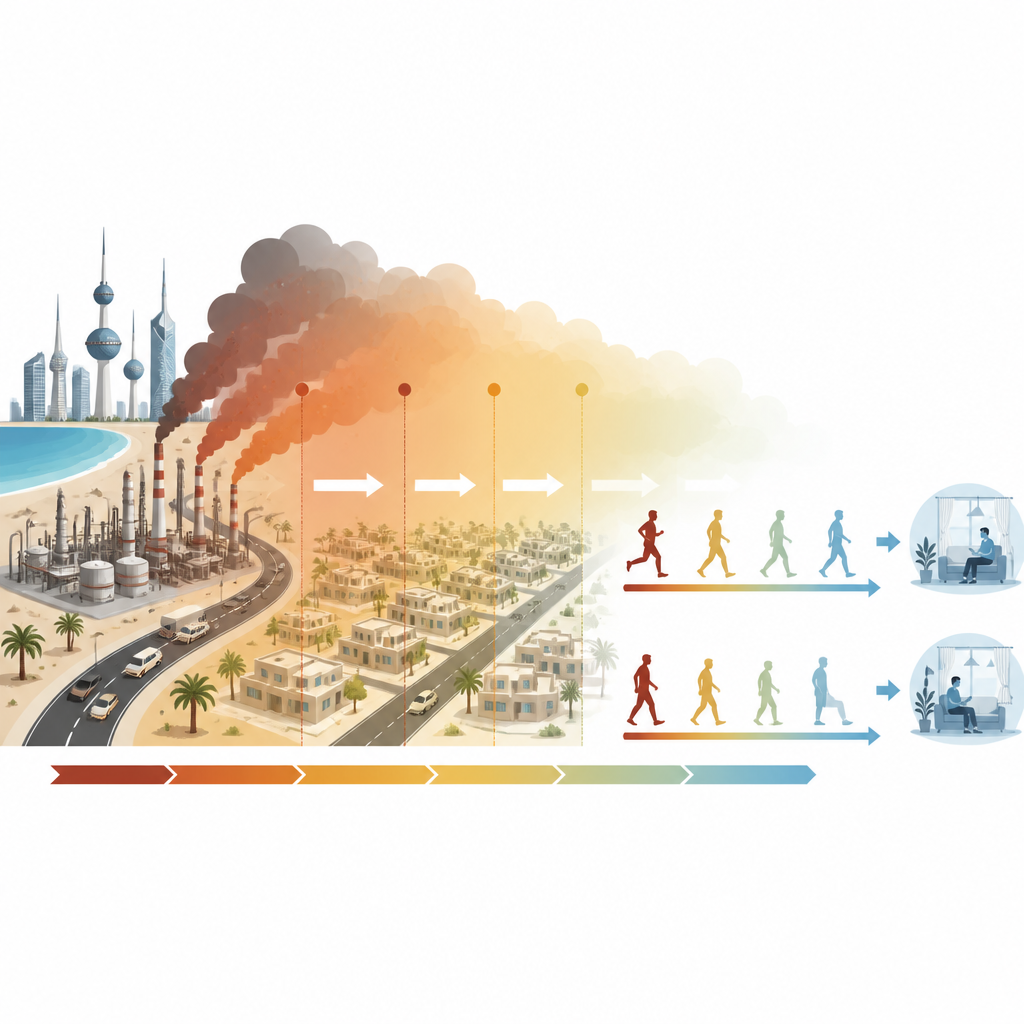
Kuwait has some of the highest rates of physical inactivity and diabetes in the world. The country’s rapid growth has brought highways, refineries, and frequent dust storms, all of which can worsen air quality. Unlike many earlier studies from cooler, greener countries with tighter pollution controls, this work focuses on a dry, oil-producing state where people already face health challenges from heat, car reliance, and limited inviting outdoor spaces. Understanding how air conditions and movement patterns fit together in this setting can guide local decisions about parks, transport, and industry.
How researchers connected air and movement
The research team drew on a nationwide health survey of 2,529 adults aged 18 and older conducted between 2011 and 2014. Participants reported their weekly physical activity across work, travel, and recreation using a standard World Health Organization questionnaire. People were considered physically active if they reached at least 600 minutes of moderate effort per week when all activities were added together. Just over half of the adults in the study met this minimum, reflecting a large share of the population that moves too little for good health.
Tracking pollution across space and time
To estimate what kind of air each person was breathing, the investigators gathered monthly readings from 16 monitoring stations scattered across Kuwait. They focused on several gases and particles linked to traffic and oil operations, including hydrogen sulphide and nitrogen-based pollutants, as well as dust-like particles known as PM10 and ground-level ozone. Using computer tools, they smoothed these readings over a fine grid covering the country, then matched each participant’s home area and survey month to a local average pollution level. They also calculated a combined pollution score from key pollutants and folded in information on temperature and humidity, which matter in Kuwait’s extreme climate.
What the numbers revealed
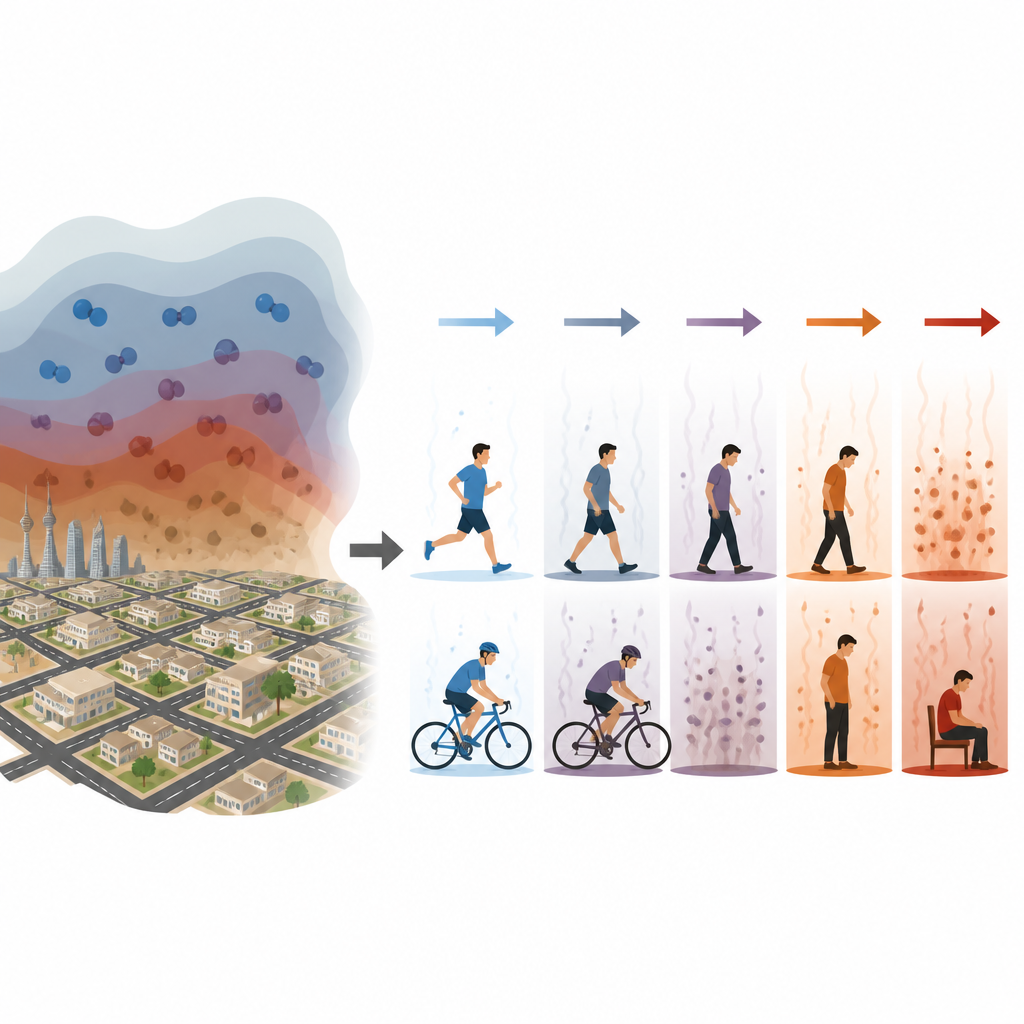
After taking into account age, sex, ethnicity, body weight, diabetes, and temperature, the study found a clear pattern: higher levels of several common pollutants were linked with lower odds of being physically active. Increases in hydrogen sulphide and nitrogen-based gases were each tied to around a 10 to 16 percent reduction in the chance that a person met the weekly activity threshold. A higher overall pollution score also went hand in hand with lower activity. One surprising exception was ozone, for which higher readings were associated with slightly greater odds of being active. The authors suggest this may reflect coastal areas and weather conditions that both favor ozone formation and make outdoor spaces more appealing, rather than ozone itself being beneficial.
What this means for health and city planning
The findings suggest that in Kuwait, dirty air may discourage people from moving their bodies, whether through physical discomfort, fear of harm, or both. While the study cannot prove cause and effect and does not distinguish indoor from outdoor exercise, it highlights how pollution and inactivity can team up to threaten heart and metabolic health. For residents, cleaner air and better-designed neighborhoods with shade, greenery, and safe walking paths could make it easier to stay active without added concern about what they are breathing. For decision makers in Kuwait and similar regions, the message is that efforts to reduce emissions and improve the built environment are likely to support higher levels of physical activity and, over time, a healthier population.
Citation: Feyissa, T.R., Oguoma, V.M., Alsharrah, S. et al. Spatial analysis of physical activity and ambient air pollution in Kuwait: a cross-sectional study. Sci Rep 16, 15636 (2026). https://doi.org/10.1038/s41598-026-45634-7
Keywords: air pollution, physical activity, Kuwait, urban health, desert environments