Clear Sky Science · en
Association of statin use with pathological complete response in postmenopausal patients with hormone receptor–positive breast cancer
Why Common Heart Drugs Might Matter for Breast Cancer
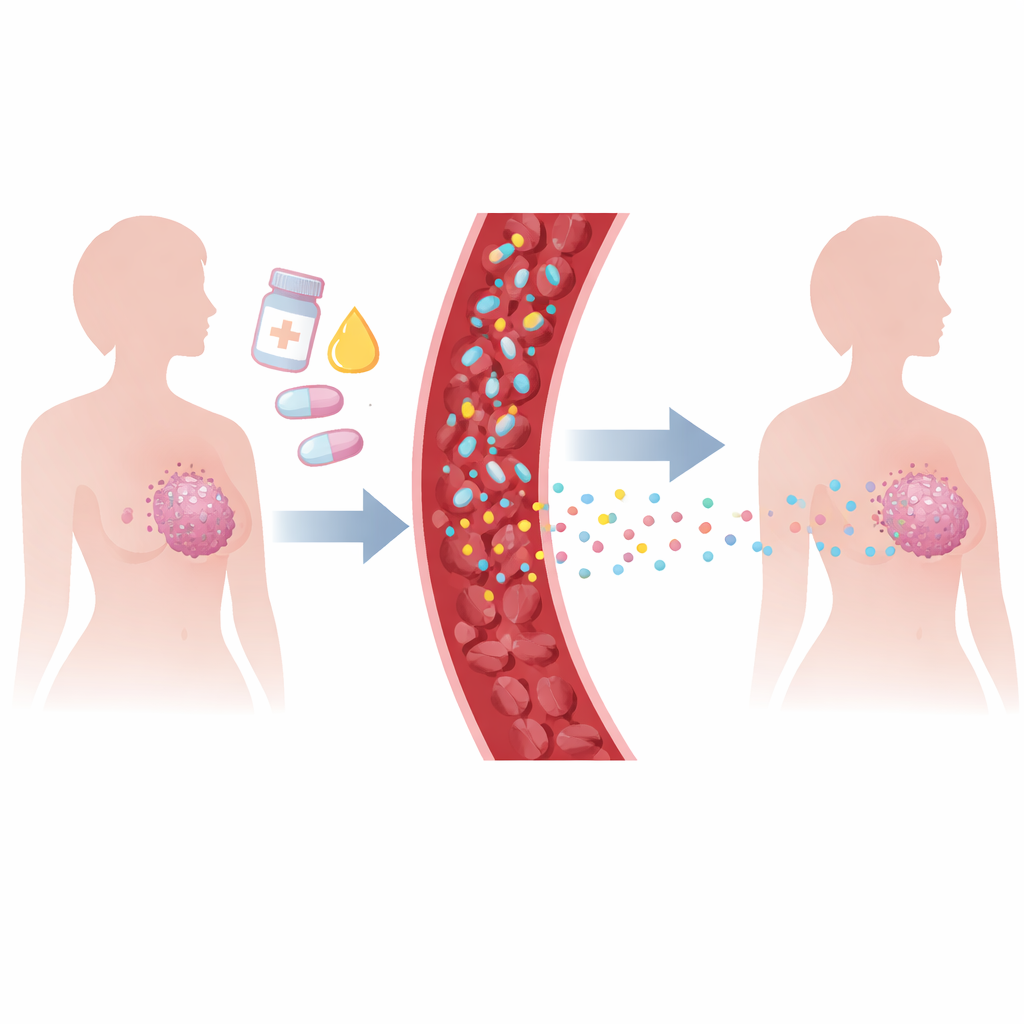
Many women take statin drugs to lower cholesterol and protect the heart. This study asks an unexpected question: could those same pills also help certain breast cancers respond better to chemotherapy? The researchers looked back at medical records of women with a common type of breast cancer to see whether those already on statins had different short‑term treatment results than those who were not.
A Focus on a Common Breast Cancer Type
The work centers on hormone receptor–positive, HER2‑negative breast cancer, the most frequent subtype worldwide. These tumors often do not shrink or disappear as completely with pre‑surgery chemotherapy as more aggressive types do. Doctors call a total disappearance of invasive cancer in the breast and nearby lymph nodes a “pathological complete response,” or pCR, and they use it as a sign of how sensitive a tumor is to treatment. Because pCR is less clearly tied to long‑term survival in this subtype, the authors treat it mainly as a short‑term biological signal rather than a promise of cure.
Who Was Studied and How
The team reviewed records from two hospitals for 60 adults treated between 2014 and 2025. All had hormone receptor–positive, HER2‑negative breast cancer and received standard pre‑surgery chemotherapy followed by an operation. Twenty‑two patients were already taking statins for non‑cancer reasons when chemotherapy began, and 38 were not. All statin use was part of routine medical care, not started for research. The investigators compared tumor features, treatment regimens, and how well cancers responded on scans and under the microscope after therapy.
What the Numbers Showed
Overall, tumors in statin users and non‑users looked broadly similar at diagnosis in terms of size, grade, hormone markers, and lymph‑node involvement, although the small sample means subtle differences may have gone unnoticed. On imaging, both groups had comparable rates of complete or partial shrinkage. Under the microscope after surgery, 7 of 22 statin users and 6 of 38 non‑users had no remaining invasive cancer. This higher pCR rate among statin users (31.8% vs. 15.8%) did not reach conventional statistical significance in the full group, so by itself it could be due to chance.
A Signal in Postmenopausal Women
A key detail was that every statin user in this study was postmenopausal. When the researchers looked only at postmenopausal women, 7 of 22 statin users had a complete response compared with 1 of 20 who were not on statins. In a basic statistical test and in an exploratory model that adjusted for tumor size and a growth‑rate marker, statin use was linked to a higher chance of complete response. However, there were only eight such complete responses in this subgroup, and the estimated effect was very imprecise, with wide uncertainty. The authors repeatedly stress that these findings cannot prove cause and effect and could still be influenced by other factors linked to menopause, metabolism, or general health.
Why Statins Could Influence Tumor Response
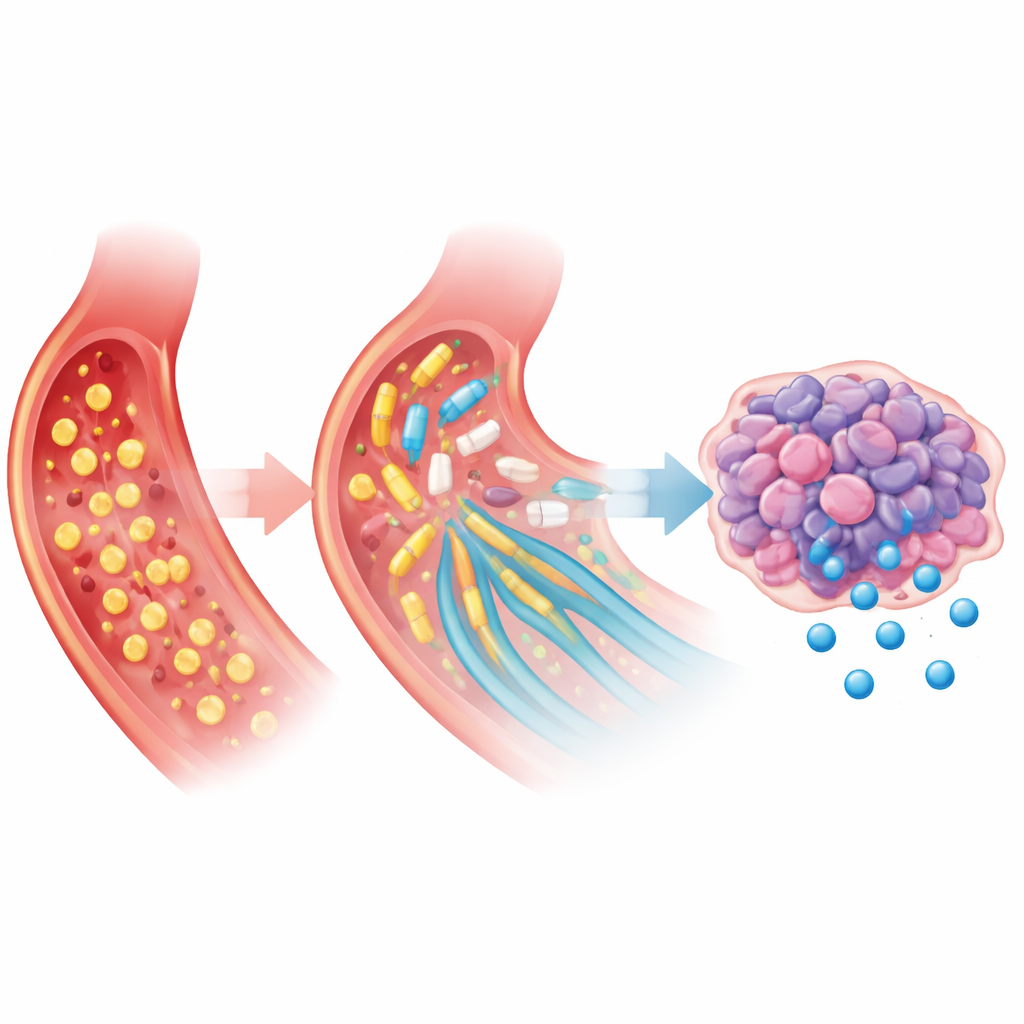
Although this study is mainly clinical, the authors discuss possible biology behind the pattern they observed. Statins block a key step in the body’s cholesterol‑making pathway. That pathway also feeds into cell‑signaling processes that cancer cells may use to grow, spread, and resist therapy. Laboratory work suggests that changing cholesterol and related molecules can alter how cancer cells die, how blood vessels grow in tumors, and how immune and support cells behave around the cancer. Because hormone receptor–positive tumors and postmenopausal bodies often rely more heavily on fat and cholesterol metabolism, dampening these pathways might make chemotherapy slightly more effective in some patients.
What This Means for Patients Right Now
The study does not show that starting a statin will improve breast‑cancer outcomes, nor does it support changing treatment guidelines today. Its main message is that, in this small group, postmenopausal women who happened to be on statins had more complete tumor clearances after chemotherapy, a pattern intriguing enough to justify larger, carefully designed trials. For now, women should not begin or stop statins because of breast cancer without consulting their doctors; statins should still be prescribed based on heart and blood‑vessel risk. If future research confirms these early hints, a widely available and inexpensive class of drugs might eventually become part of tailored treatment strategies for certain breast cancers.
Citation: Ersoy, M. Association of statin use with pathological complete response in postmenopausal patients with hormone receptor–positive breast cancer. Sci Rep 16, 10534 (2026). https://doi.org/10.1038/s41598-026-45629-4
Keywords: breast cancer, statins, chemotherapy response, postmenopausal women, cholesterol metabolism