Clear Sky Science · en
Urolithin A blocks colorectal cancer progression by AKT1 inhibition–driven immune activation
Food, gut microbes, and cancer defense
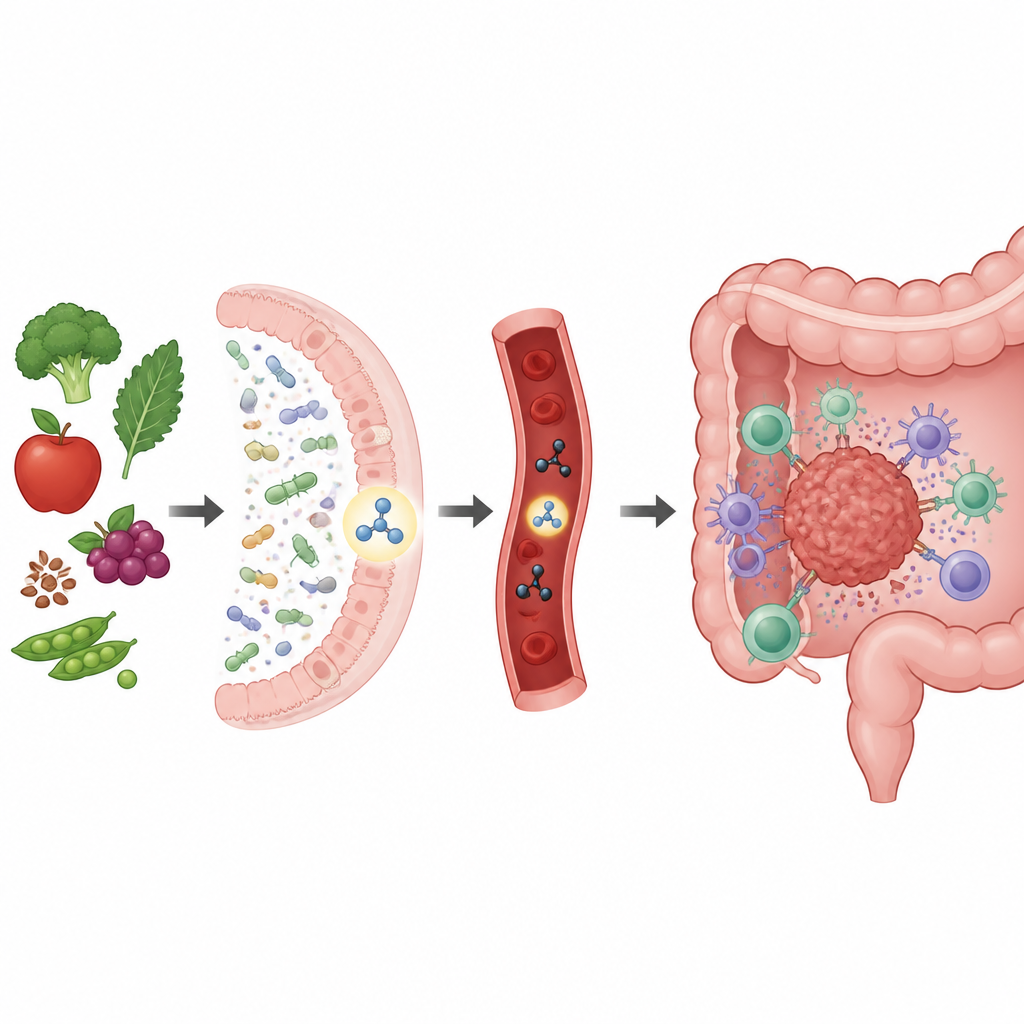
Many people know that what we eat can affect our risk of colon cancer, but the steps between diet and disease often seem mysterious. This study explores how a natural compound made by gut bacteria from foods like pomegranates and nuts may help slow colorectal cancer while also waking up the body’s immune defenses. The work connects everyday diet, intestinal microbes, tumor growth, and killer immune cells into a single story that could guide future prevention and treatment strategies.
A gut-made helper from everyday foods
The compound at the heart of this research is Urolithin A, a small molecule produced when gut microbes break down certain plant chemicals called ellagitannins. Earlier work suggested that Urolithin A can influence how cells produce energy, handle stress, and age, and may also affect immune cells. Because colorectal cancer arises in the very environment where this compound is made, the researchers asked whether Urolithin A might directly slow tumor growth and reshape the local immune landscape in the gut.
A cancer switch called AKT1
The team first used computer-based methods to predict which proteins in human cells might interact with Urolithin A. By overlaying these predictions with genes known to be altered in colorectal cancer, they found more than 200 shared targets, pointing to wide-ranging effects. One protein, called AKT1, stood out as a central hub linked to pathways that drive cell growth, metabolism, and survival. When the scientists examined large patient datasets and single-cell RNA sequencing from tumors and nearby healthy tissue, they saw that AKT1 levels were higher in cancer cells and in several types of immune cells, especially T cells. Patients whose tumors had more AKT1 tended to have worse outcomes, suggesting that dialing down this switch could be beneficial.
Slowing cancer cells while tuning immune cells
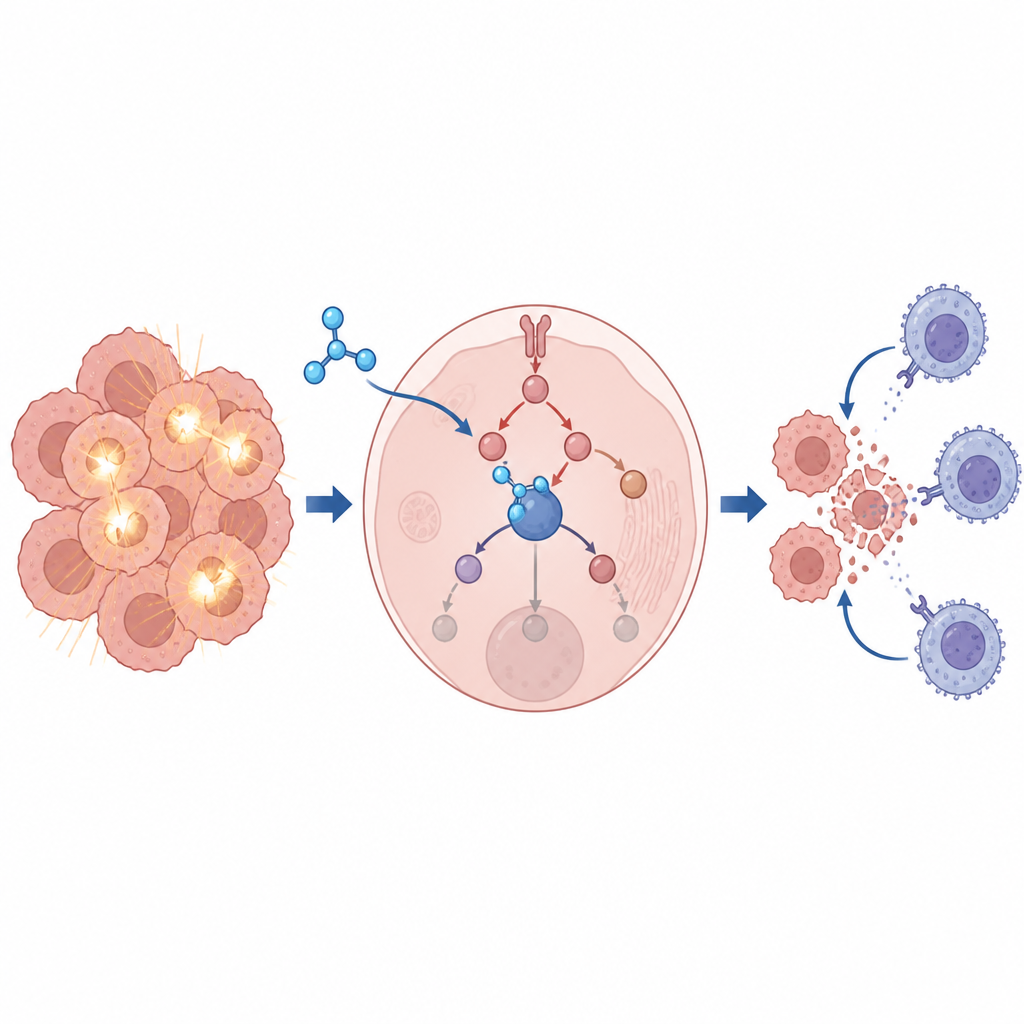
In laboratory dishes, Urolithin A reduced the growth, movement, and invasiveness of multiple colorectal cancer cell lines in a dose-dependent fashion, while having milder effects on normal colon cells. It lowered the activity of the AKT–mTOR pathway, a key growth engine inside tumor cells. At the same time, when human and mouse killer T cells were exposed to moderate levels of Urolithin A, they survived well, multiplied, and showed signs of becoming more powerful attackers, including higher levels of a toxic protein used to destroy cancer cells. However, when the compound was pushed to higher doses, it over-suppressed AKT1-related signals in T cells and began to blunt some of their helpful features, highlighting the importance of dose in balancing direct tumor control with immune support.
Rewiring the tumor neighborhood
By mining single-cell data, the researchers also tracked how AKT1 levels relate to communication between cancer cells and surrounding immune and support cells. Tumor cells with high AKT1 engaged more strongly with various neighbors through signaling pathways tied to inflammation, growth factors, and immune suppression. Urolithin A’s ability to dampen AKT1 suggests that it may weaken some of these harmful conversations. In an orthotopic mouse model, where colon tumors grow in their natural location, daily oral Urolithin A treatment shrank tumors, reduced cell division markers, and increased the number of killer CD8 T cells that had entered the tumor, consistent with both direct tumor restraint and improved immune access.
A diet–microbe–immune pathway to watch
Taken together, the findings support a simple idea for non-experts: certain foods feed gut microbes that make Urolithin A, which can then act on a growth switch called AKT1 inside colon cancer cells and immune cells. By turning this switch down to the right degree, Urolithin A slows tumor growth and helps killer T cells do their job, although too much may start to hinder immune function. While this is early-stage work and not a treatment recommendation, it outlines a potential diet–microbiota–AKT1–immunity pathway that future drugs or nutritional strategies might target to prevent or manage colorectal cancer.
Citation: Sun, Z., Li, J., Chen, H. et al. Urolithin A blocks colorectal cancer progression by AKT1 inhibition–driven immune activation. Sci Rep 16, 15438 (2026). https://doi.org/10.1038/s41598-026-45621-y
Keywords: colorectal cancer, urolithin A, AKT1 signaling, tumor immunity, gut microbiome