Clear Sky Science · en
Application of a complex Si–Al–Fe reducing agent for the production of a nickel-containing alloy
Cleaner metals for everyday products
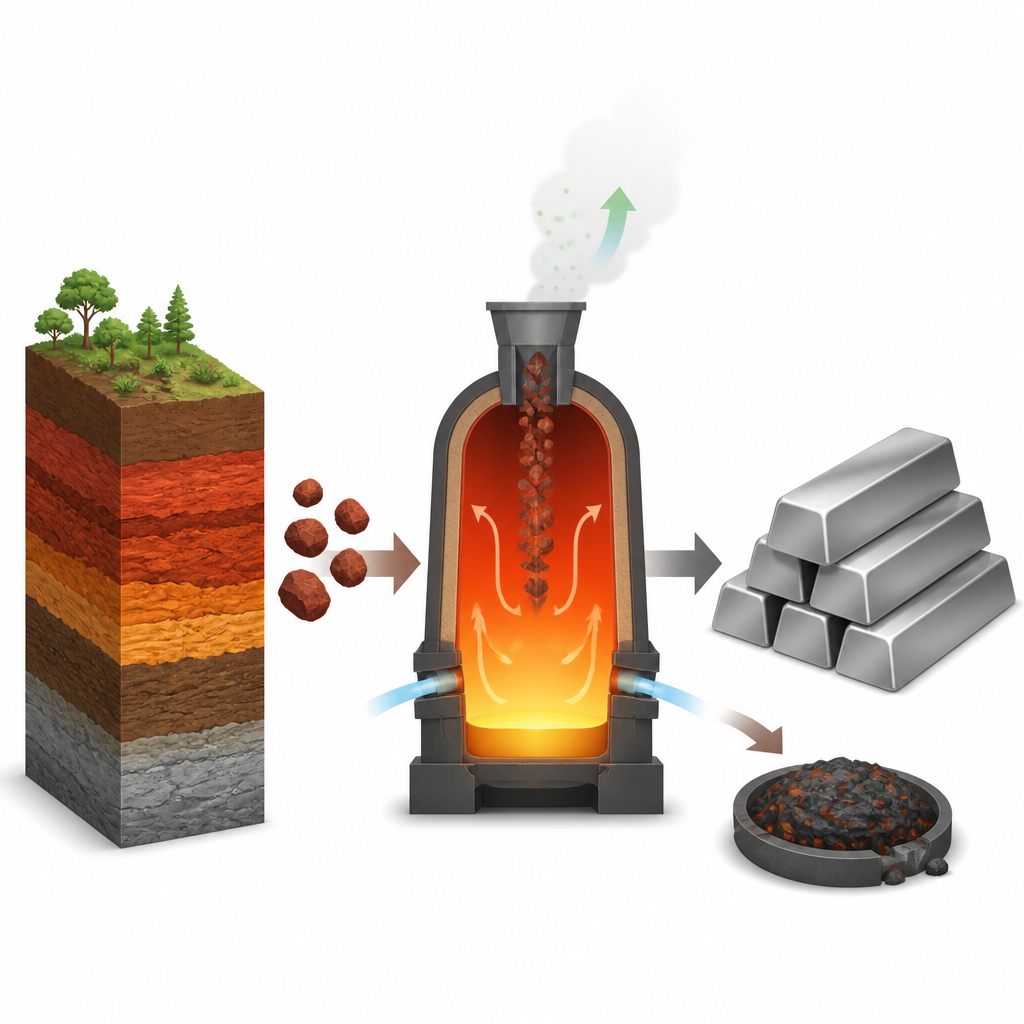
Nickel and chromium hide inside many things we rely on, from stainless steel cutlery to jet engines. Making these metals, however, usually comes with a heavy price in energy use and greenhouse gas emissions. This study explores a different way to turn low-grade nickel ores into a useful alloy while cutting back on carbon-based fuels, offering a glimpse of how everyday materials might be made with a lighter environmental footprint.
Why current nickel production is a problem
Most nickel today is produced by heating lateritic ores with carbon-rich materials such as coke or coal. In these furnaces, carbon strips oxygen from nickel and iron, but the process releases large amounts of carbon dioxide and other gases. It also requires very high temperatures, often above 1350 degrees Celsius, and can form unwanted carbon-rich compounds that complicate later refining. As ore quality declines and environmental rules tighten, this traditional route is becoming harder to justify, driving the search for cleaner approaches.
A different path using active metals
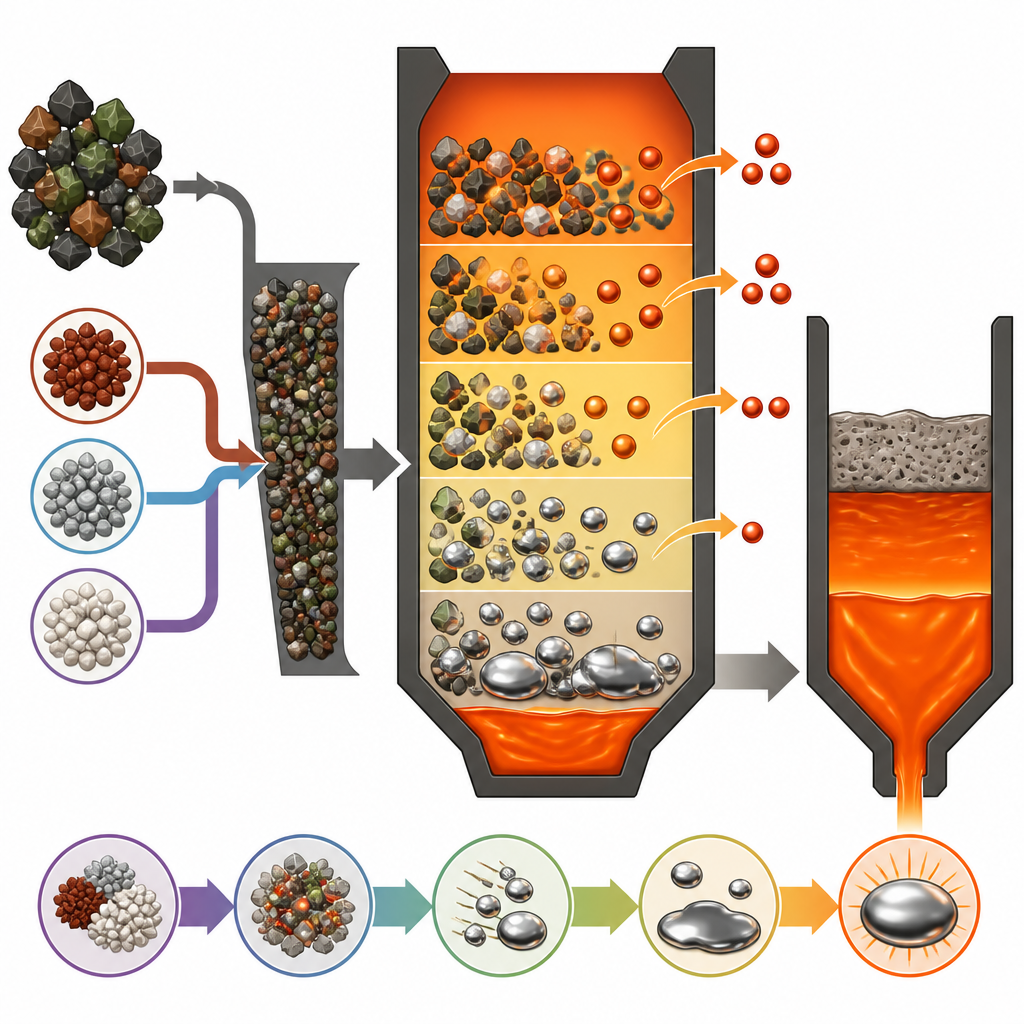
The researchers investigated a metallothermic method, in which more reactive metals take over the job usually done by carbon. They focused on a complex material called ferrosilicoaluminum, or FeSiAl, which combines iron, silicon, and aluminum in a single reducing agent. By using computer models, they compared how well silicon alone, aluminum alone, and the Si-Al combination could pull oxygen away from nickel compounds in the ore. The calculations showed that using silicon and aluminum together makes the reduction reactions more favorable across a wide temperature range, meaning nickel can be freed more easily and at somewhat lower furnace temperatures.
Watching the ore transform as it heats
To see how the reactions actually unfold, the team heated samples of the ore mixed with different reducing agents while carefully tracking weight changes and heat effects. These tests revealed when minerals in the ore lost water, broke apart, and began to react with the added metals. By analyzing these curves, the scientists estimated how much energy is needed to drive the key steps. The mixture with FeSiAl required far less activation energy than those with standard ferrosilicon or aluminum-rich slag, pointing to a strong "helping hand" effect when silicon and aluminum work together. In practical terms, the system behaves more like a smooth, diffusion-controlled process, allowing metal to form and separate more readily.
Finding the sweet spot for furnace settings
Computer simulations were then used to explore many combinations of temperature, FeSiAl amount, and lime flux, which helps form a workable slag. Using a structured design of experiments, the authors mapped how these factors influence the fraction of iron and chromium that ends up in the metal and how much silicon dissolves into the final alloy. They identified an optimal window around 1300 to 1350 degrees Celsius, with about 10 percent FeSiAl and 38 to 40 percent lime by weight. Under these conditions, nearly all the nickel moves into the metal, and high portions of iron and chromium are also captured, while the silicon level in the alloy stays within a useful range.
Putting the method to the test in the furnace
To check that the model matched reality, the team carried out large-scale laboratory smelting in an electric furnace using ore from the Batamsha deposit in Kazakhstan. Working within the optimized range, they produced 9.5 kilograms of a solid alloy containing mainly iron, with about 8 percent nickel, 18 percent silicon, and several percent chromium, plus a small amount of aluminum. Chemical analysis showed that all of the nickel, most of the chromium, and a substantial share of the iron were recovered into the metal. The leftover slag held very little nickel oxide, confirming that the valuable metal had been effectively extracted, while its composition remained suitable for handling in industrial settings.
What this means for future steel and alloys
The study concludes that using FeSiAl as a complex reducing agent offers a promising alternative to carbon-based smelting of low-grade nickel ores. Because FeSiAl contains very little carbon, direct carbon dioxide emissions from the smelting step can drop sharply, and the slightly lower temperatures help save energy. The resulting Fe-Ni-Si-Cr-Al alloy is not a standard ferronickel but can serve as a master alloy in steelmaking, where its silicon helps remove oxygen from molten steel while nickel and chromium improve strength and corrosion resistance. With further life cycle studies and industrial trials, this approach could help metal producers supply the nickel-rich materials modern technology needs while easing their environmental impact.
Citation: Yessengaliyev, D., Kelamanov, B., Zayakin, O. et al. Application of a complex Si–Al–Fe reducing agent for the production of a nickel-containing alloy. Sci Rep 16, 14856 (2026). https://doi.org/10.1038/s41598-026-45605-y
Keywords: nickel laterite, metallothermy, ferrosilicoaluminum, low carbon smelting, nickel alloy