Clear Sky Science · en
Assessment of levels spatiotemporal differences and health risks of environmental radioactivity in the soil of Chongqing China
Why the ground beneath our feet matters
Most of us rarely think about the invisible radiation that naturally comes from the ground, yet it makes up a large share of the radiation we receive in daily life. This study looks at soils across Chongqing, a vast and mountainous region in southwest China, to find out how much radioactive material they contain, how this changes from place to place and year to year, and what it could mean for public health. The work offers a detailed picture of background radiation in a modern megacity and its surrounding countryside.
Looking for invisible signals in soil
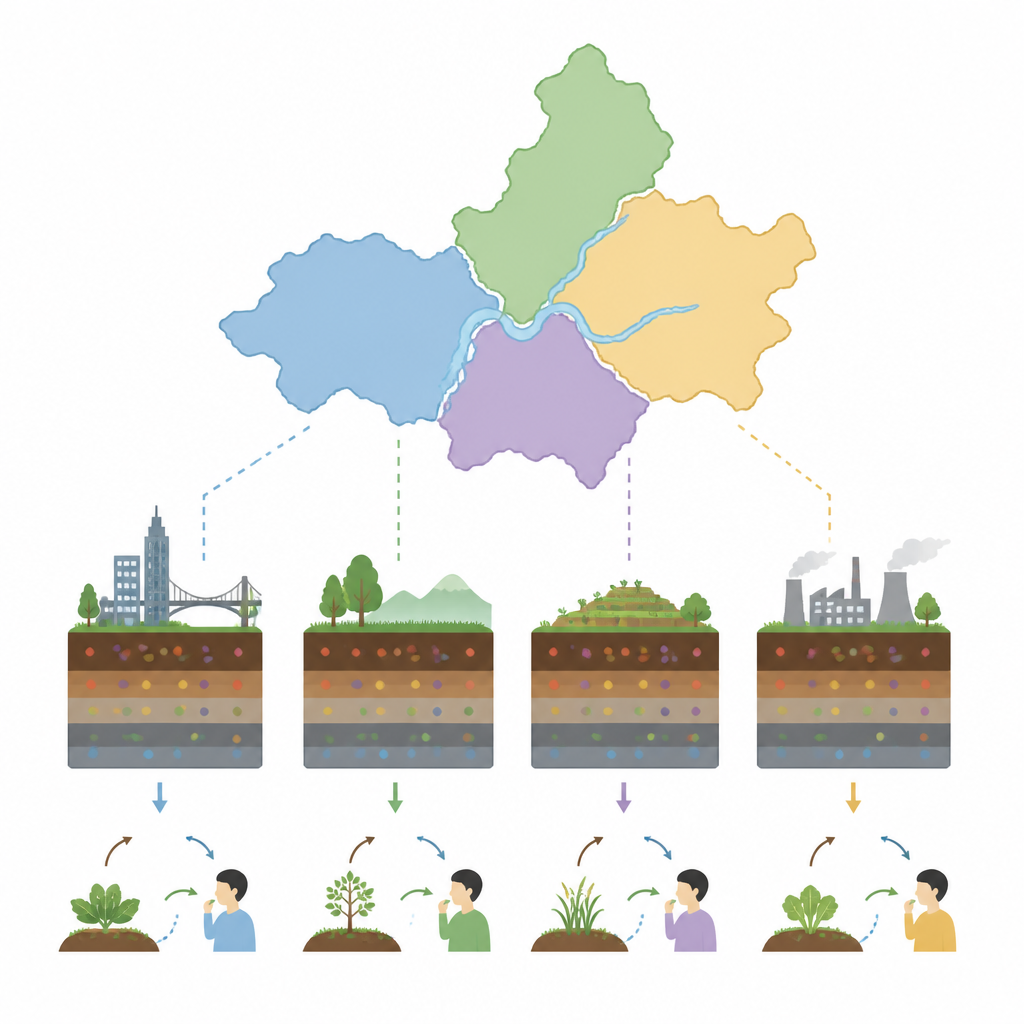
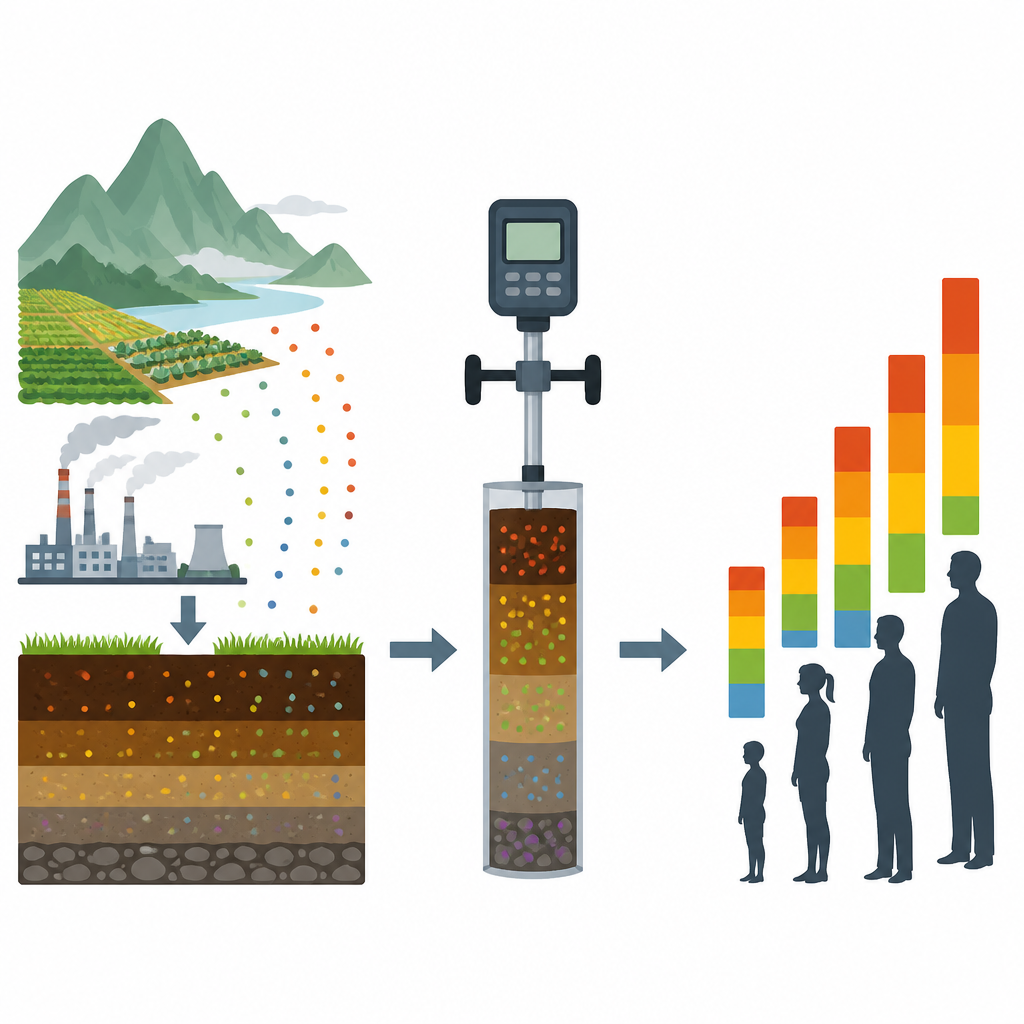
The researchers collected soil samples from public farmland, green spaces, and protected areas in 28 districts and counties of Chongqing between 2016 and 2023. They focused on four naturally occurring radioactive elements found in most rocks and soils and on one artificial element left behind by nuclear activities. Back in the laboratory, the samples were dried, ground, and sealed before being measured with a very sensitive gamma ray detector. This instrument records the tiny flashes of energy given off when these elements decay, allowing the team to calculate how much of each is present in each sample.
How radioactivity varies across Chongqing
Chongqing was divided into four broad regions based on geography and development: an older urban core, a newer urban belt, the Three Gorges reservoir area in the northeast, and a mountainous area in the southeast. After accounting for changes over time, the newer urban belt had higher levels of two key radionuclides than the city core. The southeastern mountain area showed higher levels of several radionuclides, including both natural and human-made ones. When the researchers looked at changes over the eight years, they found that some natural radionuclides, especially those linked to uranium and thorium in rocks and to potassium in soil and fertilizer, were higher in more recent years than in 2016.
Patterns, partnerships, and possible causes
By examining how the radionuclides rose and fell together, the team found that certain elements tended to be linked. Uranium and radium, which belong to the same natural decay series, were strongly tied to each other, and both were also connected to thorium. Potassium and thorium formed another pair that often appeared together, likely reflecting the underlying rocks and the way soil is moved and sorted on steep slopes. In contrast, the artificial radionuclide cesium behaved differently, clustering on its own, which fits its origin in nuclear fallout rather than local geology. The authors suggest that geology, fertilizer use, erosion, industrial activity, and recent economic changes may all play roles in shaping these patterns, though more detailed data would be needed to tease out the exact causes.
Translating soil numbers into health risk
To judge what these findings might mean for people living in Chongqing, the researchers turned the soil measurements into standard radiation risk indicators. They calculated how much radium-like activity is present, how much gamma radiation is released into the air, how much dose a typical person would receive outdoors in a year, and how this could affect lifetime cancer risk. While the overall levels in Chongqing soils remained within widely accepted safety ranges for soil, the average yearly dose and related risk values were higher than global outdoor averages. Some regions, particularly the newer urban belt and the southeastern mountains, showed higher values than the urban core, pointing to places where closer monitoring may be warranted.
What this means for everyday life
For residents, the study does not signal an immediate health crisis, but it does show that the natural radiation background in Chongqing is on the high side compared to many other parts of the world. Because these exposures add up slowly over a lifetime, tracking changes in soil radioactivity can help guide land use, building practices, and environmental rules. The authors recommend continued, long-term monitoring and more detailed follow-up studies that also consider how people might take in radionuclides through food and air. By building a strong baseline now, Chongqing can better safeguard public health as its landscape and economy continue to evolve.
Citation: Huang, Q., Zhao, X., Fang, B. et al. Assessment of levels spatiotemporal differences and health risks of environmental radioactivity in the soil of Chongqing China. Sci Rep 16, 15731 (2026). https://doi.org/10.1038/s41598-026-45598-8
Keywords: soil radioactivity, Chongqing, natural radiation, health risk, radionuclides