Clear Sky Science · en
A genomic structural equation modelling study elucidates shared genetic architecture of polygenic traits associated with post-intensive care syndrome
Why surviving intensive care is only part of the story
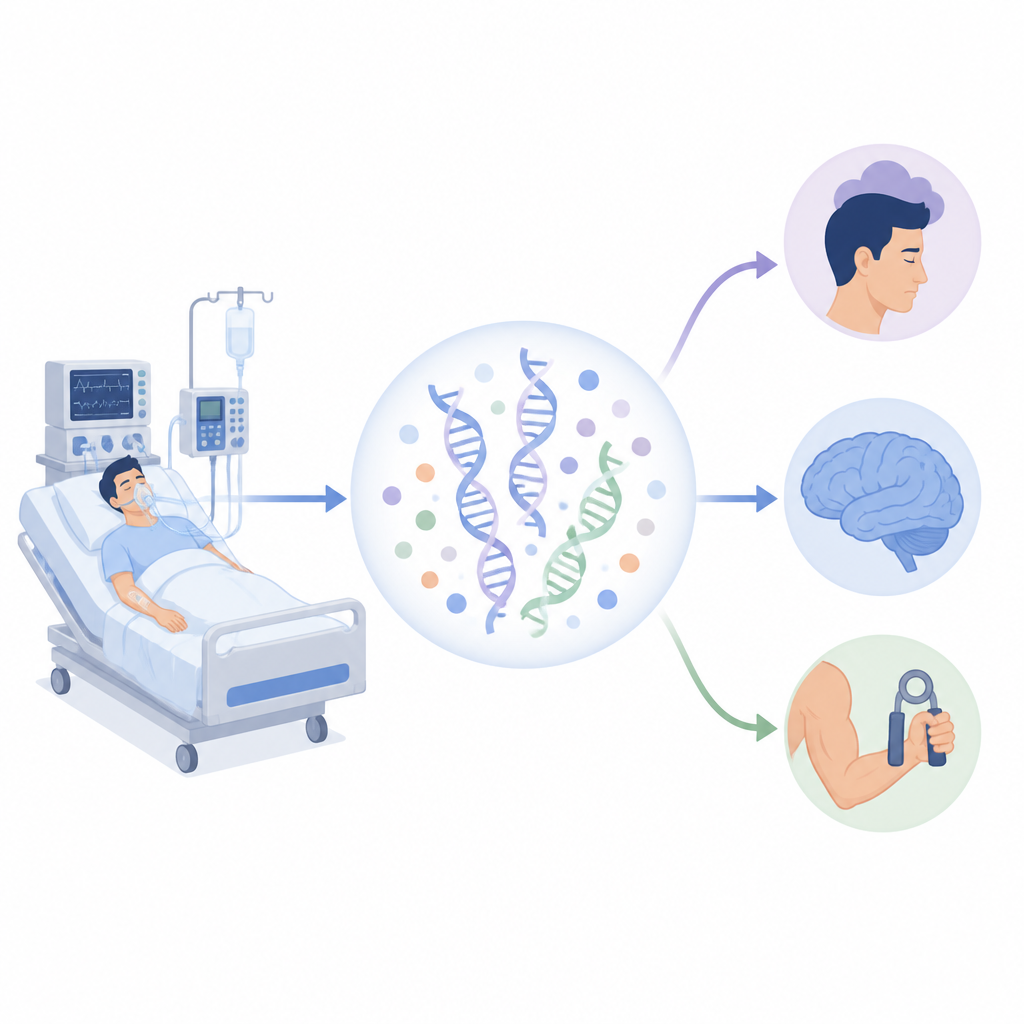
Many people who leave an intensive care unit expect the hardest part to be over, yet months or years later they still struggle with mood changes, memory lapses and weak muscles. This cluster of long lasting problems is called post intensive care syndrome, and it does not affect every survivor in the same way. This study asks a simple but powerful question: do hidden genetic differences help explain who is most vulnerable to these lingering troubles after critical illness?
Connecting mood, thinking and strength
Doctors have long known that depression, post traumatic stress, fuzzy thinking and poor physical strength often travel together after a stay in intensive care. Instead of treating each problem as a separate outcome, the researchers treated them as pieces of one larger puzzle. They gathered results from very large genetic studies of five related traits in the general population: major depression, post traumatic stress, overall thinking ability, memory performance and hand grip strength, a simple measure of muscle power. They then used a statistical tool to see whether the same genetic threads run through all five traits.
Finding a shared genetic factor
The analysis revealed that a single hidden factor could explain much of the genetic overlap among these traits. In plain terms, the same sets of genes that nudge a person toward depression or poorer thinking skills also tend to be linked with weaker muscles. When the team scanned the genome using this combined factor, they found over a thousand genetic markers tied to it, most of which had not stood out in earlier studies that looked at each trait alone. This shows that viewing post intensive care problems as a joined up syndrome, rather than separate issues, can uncover new genetic signals.
What the key genes are doing
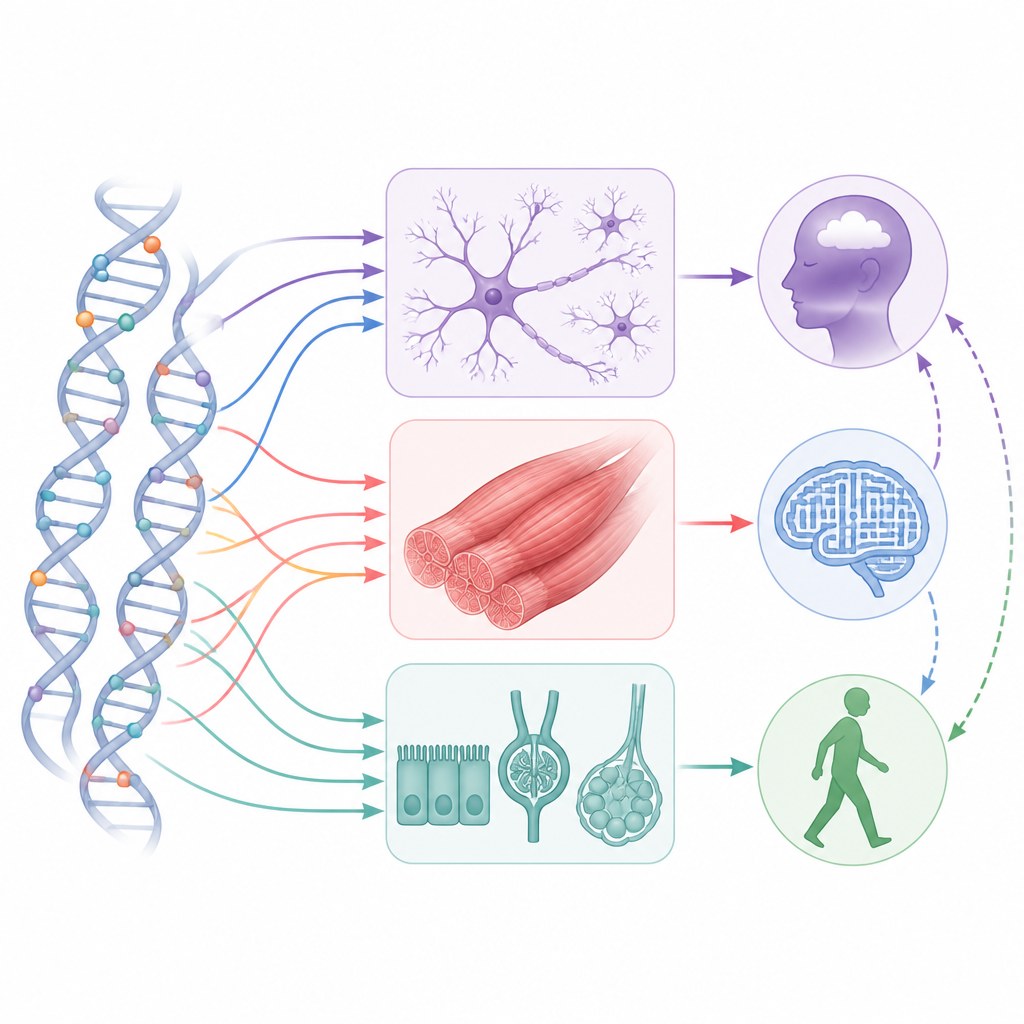
Next, the researchers asked what kinds of biological jobs these risk genes perform. Several are active in brain cells and help control how nerve connections form, adapt and survive, which fits with the lasting effects on mood and memory. Others are involved in cell death, inflammation and how the body responds to stress, pointing toward processes that can damage organs during severe illness. Still others help regulate energy use inside cells and control muscle growth and breakdown, echoing the muscle loss and weakness seen in many intensive care survivors. Taken together, these clues paint a picture of a body whose brain, immune system and muscles are all shaped by a shared genetic background.
Where in the body the risk is concentrated
The team then asked in which tissues these genetic influences seem strongest. They found that the signals were enriched in genes active in many types of nerve cells, especially in the developing brain, spinal cord and pain sensing nerve clusters. There were also links to developing muscle and to barrier organs such as the lung and gut that are often stressed during critical illness. The risk markers tended to fall in important stretches of DNA that are highly conserved and involved in turning genes on and off, suggesting that even small changes there can have outsized effects on long term recovery.
What this means for patients and care
For patients and families, these findings do not mean that genes alone decide who will struggle after intensive care. Illness severity, treatments, rehabilitation and social support still matter greatly. But the study does show that there is a shared genetic backdrop that links mood, thinking and physical strength after critical illness. By mapping this backdrop down to specific genes, cell types and tissues, the work lays a foundation for future tools that might one day help identify people at higher risk and tailor follow up care to their underlying biological vulnerability.
Citation: Lv, Q., Wu, G., Huang, Z. et al. A genomic structural equation modelling study elucidates shared genetic architecture of polygenic traits associated with post-intensive care syndrome. Sci Rep 16, 15621 (2026). https://doi.org/10.1038/s41598-026-45594-y
Keywords: post intensive care syndrome, genetic architecture, critical illness survivorship, polygenic risk, cognitive and physical recovery