Clear Sky Science · en
Synthesization of metal based-HAP catalysts for enhanced biodiesel yield from palm fatty acid distillate (PFAD)
Turning Waste into Cleaner Fuel
Biodiesel is often praised as a cleaner alternative to diesel, but making it can be costly, especially when it relies on food-grade vegetable oils. This study explores how an industrial waste stream from palm oil production can be upgraded into useful fuel using a specially designed solid catalyst. The work matters to everyday readers because it tackles two big issues at once: what to do with low-value waste and how to make cleaner fuels more affordable and sustainable.
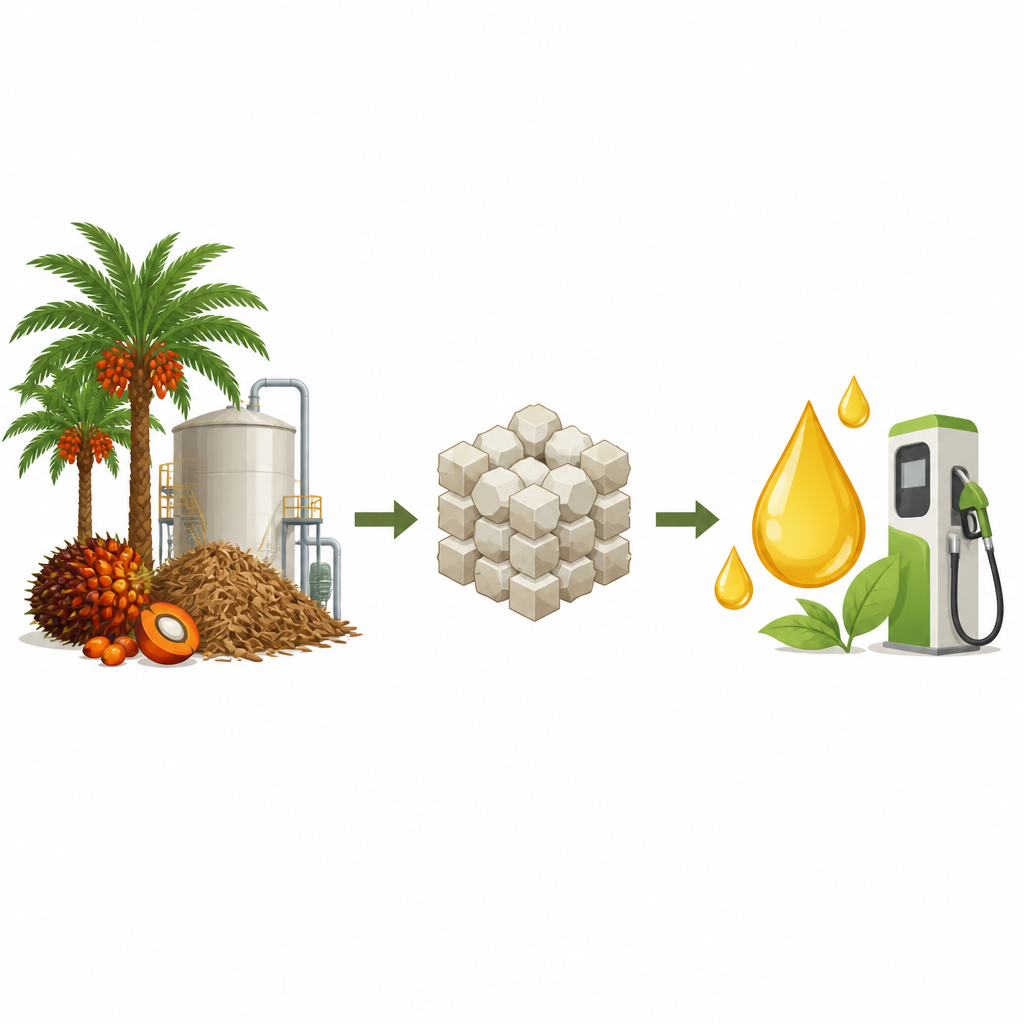
A Second Life for Palm Oil Waste
Palm fatty acid distillate, or PFAD, is a by-product from refining palm oil that contains a lot of free fatty acids and is usually sold cheaply or used in low-value applications. Instead of throwing it away, the researchers tested whether PFAD could become a practical raw material for biodiesel. Biodiesel is a type of fuel made from fats and oils that can run in diesel engines, offering lower greenhouse gas emissions, no sulfur, and easier breakdown in the environment. If waste streams like PFAD can be turned into fuel efficiently, biodiesel production would rely less on edible oils and become both greener and more economical.
Designing a Solid Helper for the Reaction
To turn PFAD into biodiesel, the team focused on solid catalysts based on a material called hydroxyapatite, a calcium phosphate similar to the mineral found in bones. They prepared three versions by adding different metals: magnesium, sodium, and copper, giving Mg/HAP, Na/HAP, and Cu/HAP. These powders were carefully made and heated so their structure would be stable, then treated with sulfuric acid to make their surfaces more acidic. A suite of tools, including X-ray diffraction, gas adsorption, and temperature-programmed desorption, was used to check the crystal structure, pore system, and acidity, all of which control how well the catalysts help the chemical reaction that converts PFAD and methanol into biodiesel.
Why Copper Stood Out
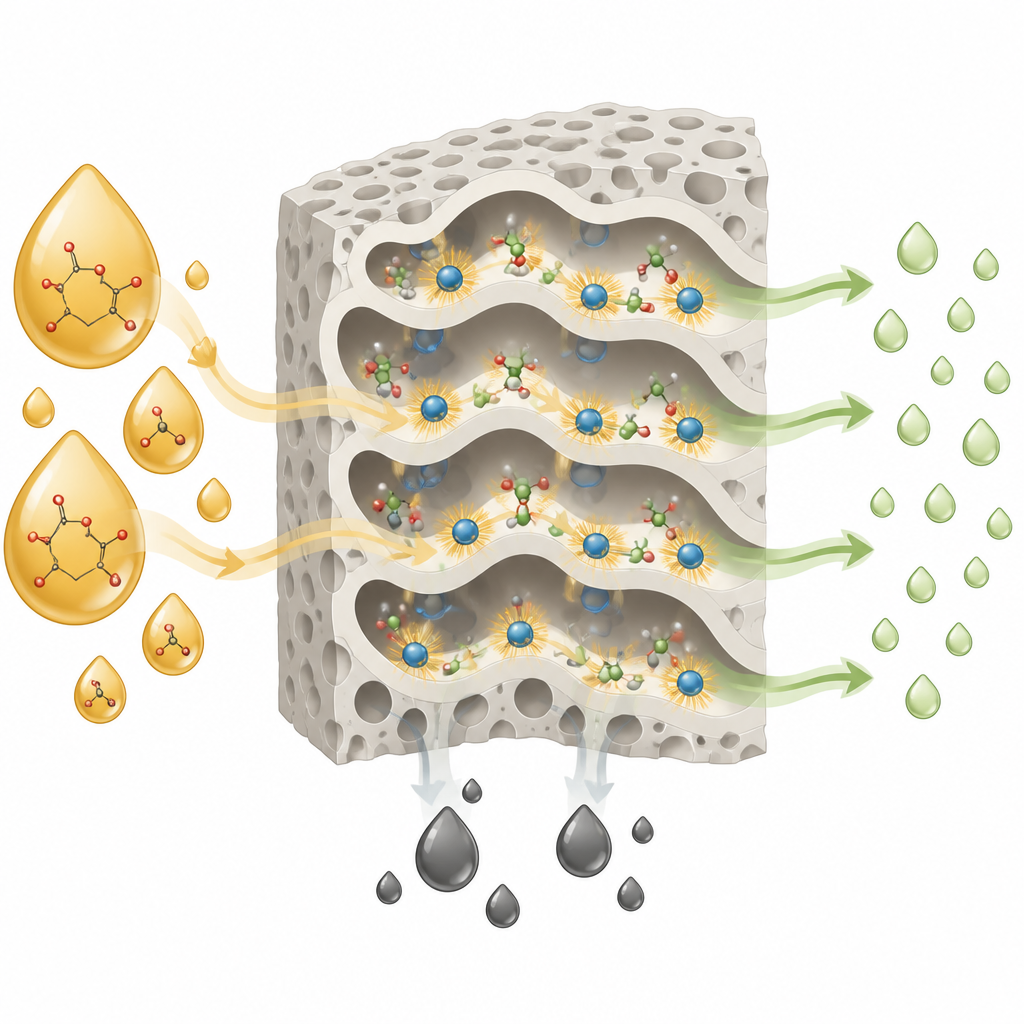
Although all three catalysts shared the same basic framework, only the copper-based version, Cu/HAP, showed strong performance with PFAD. Tests revealed that Cu/HAP had a mesoporous structure, meaning it contained medium-sized channels that allow larger molecules to move in and react. It also possessed many strong acid sites on its surface, created by the sulfonation treatment and the copper species, which are crucial for turning free fatty acids into biodiesel rather than soap. In contrast, the sodium and magnesium catalysts behaved more like basic materials and tended to trigger soap formation when faced with the highly acidic PFAD, making separation difficult and lowering the useful fuel yield.
Measuring the Fuel and Tuning the Process
The researchers ran controlled reactions using methanol and PFAD in the presence of each catalyst and then measured how much of the free fatty acids were converted and how much biodiesel was formed. With Cu/HAP under optimized conditions, they obtained a biodiesel yield of about 40.4% and a free fatty acid conversion above 60%, confirmed using gas chromatography and infrared spectroscopy, which identified the expected fatty acid methyl esters. By systematically varying temperature, reaction time, methanol-to-oil ratio, and catalyst loading, they showed that there is a sweet spot where the reaction is fast, side reactions like soap formation are minimized, and the fuel phase separates cleanly from the by-products.
Stability and Real-World Promise
Beyond initial performance, the study also checked whether the copper catalyst could be reused. In repeated cycles, Cu/HAP kept most of its activity, with only a gradual decline mainly blamed on surface deposits from the reaction mixture. A simple heating step restored much of its performance, pointing to a durable material that could work over many runs in an industrial setting. When compared with other catalysts reported in the literature, the Cu/HAP system stands out for working well with a challenging, high-acid waste feedstock, using modest temperatures and a low amount of catalyst while still reaching competitive biodiesel yields.
What This Means for Cleaner Energy
For non-specialists, the takeaway is that the right solid catalyst can turn a problematic palm oil by-product into a cleaner-burning fuel, reducing waste and reliance on food-grade oils at the same time. The copper-based hydroxyapatite developed in this study combines suitable pore size, strong acidity, and good stability, making it particularly well matched to the harsh chemistry of PFAD. While more work is needed to move from the lab to full-scale plants, the research offers a realistic pathway toward more sustainable biodiesel that makes better use of existing industrial streams.
Citation: Adzahar, N.A., Alsultan, A.G.A., Ibrahim, N.A. et al. Synthesization of metal based-HAP catalysts for enhanced biodiesel yield from palm fatty acid distillate (PFAD). Sci Rep 16, 15590 (2026). https://doi.org/10.1038/s41598-026-45587-x
Keywords: biodiesel, palm fatty acid distillate, heterogeneous catalyst, hydroxyapatite, renewable fuel