Clear Sky Science · en
Integrated genomic and phenotypic characterization of antimicrobial resistance in Shiga toxin-producing Escherichia coli from asymptomatic carriers in Japan
Hidden Germs in Healthy People
Many people carry harmful strains of the common gut bacterium Escherichia coli without feeling sick. Some of these strains can produce Shiga toxin, which in others may cause severe diarrhea and even kidney failure. Understanding which antibiotics still work against these silent hitchhikers matters for food safety, public health rules, and for people in jobs like food handling who can lose work while they test positive.
Who Was Studied and Why
The researchers focused on 495 Shiga toxin-producing E. coli (STEC) strains found during routine stool checks of healthy food handlers and care workers across Japan. These people had no symptoms, but the bacteria they carried could, in theory, be passed on to vulnerable customers or residents. Because Japan often screens and then treats carriers to clear the bacteria, the team wanted to know how often these STEC strains resist antibiotics and which drugs are still likely to work.

Reading Bacterial DNA for Resistance Clues
All 495 bacterial samples had already been fully sequenced, so the team could scan their DNA for known antimicrobial resistance genes and mutations. They found that about one in six strains carried at least one resistance gene, and fewer than one in five had any resistance-related change at all. Most resistance genes were linked to older drugs such as streptomycin, sulfonamides, and tetracycline, as well as common penicillin-like drugs. Genes that protect against powerful last-line drugs were rare, and resistance genes were scattered across many genetic families and types of STEC, suggesting they move around on mobile DNA elements rather than staying in one high-risk lineage.
Comparing Cows, Gut Bacteria, and Carriers
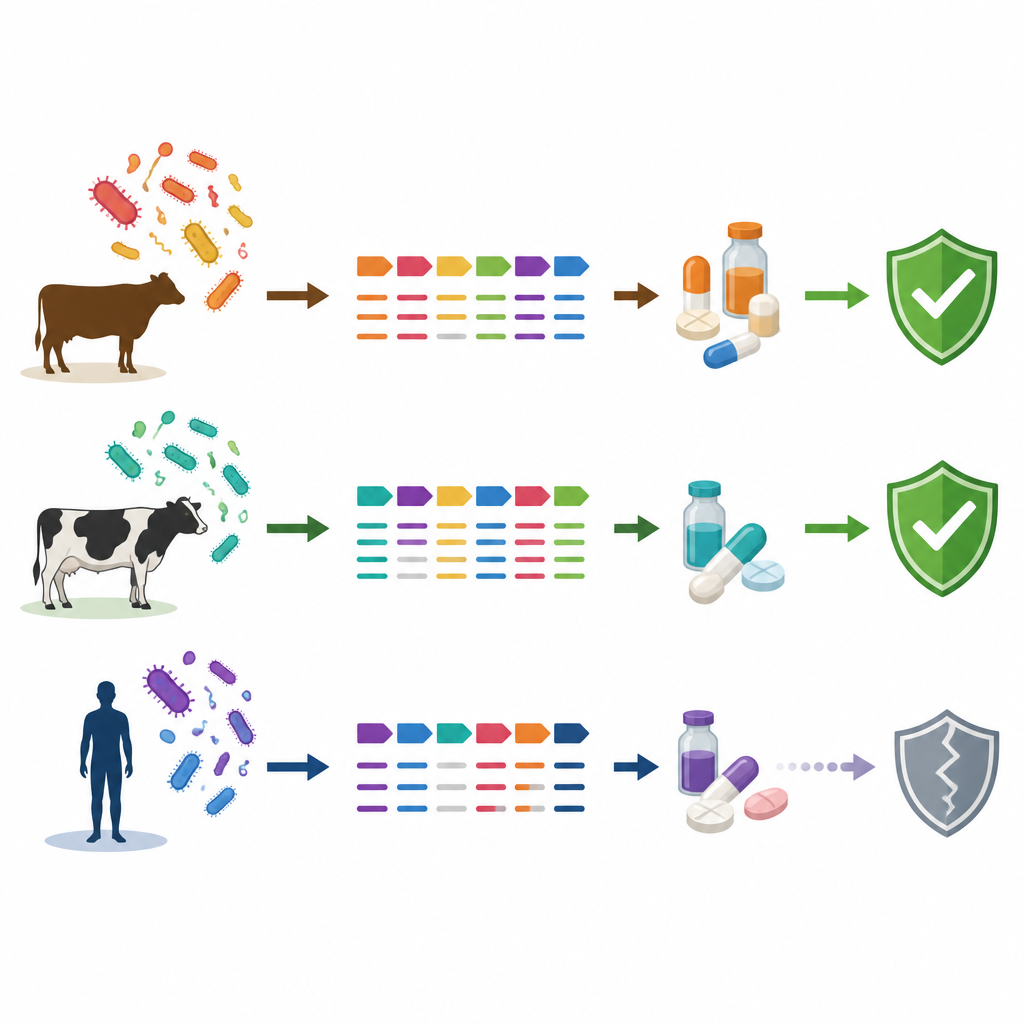
To put these findings in context, the researchers compared the carrier STEC to previously collected ordinary E. coli from healthy people and from cattle. They saw that the resistance pattern in carrier STEC closely matched that of normal human gut E. coli, while cattle strains carried resistance genes more often and in greater variety. This points to stronger antibiotic pressure in farm settings, likely reflecting veterinary and agricultural drug use, which can shape the pool of resistance genes that later reach humans.
Do the Genes Match Real Drug Resistance
The team then tested 87 strains that carried resistance markers to see which antibiotics they actually resisted in the lab. Tetracycline and ampicillin resistance were the most common, while resistance to modern drugs such as fluoroquinolones, fosfomycin, and amikacin was rare or absent. In most cases, the presence of a resistance gene matched the test result, but some strains carried genes tied to streptomycin, macrolides, or certain last-line drugs without showing real resistance. This suggests that some genes may be weakly active, or that bacteria can lose resistance elements under test conditions.
What This Means for Treatment and Safety
For health officials and clinicians in Japan, the study brings cautious reassurance. Among symptom-free STEC carriers, strong resistance to several key drugs used to treat or clear infection remains uncommon. At the same time, the frequent presence of genes for older drugs like streptomycin, probably driven by use in livestock and agriculture, shows how resistance can persist in the wider environment. The authors argue that continuing to track resistance through genome analysis, in both people and animals, is vital to keep treatment options open and to design fair, risk-based rules for workers who unknowingly carry these bacteria.
Citation: Imai, Y., Okuno, M., Iriguchi, S. et al. Integrated genomic and phenotypic characterization of antimicrobial resistance in Shiga toxin-producing Escherichia coli from asymptomatic carriers in Japan. Sci Rep 16, 15882 (2026). https://doi.org/10.1038/s41598-026-45559-1
Keywords: Shiga toxin-producing E. coli, antimicrobial resistance, asymptomatic carriers, genomic surveillance, food safety