Clear Sky Science · en
Glutaminase inhibition is correlated with an increase in phospholipid unsaturation, a potential cellular adaptation to pH fluctuations
How Cells Keep Their Internal Balance
Every cell lives in a world that can quickly change, including shifts in acidity that threaten its delicate inner balance. This study explores how cells may quietly adjust the fats in their outer shell to keep their internal pH within a safe range. By watching fruit fly cells under chemical stress, the researchers uncovered a link between how cells process a key nutrient, glutamine, and how they fine tune the flexibility and structure of their membranes when their surroundings become more acidic.
The Cell’s Protective Skin
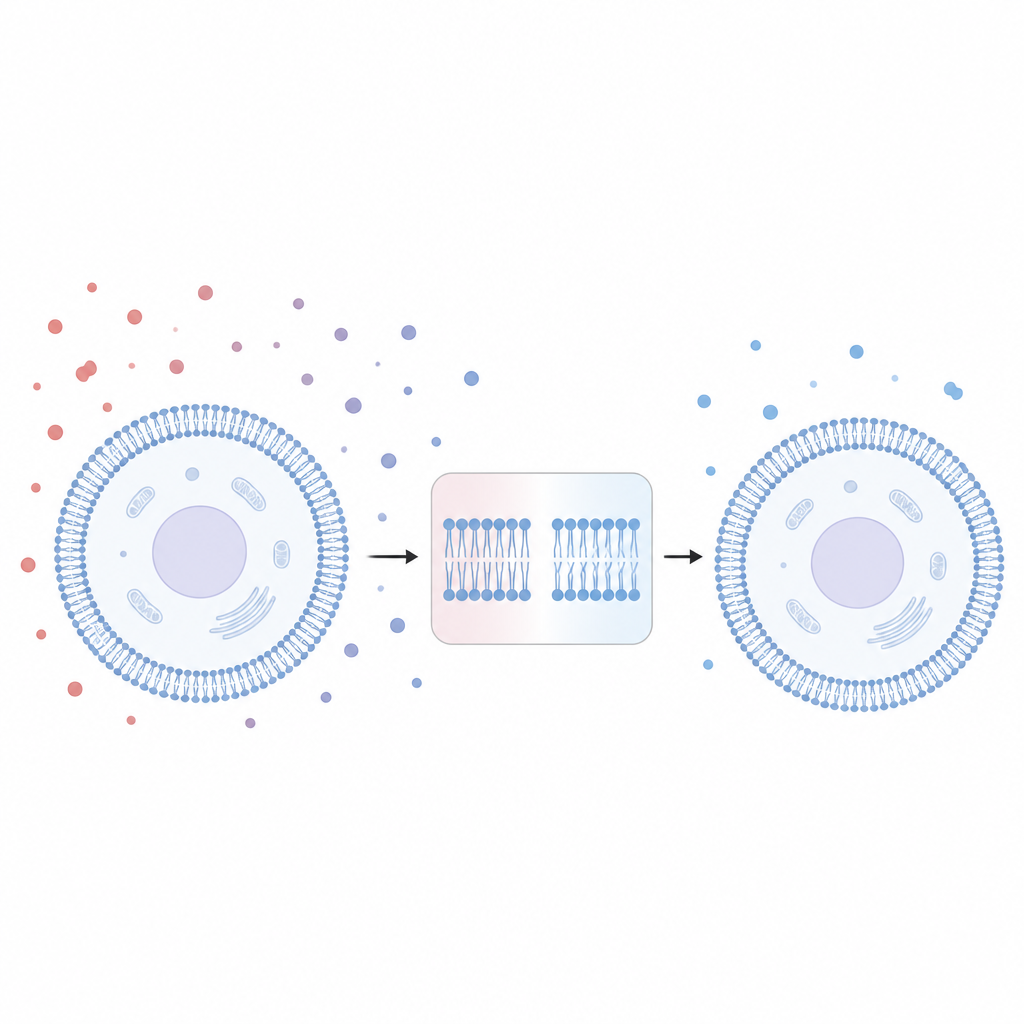
The outer surface of a cell is built from phospholipids, a class of fats arranged in a thin double layer. Each phospholipid has two “tails” that can be straight or kinked, depending on how many double bonds they contain. Straight tails, called saturated, pack tightly and make the membrane more rigid. Kinked tails, called monounsaturated or polyunsaturated, introduce bends that loosen packing and change how the membrane behaves. This mix of tail types helps set properties such as softness, permeability, and how well membrane proteins can work, which in turn affects how cells respond to physical and chemical challenges.
A Nutrient Enzyme Tied to Membrane Fats
The team focused on glutaminase, an enzyme that converts the nutrient glutamine into glutamate and releases ammonia inside mitochondria, the cell’s power stations. In fruit fly S2 cells, blocking this enzyme with several different drugs consistently shifted the makeup of membrane phospholipids. Molecules that carried two double bonds in their tails increased, while those with only one double bond declined. Detailed analysis showed that the rising species were especially rich in monounsaturated fatty acids, whereas those that fell tended to pair one straight tail with one kinked tail. These changes happened without altering the types of phospholipid head groups or the amount of cholesterol, pointing to a specific reshaping of tail unsaturation rather than a broad overhaul of the membrane.
Acid Stress and a Two Way Conversation
To understand what drives this remodeling, the researchers examined the products of the glutaminase reaction. Supplying cells with glutathione, an antioxidant made from glutamate, had little effect, and adding a glutamate based metabolite called alpha ketoglutarate actually favored more highly unsaturated phospholipids. In contrast, adding ammonia, which is basic, or simply raising the medium pH with sodium hydroxide, reversed the shift toward more unsaturated tails seen during glutaminase inhibition. Directly lowering the medium pH with hydrochloric acid, or reducing intracellular pH by blocking a sodium hydrogen exchanger, produced the same lipid changes as glutaminase inhibition. These experiments indicate that it is the acidification linked to reduced ammonia that pushes cells to enrich their membranes with monounsaturated tails.
Membrane Changes Help Steady pH
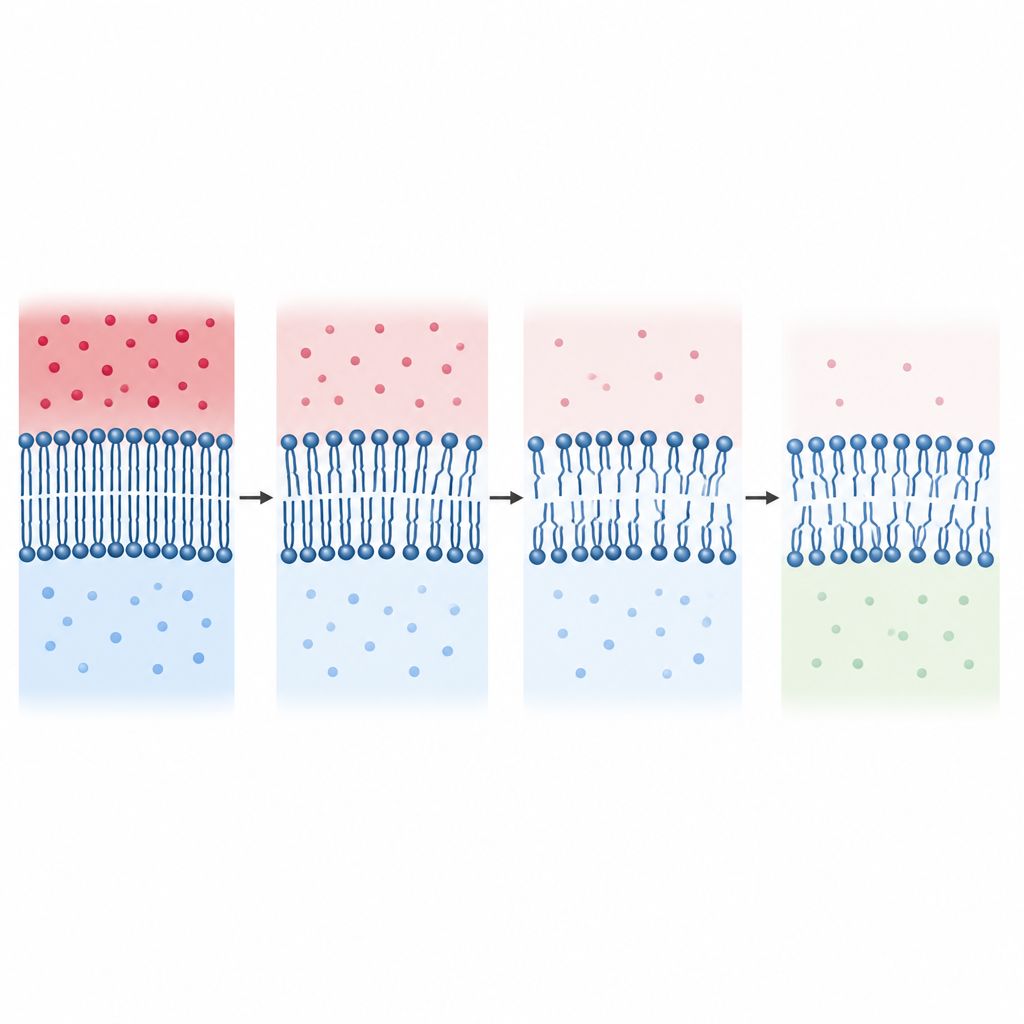
The story does not end there. When the researchers deliberately reduced the cell’s ability to make monounsaturated fatty acids by blocking a key desaturase enzyme, both intracellular and extracellular pH dropped. Under these conditions, glutaminase levels and cellular energy metabolism also shifted, and lactate production rose. Yet even when monounsaturated fat production was hampered, cells still tried to increase the share of unsaturated phospholipids under glutaminase inhibition, suggesting a strong built in drive to adjust membrane tails in response to pH changes. Together, the findings reveal a feedback loop in which pH shape shifts the membrane, and the membrane in turn helps stabilize pH.
Why This Matters for Everyday Biology
In simple terms, this work suggests that cells use the chemistry of their own skin as a buffer against swings in acidity. When the environment turns more acidic, cells increase the share of kinked, monounsaturated tails in their membrane phospholipids, which likely alters membrane charge, fluidity, and energy handling in ways that help restore pH balance. This pH sensitive lipid tuning adds to other known examples where cells remodel their membranes to cope with cold or mechanical stress. Understanding this quiet adjustment mechanism in fruit fly cells may ultimately shed light on how many cell types, including human ones, keep their internal conditions steady in the face of changing surroundings.
Citation: Miyamoto, S., Matsumoto, K., Saito, H. et al. Glutaminase inhibition is correlated with an increase in phospholipid unsaturation, a potential cellular adaptation to pH fluctuations. Sci Rep 16, 15923 (2026). https://doi.org/10.1038/s41598-026-45555-5
Keywords: cell membrane, pH balance, glutamine metabolism, lipid composition, monounsaturated fats