Clear Sky Science · en
Headspace GC–MS volatiles profiling in leaves of 4 Cymbopogon species and their vapor-phase antibacterial effects
Why lemon-scented grasses matter
If you have ever brewed lemongrass tea or lit a citronella candle, you have already met the plants at the heart of this study. Beyond their refreshing aroma, these grasses produce airborne chemicals that can slow the growth of harmful microbes. As antibiotic resistance rises worldwide, scientists are searching for gentle, natural ways to keep surfaces, food, and even hospital air safer. This paper explores how the scented vapors from four Cymbopogon species behave and how well they can stop dangerous bacteria from growing.
Smelling the air around the plants
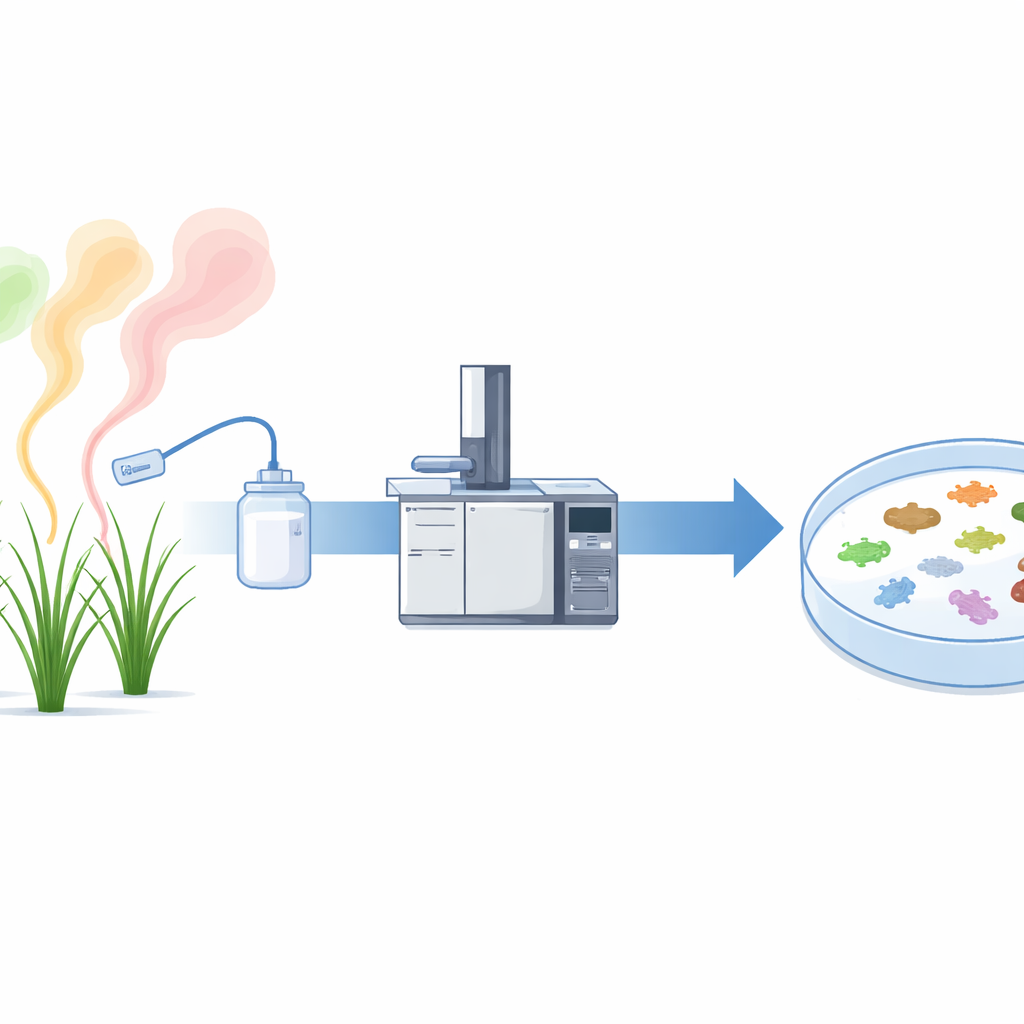
The researchers focused on four close relatives: lemon grass (Cymbopogon citratus), citronella grass (C. nardus), palmarosa (C. martini), and the lesser-known C. procerus. Instead of distilling oils, they captured the actual vapors rising from fresh leaves using a technique that gently samples the air above the plant and feeds it into a gas‑based analyzer. They compared six leaf samples plus a commercial lemongrass essential oil, asking two questions: what exactly is in the scent, and how do these vapors perform against tough hospital‑linked bacteria known as ESKAPE pathogens.
What gives each grass its special scent
Across most of the grasses and in lemongrass oil, the aroma was dominated by two closely related lemony substances, together known as citral. These compounds made up three‑quarters or more of the vapors from lemon grass, citronella grass, C. procerus, and the bottled oil. In contrast, palmarosa stood apart: its scent was overwhelmingly rich in geraniol, a rose‑like alcohol common in perfumes. Dozens of smaller components also appeared—ketones, ethers, esters, and terpenes—many of which have known insect‑repellent or germ‑fighting properties. The team used statistical tools to cluster samples by their chemical fingerprints. These clearly separated palmarosa from the citral‑rich plants, but they did not reliably distinguish where individual lemongrass samples had been grown, suggesting growing location was less important than species and overall chemistry.
Putting plant vapors against tough microbes
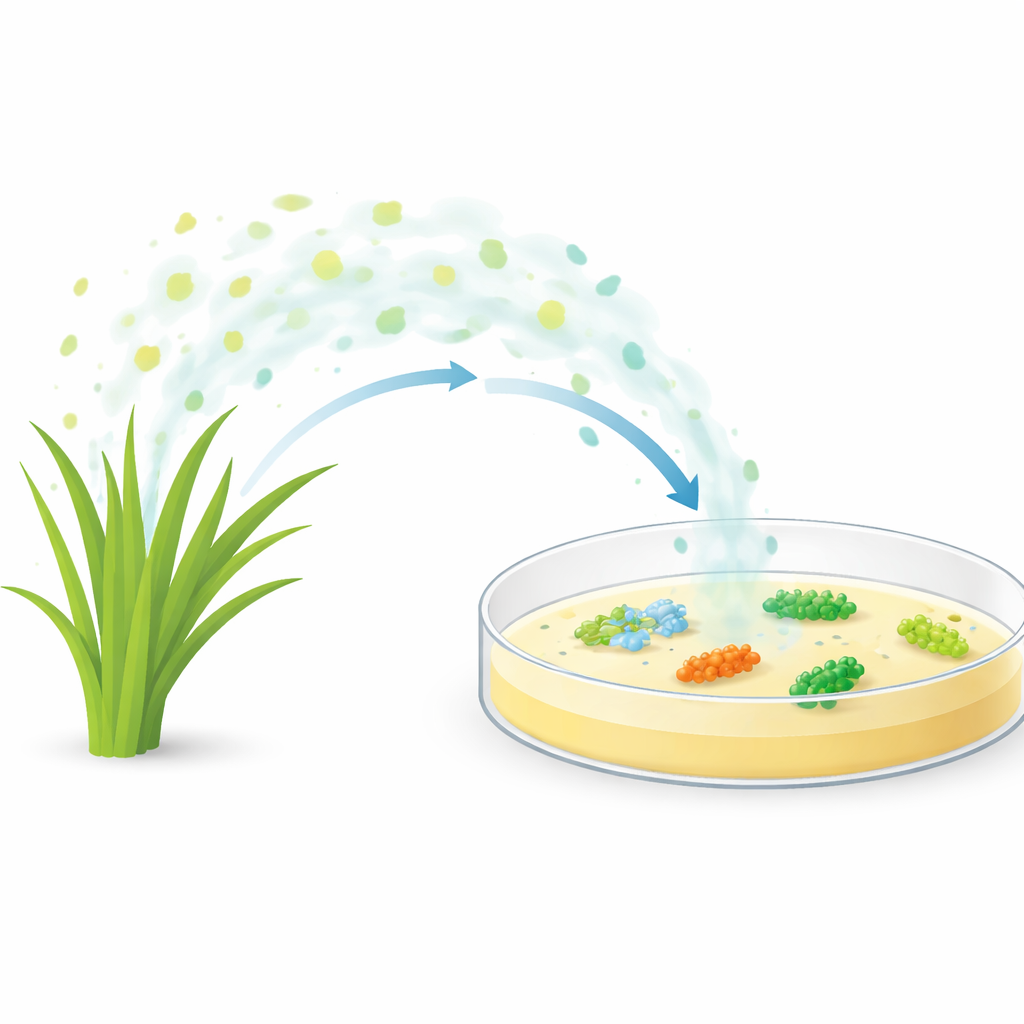
To test antibacterial power in the air, the team inverted Petri dishes so that bacterial spots on the nutrient surface faced upward while leaf pieces or oil were fixed inside the lid above them. As the volatile compounds filled the closed space, the scientists measured the lowest concentration of plant material needed to visibly stop growth, a value they called the vapor‑phase minimum inhibitory concentration. All four Cymbopogon species, the lemongrass oil, and pure citral were able to inhibit a broad range of both Gram‑positive and Gram‑negative bacteria, including notorious species like Staphylococcus aureus, Klebsiella pneumoniae, Acinetobacter baumannii, and Pseudomonas aeruginosa.
More than one ingredient does the job
One stubborn microbe, Enterococcus faecalis, was hardest to stop. Among the fresh leaves, only one lemongrass sample and the commercial oil were effective against it. Interestingly, the whole lemongrass oil worked better than pure citral, even though citral is its major ingredient. For some bacteria, such as K. pneumoniae and A. baumannii, the complete oil required only about half the vapor concentration of isolated citral to achieve the same level of inhibition. This pattern points to teamwork among multiple volatile components—minor constituents and supporting compounds that sharpen or broaden the overall antibacterial effect.
What this means for everyday life
In plain terms, this study shows that the scented “breath” of lemongrass and its relatives is not just pleasant—it can actively slow the growth of hard‑to‑treat bacteria when used in a closed space. The authors provide the first detailed description of the scent chemistry and airborne antibacterial action of C. procerus and confirm that different Cymbopogon species offer distinct mixes of protective molecules. Because vapor application can be effective at very low doses and does not require direct contact, these grasses and their oils could help inspire new ways to keep hospital rooms, food storage areas, and packaging surfaces cleaner using natural plant aromas rather than relying solely on traditional antibiotics.
Citation: Wahdan, M.O., Saber, F.R., Hassan, M. et al. Headspace GC–MS volatiles profiling in leaves of 4 Cymbopogon species and their vapor-phase antibacterial effects. Sci Rep 16, 12718 (2026). https://doi.org/10.1038/s41598-026-45553-7
Keywords: lemongrass, essential oils, antibacterial vapors, Cymbopogon, antibiotic resistance