Clear Sky Science · en
Green synthesis of silver-based NPs/NCs and their antimicrobial and photocatalytic activity
Cleaner Water and Safer Surfaces
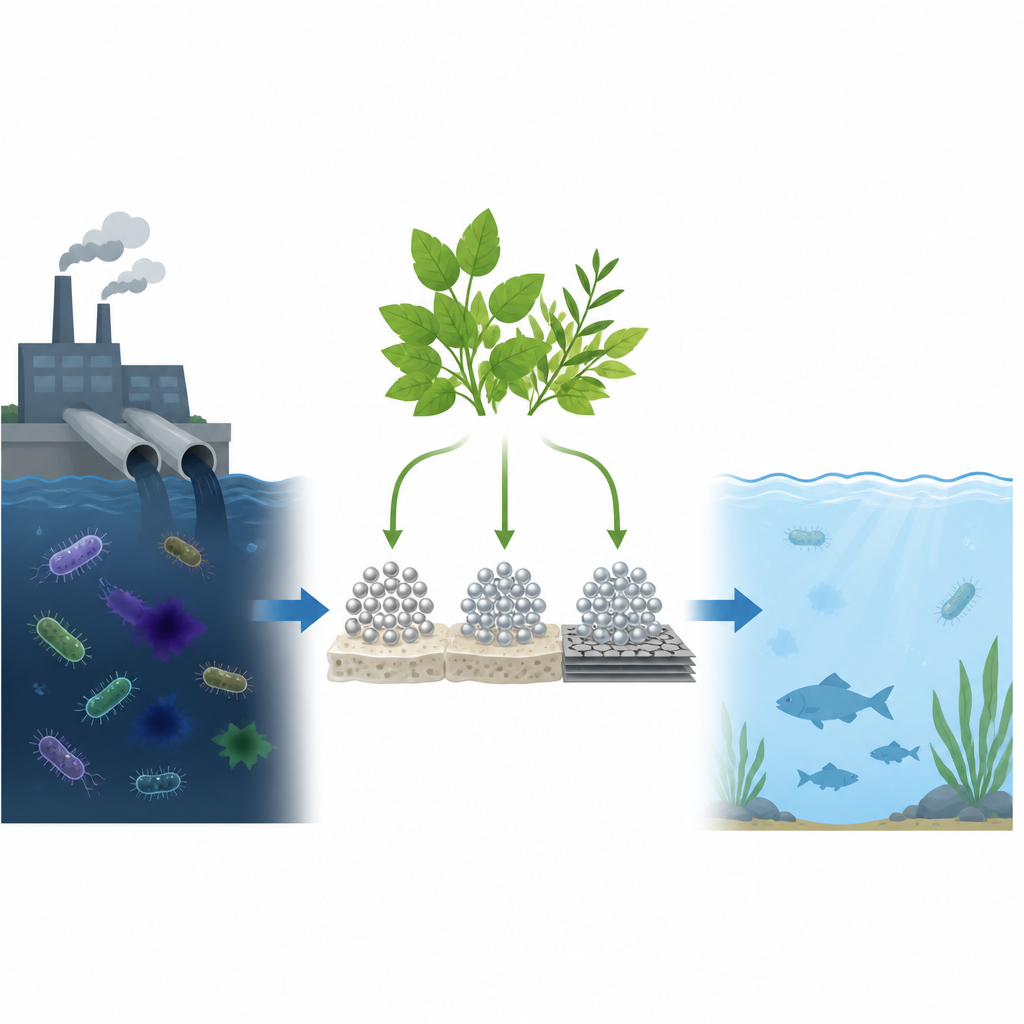
Dirty water and drug resistant germs are two growing worries for public health. Factories release colorful but toxic dyes into rivers, and many microbes are learning to shrug off our usual antibiotics. This study explores tiny particles of silver made with plant extracts that can both slow down harmful bacteria and help break apart a stubborn pollutant in water, pointing toward new tools for safer hospitals, homes, and waterways.
Why Tiny Silver Matters
Silver has been used for centuries to keep infections in check, from coins dropped into water jugs to modern wound dressings. At the scale of billionths of a meter, silver becomes even more active, interacting strongly with light, electricity, and the surfaces of microbes. These silver nanoparticles can poke holes in bacterial defenses and disrupt vital processes. The challenge is to make them in ways that are kind to the environment, keep them from clumping together, and allow them to work well in real world settings such as dirty water or on coated materials.
Green Routes to Smart Nanoparticles
Instead of relying on harsh chemicals, the researchers turned to plant leaves to help grow silver nanoparticles in water. Molecules in the leaves act like gentle factories, turning dissolved silver into solid particles while also coating and stabilizing them. The team then combined these silver particles with two friendly helper materials: chitosan, a natural substance related to shellfish shells that forms thin films, and graphitic carbon nitride, a layered material that absorbs light. By mixing silver with these supports in different amounts, they built three families of materials: plain silver particles, silver in a chitosan film, and silver on carbon nitride sheets. Standard tools that measure how materials absorb light, scatter X rays, and look under an electron microscope confirmed that the particles were small, mostly spherical, and well distributed.
Stopping Germs Without Harsh Drugs
The team tested how well these materials could hold back three common bacteria often linked to hospital and community infections. They placed different amounts of the silver based materials into small wells in bacteria coated agar plates and watched how large a clear ring formed where the microbes could not grow. Both the bare silver particles and the silver mixed with chitosan or carbon nitride created such clear zones, showing strong antibacterial power that in some cases came close to that of a standard antibiotic. At the same time, a simple test using brine shrimp helped check safety. Even at higher doses, the silver composites caused relatively low death rates in the shrimp, suggesting that these green made materials can be effective against germs while staying less toxic than many conventional options.
Using Light to Scrub Pollutants
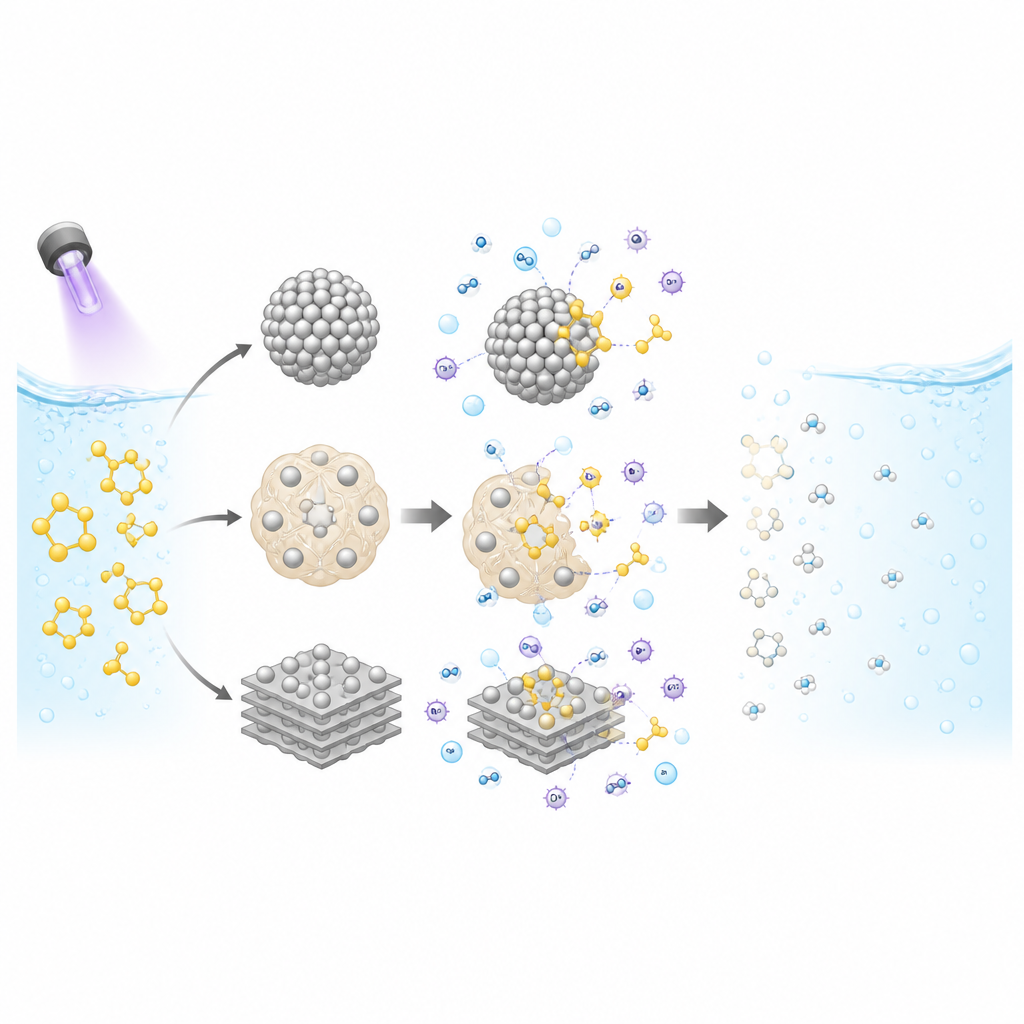
Beyond killing bacteria, the new materials were challenged to break down a model pollutant called 4 nitrophenol, often used to mimic tough dye like molecules in wastewater. When mixed with this compound and exposed to ultraviolet light, the silver composites helped speed up its breakdown. The plain silver particles worked reasonably well, but the mixtures with chitosan and especially with carbon nitride did better, with the best sample removing just over half of the pollutant in four hours. The carbon nitride layers help harvest light, while the silver improves the flow of charges that trigger the chemical reactions, and together they create a more efficient clean up team.
What This Means for Everyday Life
In simple terms, the study shows that tiny silver particles grown with the help of plants and then anchored to friendly supports can pull double duty. They can make surfaces less welcoming to harmful bacteria and help sunlight or ultraviolet lamps break apart stubborn pollutants in water. While more work is needed before they appear in household filters or medical coatings, these green made silver composites offer a glimpse of future materials that clean and protect without adding new environmental burdens.
Citation: Badshah, K.D., Rehman, W., Rasheed, L. et al. Green synthesis of silver-based NPs/NCs and their antimicrobial and photocatalytic activity. Sci Rep 16, 15788 (2026). https://doi.org/10.1038/s41598-026-45547-5
Keywords: silver nanoparticles, green synthesis, antibacterial activity, photocatalytic degradation, wastewater treatment