Clear Sky Science · en
A machine learning-derived biological age model for liver grafts provides a superior assessment of aging compared to chronological age in transplantation
Why liver age matters for transplant patients
Liver transplants save lives, but there are never enough donor organs to meet demand. Many livers are turned down simply because the donors are older, even though some of those organs might still work well. This study asks a simple question with big consequences: instead of judging a liver by how many birthdays its donor had, can doctors estimate how “old” the organ itself really is?
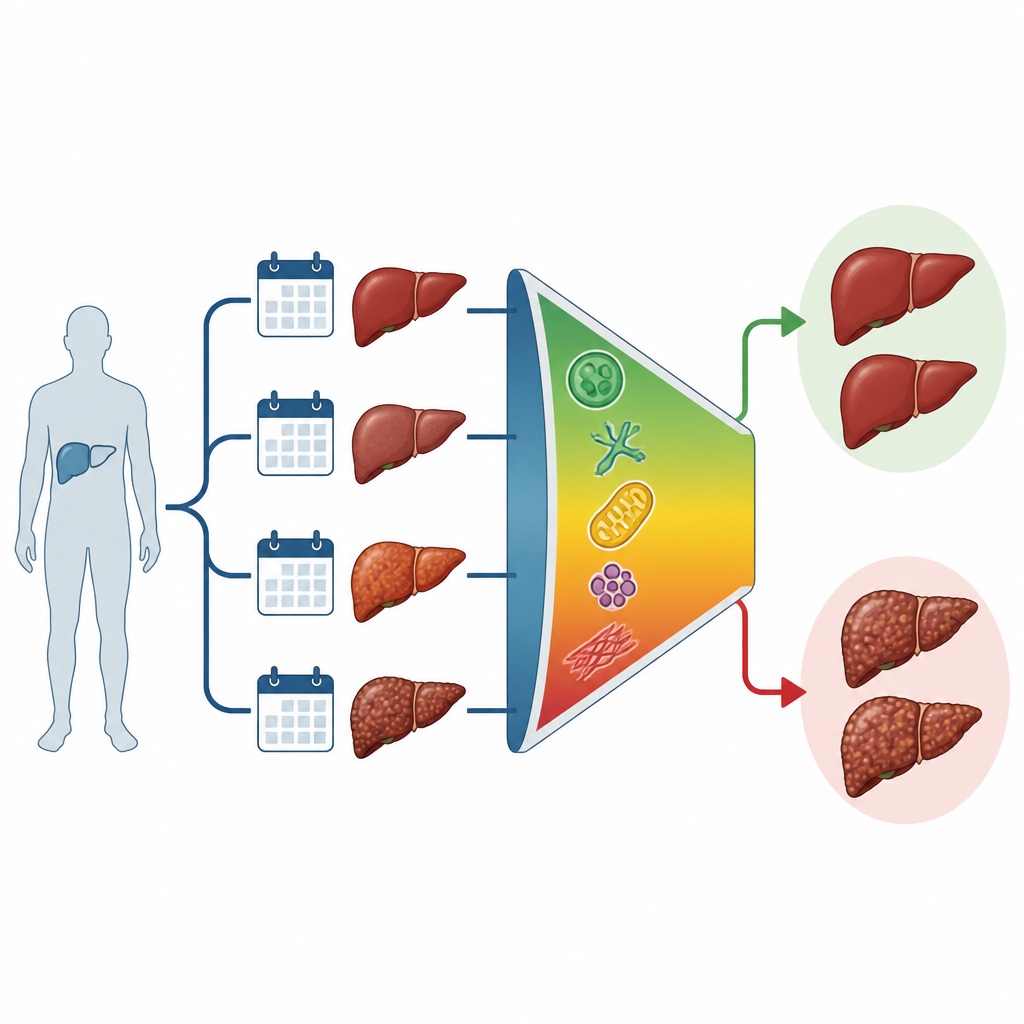
Looking beyond the calendar
Doctors usually classify donor livers by chronological age, the number of years the donor lived. Older donors are often labeled as higher risk, and their livers can be discarded or used cautiously. Yet research suggests that the liver ages more slowly than many other organs and can stay healthy even in very old people. That means a liver from a 70-year-old might function like one from someone much younger, while another liver from a middle-aged donor could already be worn out. The authors argue that what matters is the organ’s biological age, a measure of its real physical condition, not just the date on a birth certificate.
Turning lab tests into an age estimate
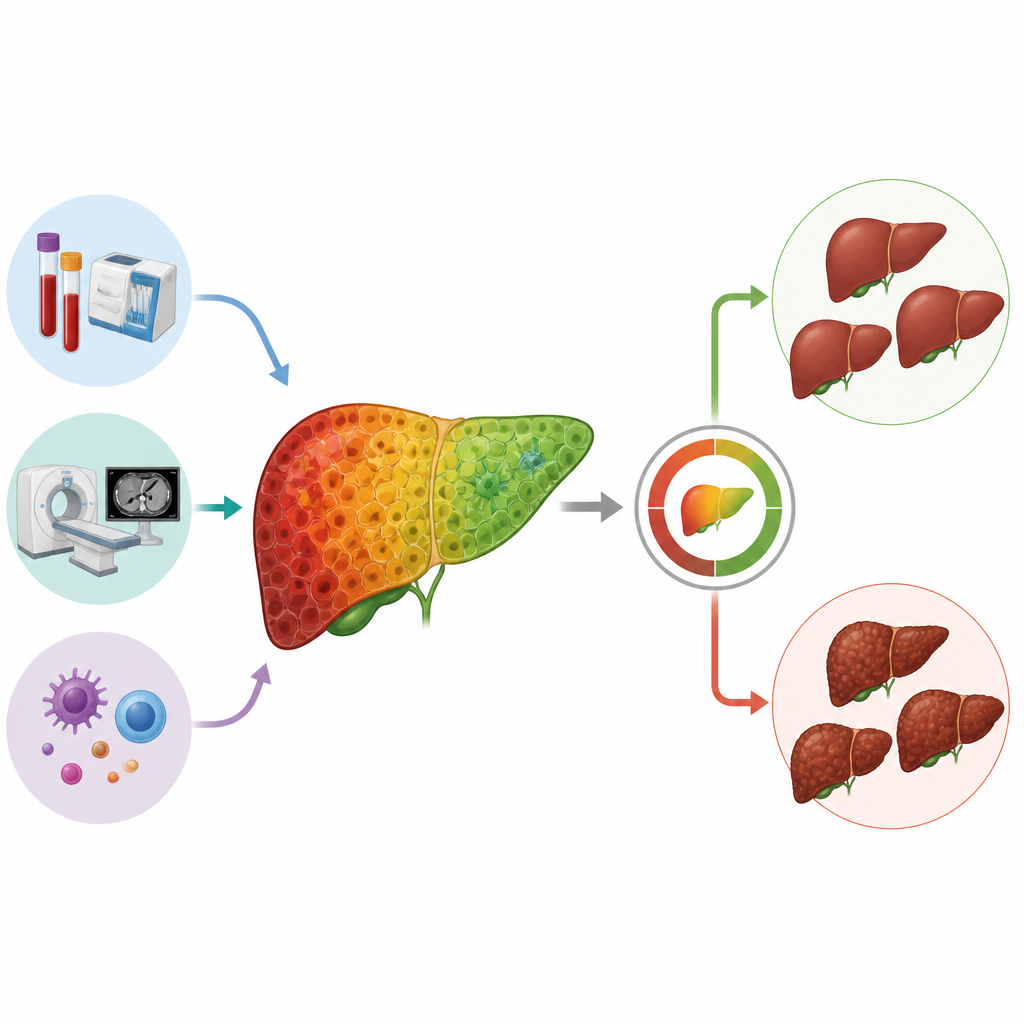
To build a better measure of liver age, the team studied 247 deceased donors at a single transplant center. Before donation, each donor underwent imaging scans and blood tests covering liver function, blood clotting, and inflammation. These 20 routine clinical markers capture how stiff the liver tissue is, how well it makes proteins, how easily blood flows through it, and how inflamed it is. Using these measurements, the researchers trained several computer models, including traditional statistics and more flexible machine learning methods, to estimate each graft’s biological age. The models started by learning how these markers usually change as people get older, then used that pattern to assign an age-like score to each liver.
Machine learning finds hidden wear and tear
The researchers then tested their models in a separate group of 82 donor–recipient pairs transplanted later in time. A conventional linear model best matched the donors’ actual ages, but it mostly reproduced the calendar age and did not reveal extra information about risk. In contrast, a gradient boosting machine learning model captured more complex patterns. It did a poorer job of mimicking chronological age, but its biological age scores were strongly linked to real clinical outcomes. Livers whose biological age was higher than the donor’s calendar age were more likely to cause bile duct problems after surgery and were associated with worse graft survival. In this model, an older-than-expected biological age emerged as an independent risk factor for losing the graft, even after accounting for recipient condition and surgical details.
Sorting livers into faster and slower aging groups
To make the results easier to use in the clinic, the team divided grafts into two groups based on the gap between biological and chronological age. Livers in the accelerated aging group, where the organ appeared older than the donor’s years, behaved worse after transplant. Those in the decelerated aging group, whose biological age matched or trailed behind the calendar age, had noticeably better long-term survival. Strikingly, when donors were grouped only by chronological age, survival curves overlapped and did not show a clear difference. This suggests that the machine learning derived biological age is picking up real biological wear and tear that simple age cutoffs miss.
What this means for future transplants
In everyday terms, this work shows that some livers from older donors may be safer than they look on paper, while others from younger donors may be unexpectedly fragile. By condensing many lab and imaging signals into a single, intuitive “organ age,” the model offers a new way to judge graft quality and match donors to recipients. The findings are still preliminary and come from one center, so broader testing is needed. But if confirmed, using biological age rather than calendar age could help doctors rescue more usable livers from the donor pool while better protecting patients from high-risk grafts.
Citation: Wang, Y., Zhang, L., Xiong, X. et al. A machine learning-derived biological age model for liver grafts provides a superior assessment of aging compared to chronological age in transplantation. Sci Rep 16, 14868 (2026). https://doi.org/10.1038/s41598-026-45531-z
Keywords: liver transplantation, biological age, machine learning, organ donation, graft survival