Clear Sky Science · en
Prevention measures and monitoring technology of dynamic load in Tangshan coal mine after coal bump disaster
Why underground jolts matter to us
Deep underground, miners work in tunnels cut through coal and rock that are squeezed by immense natural forces. Sometimes that pressure is released suddenly, violently throwing coal and rock into the mine in an event called a coal bump. These shocks can collapse tunnels and kill workers in an instant. This study looks at how one Chinese coal mine recovered after a deadly coal bump by carefully easing the pressure in the rock and closely watching how the mine roof moved, offering lessons for safer energy production worldwide.
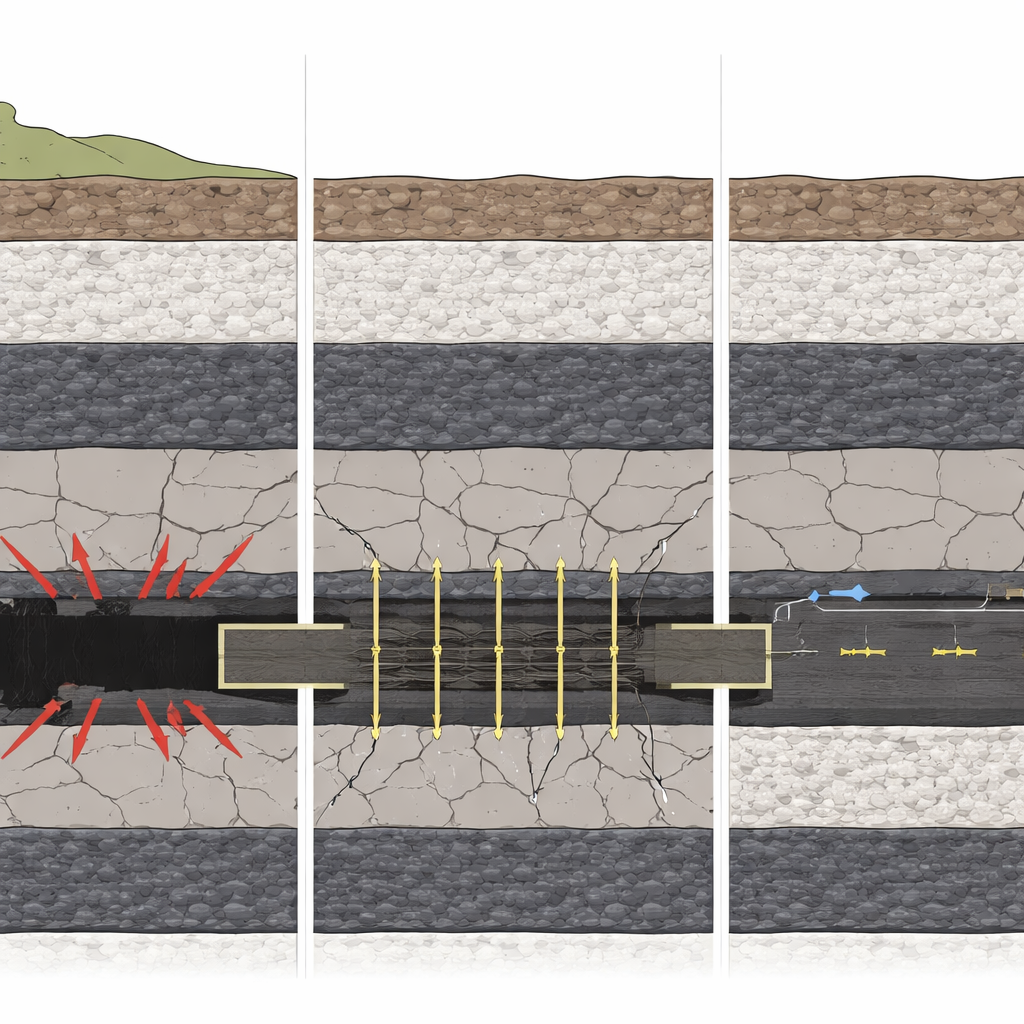
A mine with a troubled past
The Tangshan coal mine lies deep below a geologically complex region, where layers of rock are folded and cut by many faults. In August 2019, a major coal bump there killed seven miners. Investigators found that the disaster arose from several overlapping conditions: strong forces built up by the Earth’s crust, coal and rock that could store and suddenly release elastic energy, concentrated loads around leftover pillars of coal, and shaking from mining machines. Before the mine could reopen a key production area known as the 0250 working face, engineers had to prove that these dangerous conditions could be brought under control.
Letting the coal relax
The first step was to reduce the pent-up energy inside the coal seam itself. The team used two main tactics. They blasted selected sections of coal with explosives, deliberately cracking and weakening areas where stress was highest. They then drilled large-diameter holes along the sides of the tunnel, creating zones where the coal could break and deform in a controlled way. These "pressure relief" holes encourage the rock to fail gradually, bleeding off energy instead of allowing it to accumulate until it bursts. After this campaign of blasting and drilling, the remaining risk of a violent bump at the 0250 face was judged to be low—but only if the mine roof stayed stable as cutting resumed.
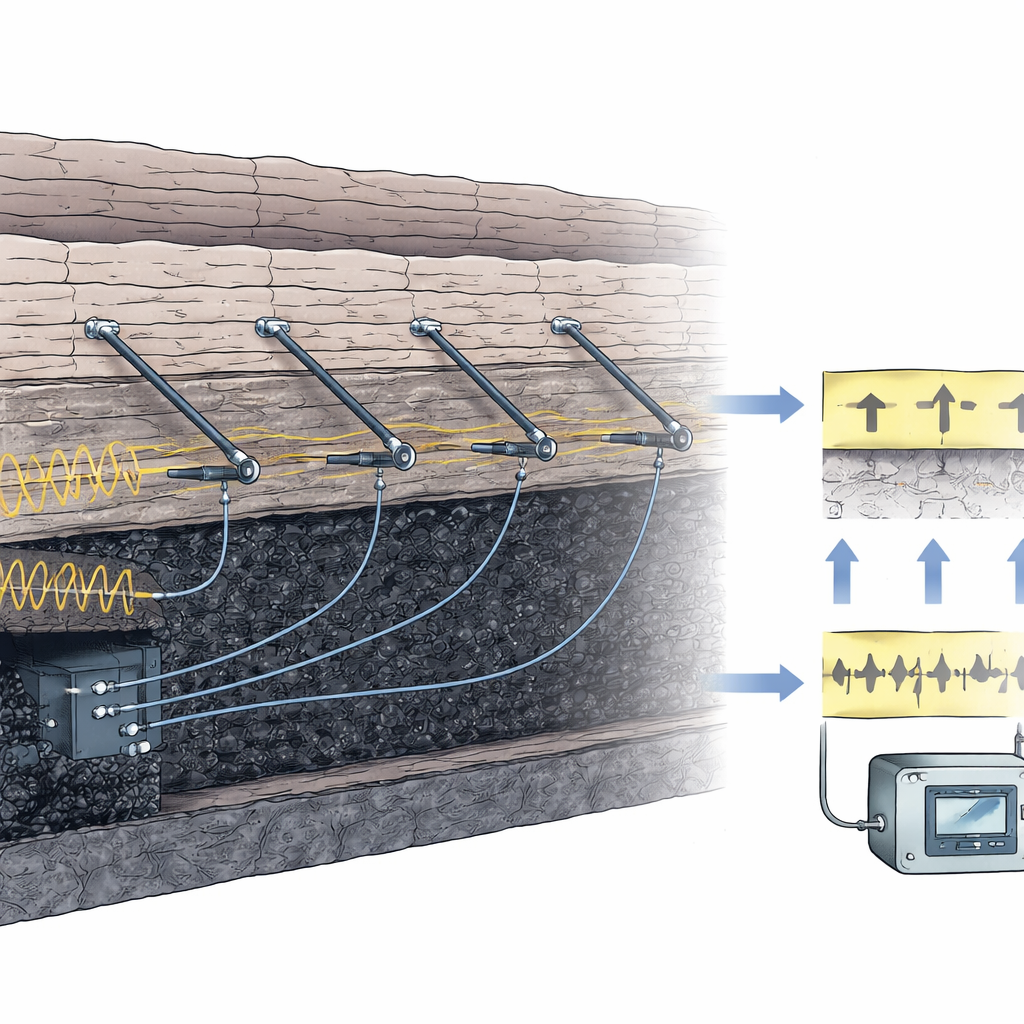
Listening to the mine roof move
The next challenge was to watch, in real time, how the rock above the tunnel responded as mining machines advanced. Existing methods mostly measured indirect signs, such as changing support loads or stress in boreholes, which can mix together slow background forces and sudden jolts. In this study, the authors brought in a vibration instrument normally used in the machinery and slope-monitoring industries. They bolted vibration sensors to cables anchored in the main roof rock and paired these with multi-point displacement meters threaded through 10‑meter drill holes. This setup allowed them to record both how fast the roof moved during brief shaking events and how far it slowly sagged over days.
What the numbers say about safety
Over several days of production, the mine face advanced only a few meters, but the instruments captured more than a thousand vibration records. After filtering out noise, the team focused on the vertical motion of the roof. Typical vibration speeds ranged from a few to about 15 centimeters per second, with each burst lasting only one to two seconds—consistent with normal mining activities like coal cutting and support movement. The largest quick up‑and‑down displacements, around 35 centimeters, occurred just a few meters ahead of the active cutting zone, an area not usually associated with coal bumps and likely tied to routine machinery actions. More importantly, in the high‑pressure zone 7 to 16 meters in front of the face—where dangerous bumps are most feared—the roof’s vertical motion stayed within about 10 centimeters. Long-term subsidence measurements from the displacement meters showed only small, gradual shifts, indicating that the layered roof rock remained intact and well supported.
Looking ahead underground
Taken together, the results suggest that the combination of pre‑mining pressure relief and continuous, direct monitoring of roof motion kept dynamic loads at the 0250 working face within a safe range. The coal had already shed much of its stored energy, and the remaining vibrations looked more like the steady breathing of a working mine than the sudden gasp of a disaster. The authors note that the vibration tools they used still need longer recording times and smarter data processing for daily mine use. Even so, the approach—deliberately weakening risky coal zones and then closely tracking how the rock actually moves—points toward a more transparent, measurable way to decide when deep mining can proceed without courting another deadly jolt.
Citation: Ma, S., Su, Y., Jia, D. et al. Prevention measures and monitoring technology of dynamic load in Tangshan coal mine after coal bump disaster. Sci Rep 16, 14593 (2026). https://doi.org/10.1038/s41598-026-45527-9
Keywords: coal bump, rockburst prevention, mine roof monitoring, vibration measurement, deep coal mining safety