Clear Sky Science · en
The role of expandable graphite particle size and microstructure on the dielectric and thermal properties of polyethylene-based composites
Turning Everyday Plastics into Smarter Materials
From smartphones to electric cars, modern gadgets need materials that can quietly handle both unwanted heat and stray electromagnetic waves. This study looks at a low cost way to upgrade a common plastic, polyethylene, by mixing in a special form of graphite so that the material can better guide heat and tame high frequency signals used in wireless technologies.
Why a Familiar Carbon Can Stand In for Graphene
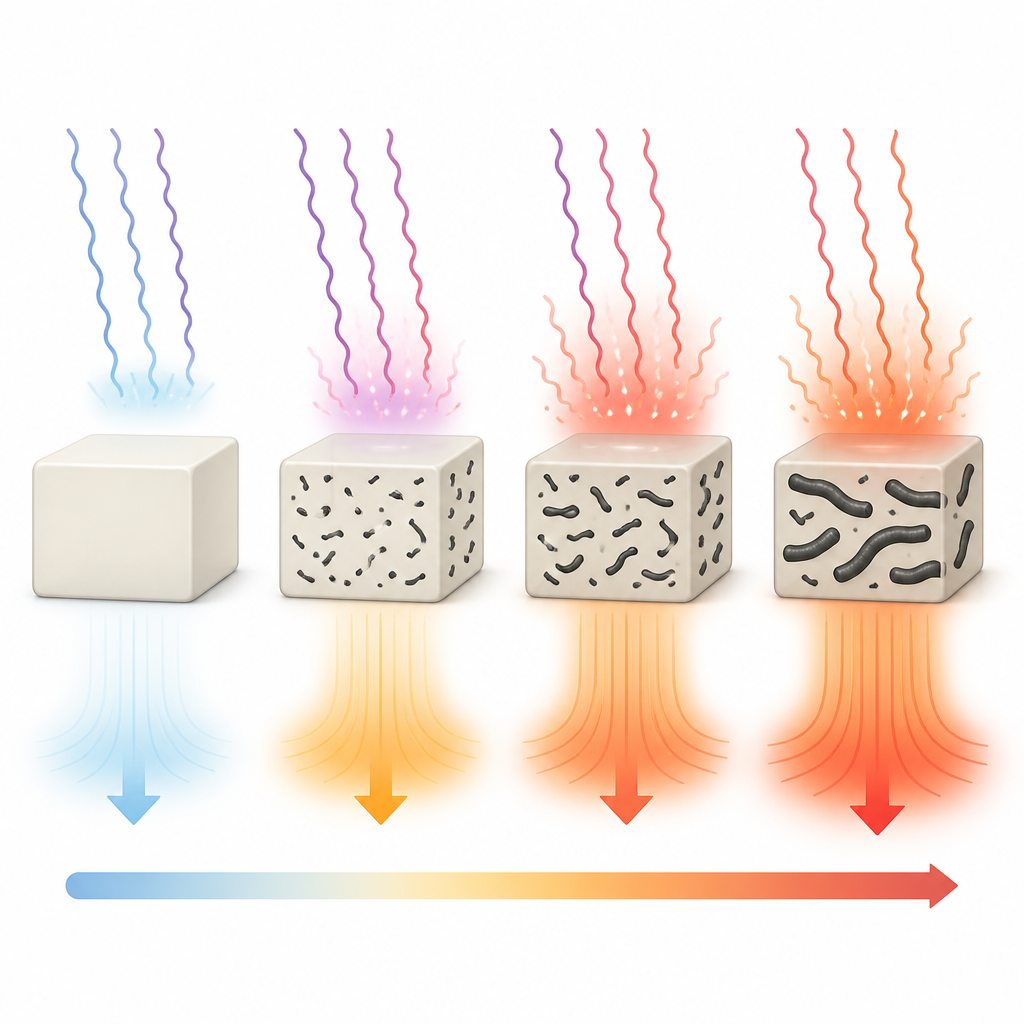
Graphene often makes headlines for its remarkable electrical and thermal properties, but it is still expensive and tricky to use on a large scale. The authors explore an easier alternative called expandable graphite, a form of graphite that puffs up into worm like shapes when heated. By blending this modified graphite into polyethylene, they aim to capture some of graphene’s useful behaviour without the high cost or processing hurdles, opening a path toward practical parts for consumer electronics and electrical insulation.
How Graphite Shape and Size Change the Inner Structure
The team compared three kinds of expandable graphite that swell to different degrees and therefore form short, medium, or long worm like structures after expansion. Using electron microscopes, X ray measurements and Raman spectroscopy, they showed that the shortest worms create the most even, tightly packed network inside the plastic, with few air gaps and less clumping. Longer worms tend to bunch together and leave more empty pockets, making the composite less uniform. Measurements of surface area and pore structure confirmed that the short worm graphite also has slightly higher internal porosity, meaning more tiny holes within each particle where air can sit and waves can bounce.
What Happens to High Frequency Electrical Behaviour
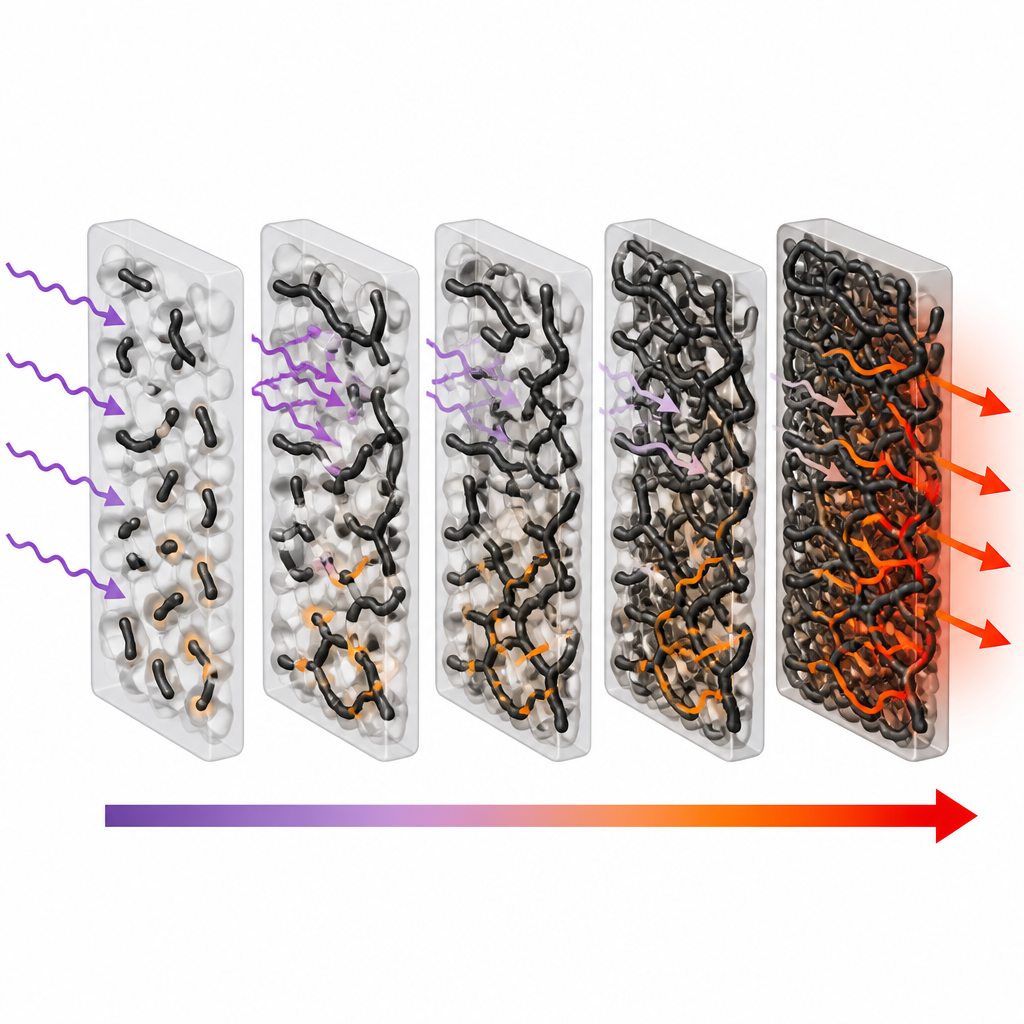
The researchers then probed how these different microstructures respond to microwave frequency electric fields, similar to those used in radar and wireless links. Composites with the shortest graphite worms showed the highest dielectric constant in the tested range, meaning they can store more electric energy, and they also displayed stronger energy loss at the interfaces between graphite and plastic. The authors argue that the many short, well connected worms act like countless tiny capacitors and obstacles, making incoming waves scatter and lose energy as heat. In contrast, composites built from longer worms and larger particles showed much lower dielectric response, because there are fewer contact points between graphite and plastic and more trapped air, which interrupts the conductive paths needed for effective interaction with microwaves.
Guiding Heat without Sacrificing Structure
Beyond electrical behaviour, the study examined how well the composites conduct heat. Across all three graphite types, adding more filler generally improved heat transport, as expected for a plastic mixed with a good heat conductor. However, the differences between short and long worms were less dramatic than for the dielectric response. Even so, the composite with short worms and 20 percent graphite by weight combined relatively high thermal conductivity with a very homogeneous structure and few voids. The authors also compared processing methods and found that hot pressing preserves the worm like shapes better than extrusion, which tends to break them, and this preservation correlates with stronger dielectric performance.
Practical Lessons for Future Devices
In simple terms, this work shows that not all graphite additives are equal, even when they are made of the same basic carbon. Shorter, more finely dispersed worm like particles give polyethylene a smoother internal landscape, more contact between carbon and plastic, and tiny pores that help microwaves get trapped and fade away. At the same time, these composites still move heat efficiently enough for use in electronic housings or circuit substrates. By carefully choosing the graphite expansion level and the processing route, engineers can tune a cheap, familiar plastic into a material that both manages heat and shapes high frequency signals, helping future devices run cooler and more reliably.
Citation: Łapińska, A., Panas, A.J., Grochowska, N. et al. The role of expandable graphite particle size and microstructure on the dielectric and thermal properties of polyethylene-based composites. Sci Rep 16, 15521 (2026). https://doi.org/10.1038/s41598-026-45520-2
Keywords: expandable graphite, polyethylene composites, dielectric properties, thermal conductivity, electronic materials