Clear Sky Science · en
Analyzing the share of amorphous silica in mixtures with different soil minerals using fourier transform infrared spectroscopy and PLSR chemometrics
Why the hidden sand in soil matters
Farmers and ecologists are increasingly interested in a special form of silicon in soils called amorphous silica. Though invisible to the naked eye, it helps soils hold water, keep their structure, and feed crops, making fields more productive and resilient to drought. Yet measuring how much of this helpful material is present usually requires slow and labor‑intensive chemical extractions. This study explores whether a quick light‑based method, borrowed from chemistry labs, can accurately measure amorphous silica in soil‑like mineral mixtures, paving the way for faster monitoring of soil health.
Shining light through soil powders
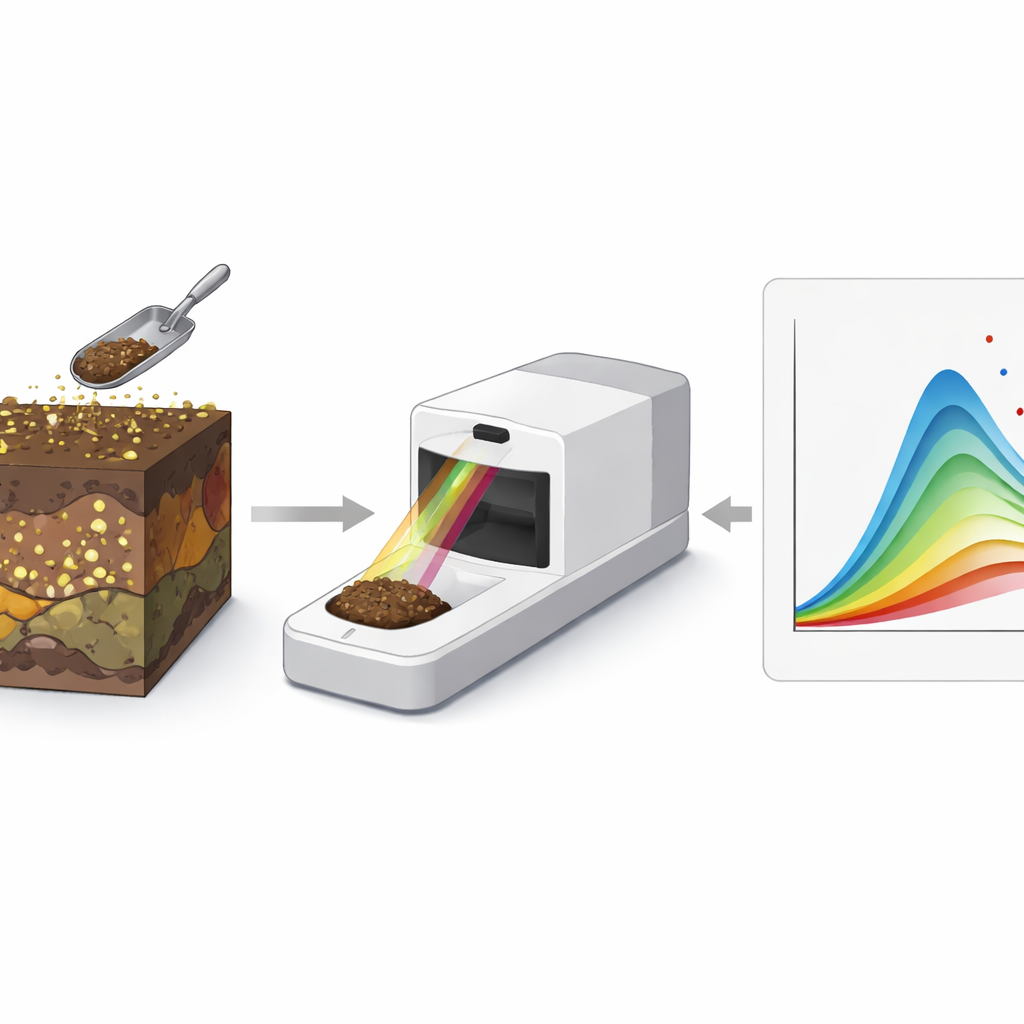
The authors focus on a technique called Fourier‑transform infrared spectroscopy, which sends infrared light through a powdered sample and records how different wavelengths are absorbed. Every mineral leaves a kind of spectral fingerprint, depending on how its atoms vibrate. The team examined a range of common soil components: clay minerals such as kaolin and montmorillonite, primary silicates like olivine and biotite, and several types of amorphous silica, including industrial products and plant‑derived forms. By comparing their fingerprints, they looked for repeating patterns that reliably distinguish amorphous silica from more ordered crystalline minerals.
Reading the fingerprints of soil minerals
The spectra showed three main regions where the minerals absorbed infrared light, each linked to vibrations of oxygen and silicon atoms or to water held in the structure. Amorphous silica from different sources shared very similar broad absorption bands, confirming that they form a recognizable group. In contrast, the clay minerals and primary silicates displayed sharper and more complex patterns that varied with their internal layer structure, degree of weathering, and chemical makeup. Even kaolin samples from three different sites, and montmorillonite from two different sources, showed subtle but consistent differences in band positions and intensities. This confirmed that the method is sensitive not only to mineral type but also to how and where it formed.
Mixing clays with helpful silica
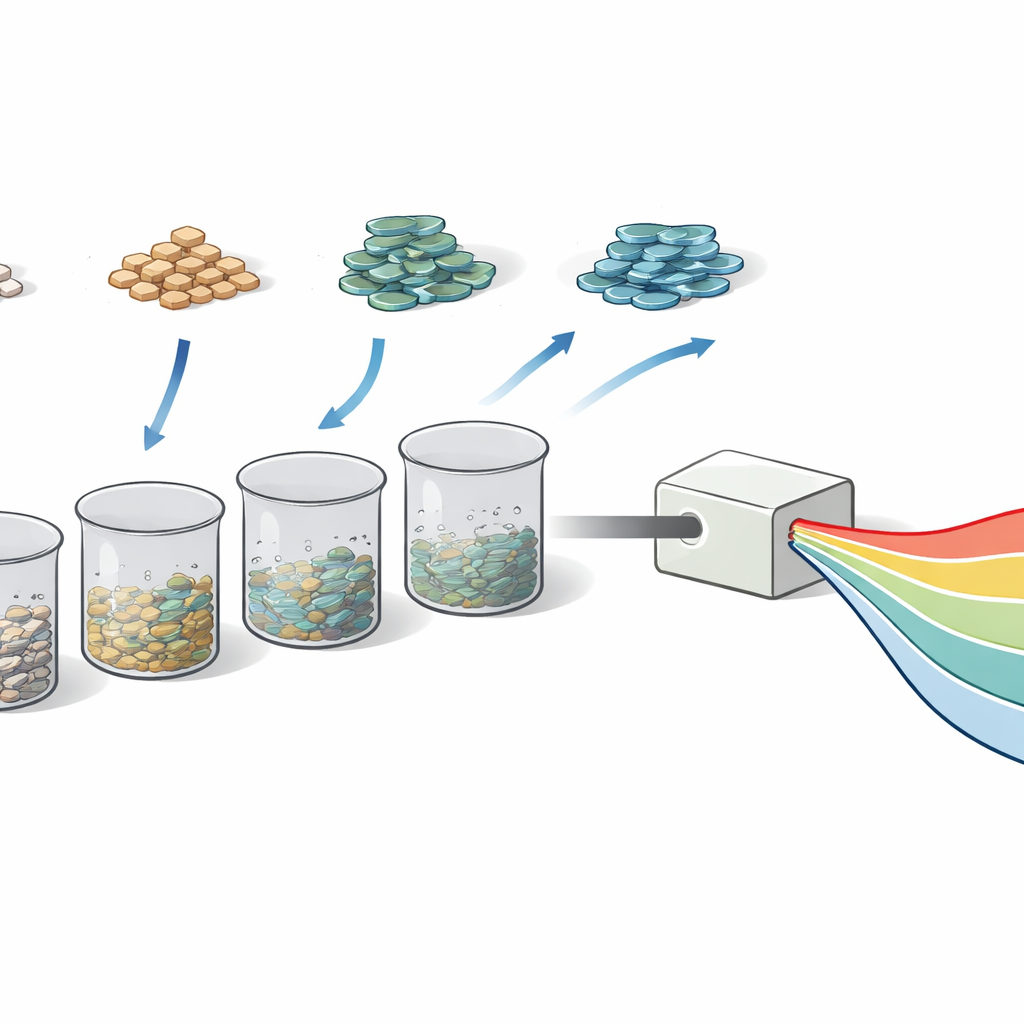
To move from pure minerals to realistic soil‑like conditions, the researchers created mixtures of amorphous silica with kaolin and with montmorillonite at precisely known proportions. They then recorded the infrared spectra of these blends. As more amorphous silica was added, bands characteristic of silica became stronger, while those typical of the clays weakened. In kaolin mixtures, the silica‑related changes were especially pronounced; in montmorillonite mixtures they were more subtle because the clay’s own fingerprint partly overlaps with that of amorphous silica. Nevertheless, the gradual shifts with changing mixture composition suggested that the spectra contained enough information to recover how much amorphous silica was present.
Letting statistics do the heavy lifting
Instead of trying to read hundreds of data points by eye, the team turned to a statistical tool called partial least‑squares regression. This method learns how variations in the spectra relate to known amounts of amorphous silica in a training set of samples and then uses that relationship to predict unknown samples. Using many two‑ and three‑component mixtures, the model achieved very high agreement between predicted and actual amorphous silica contents, with only small average errors of a few percentage points. It performed well not only on the mixtures used to build the model but also on independent test mixtures, including a more complex blend of two clays plus amorphous silica.
What this means for future soils
In everyday terms, the study shows that it is possible to point an infrared instrument at a powdered soil mineral mixture and, with the help of modern data analysis, get a quick and reasonably precise estimate of how much beneficial amorphous silica it contains. While the work was done on relatively simple, well‑defined mixtures, it lays the foundation for applying the same approach to real soils, which contain more minerals and greater natural variability. If successfully extended, this light‑based method could give farmers and soil scientists a rapid, cost‑effective way to track a key ingredient of healthy, drought‑resilient soils without the need for slow chemical tests.
Citation: Hunfeld, O., Ellerbrock, R.H., Stein, M. et al. Analyzing the share of amorphous silica in mixtures with different soil minerals using fourier transform infrared spectroscopy and PLSR chemometrics. Sci Rep 16, 9969 (2026). https://doi.org/10.1038/s41598-026-45511-3
Keywords: amorphous silica, soil minerals, infrared spectroscopy, chemometric modelling, soil health