Clear Sky Science · en
Integrative multi-omics analysis identified FUT9 and MS4A3 as novel immune-phenotype and prognosis biomarkers for colorectal cancer and analyze the role of FUT9 in oncoimmunology
Why this research matters to patients
Colorectal cancer is common, yet people with seemingly similar tumors can respond very differently to modern immunotherapies. This study uses big-data biology to uncover why some colorectal tumors are more visible to the immune system than others, and pinpoints two genes, FUT9 and MS4A3, that help predict how a patient might fare and how their tumor might respond to immune-based treatments.
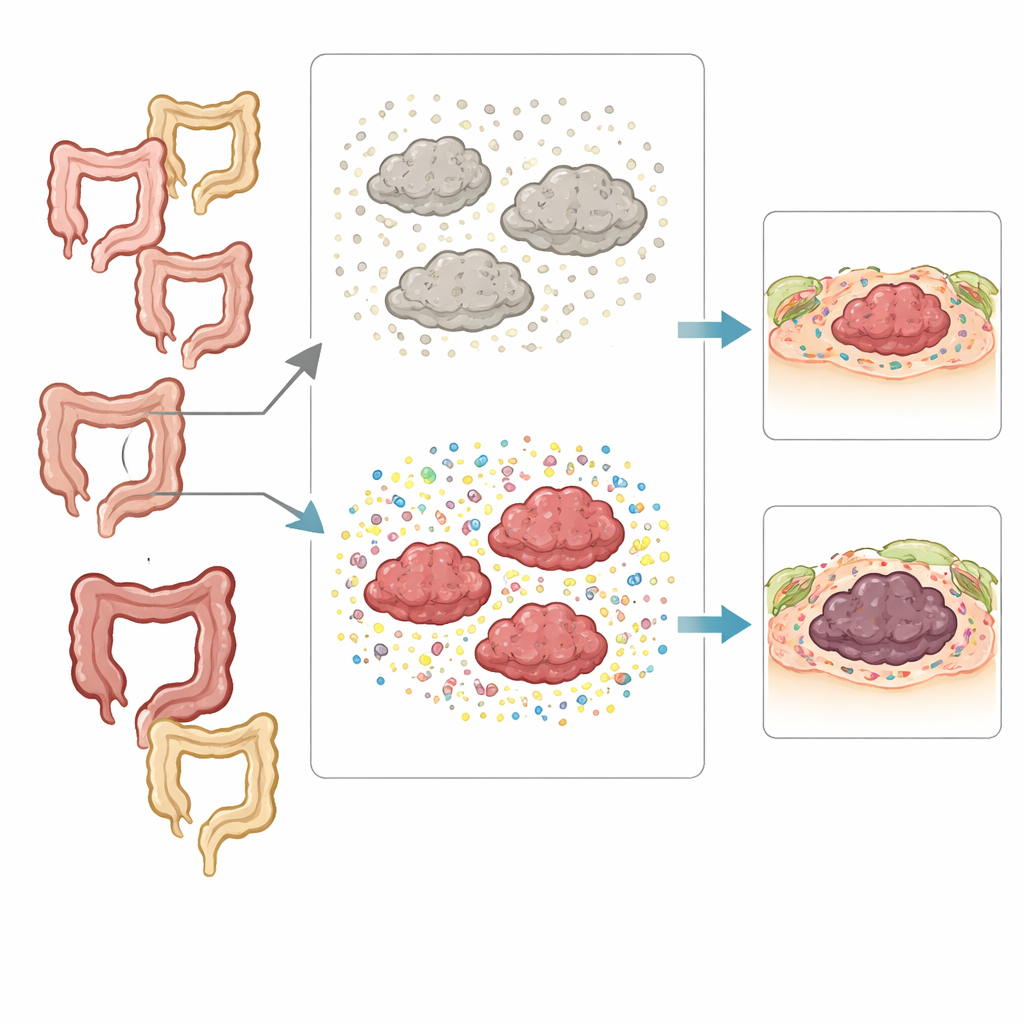
Different kinds of tumor–immune neighborhoods
The authors began by examining large public datasets of colorectal cancer, which include gene activity, DNA changes and clinical outcomes. Instead of looking only at tumor cells, they focused on the mix of immune cells infiltrating each tumor, such as killer T cells, helper T cells, natural killer cells and macrophages. Using computational clustering, they grouped tumors into two main classes and five finer subtypes that ranged from “cold” tumors with few active immune cells to “hot” tumors packed with aggressive immune cells capable of attacking cancer. These immune patterns were consistent across several independent patient cohorts, suggesting they reflect real biological differences rather than noise.
Peering into the genetic wiring of immune types
To understand what drives these contrasting immune landscapes, the team compared tumors with the lowest immune attack to those with the strongest. They integrated multiple layers of information: standard gene expression, DNA mutations, gains and losses of DNA segments and chemical tags on DNA known as methylation. They also looked at alternative splicing, a process that allows a single gene to produce different message variants, and at regulatory networks involving microRNAs and long noncoding RNAs. This integrative “multi-omics” approach highlighted dozens of genes whose behavior consistently differed between immune-poor and immune-rich tumors.
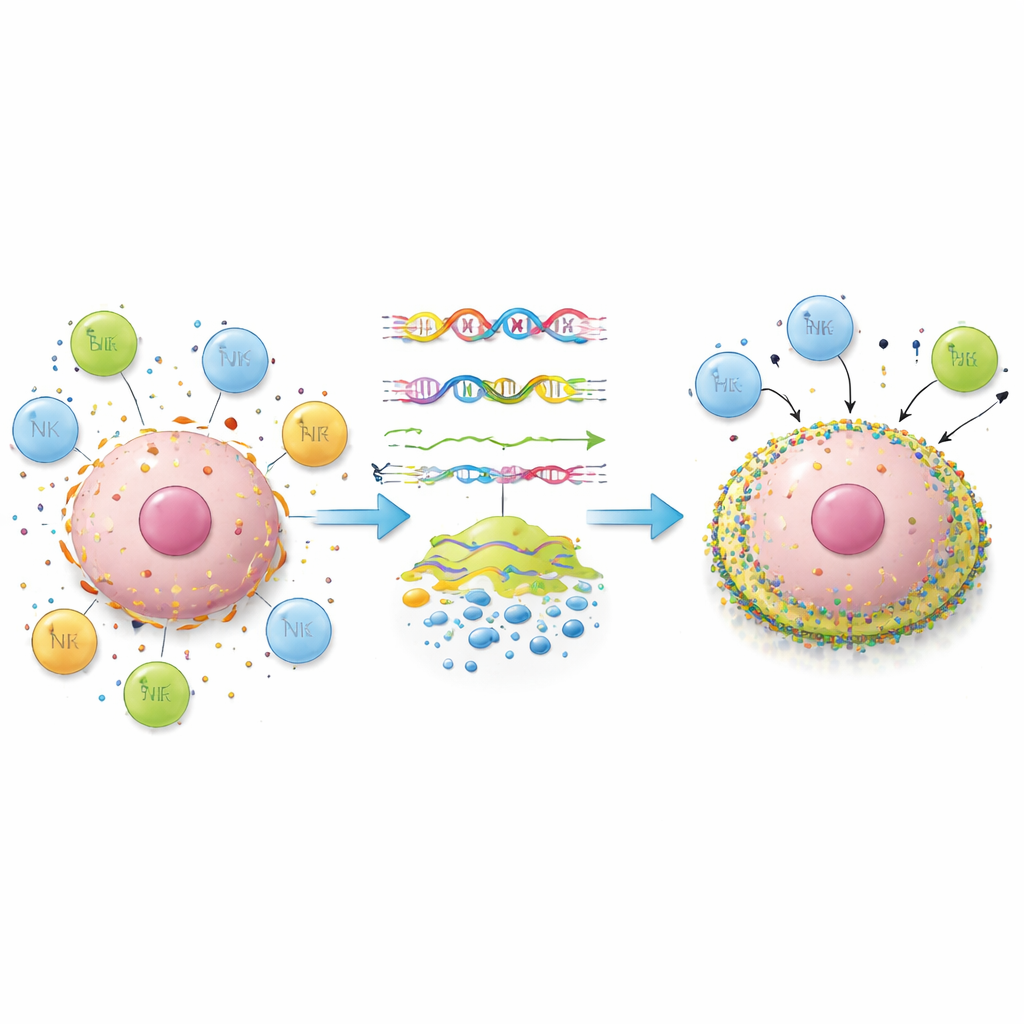
FUT9 and MS4A3 as warning and safety lights
From this wide net, two genes emerged as especially informative: FUT9 and MS4A3. By combining their activity into a simple risk score, the researchers could divide patients into high- and low-risk groups, with the high-risk group showing clearly worse overall survival. The score also remained predictive even when accounting for age, tumor stage and other clinical factors, and it worked in a separate validation dataset. Across many cancer types, high FUT9 often tracked with poorer outcomes, while higher MS4A3 in colorectal cancer was linked to better survival and stronger immune presence in tumors.
How FUT9 may help tumors hide
To move beyond correlations, the team tested FUT9 directly in colorectal cancer cell lines. They found that FUT9 levels were higher in tumor samples than in nearby normal tissue. When they artificially raised FUT9 in cancer cells and then exposed them to highly cytotoxic T cells, the tumor cells became more resistant to being killed and showed reduced signs of cell death. Conversely, lowering FUT9 made cancer cells more vulnerable. These experiments suggest that FUT9 helps tumor cells evade immune attack, contributing to an immunosuppressive environment despite the presence of immune cells.
What this means for future care
Overall, the study shows that carefully reading the molecular “fingerprints” of colorectal tumors can reveal which cancers are likely to be immunologically cold or hot, and that FUT9 and MS4A3 are key markers of this state. For patients, this points toward future blood or tissue tests that could better estimate prognosis and guide decisions about immunotherapy. It also positions FUT9 as a potential target for new drugs aimed at stripping tumors of their immune camouflage so that the body’s own defenses can work more effectively.
Citation: Zhu, M., Dong, H., Hu, Y. et al. Integrative multi-omics analysis identified FUT9 and MS4A3 as novel immune-phenotype and prognosis biomarkers for colorectal cancer and analyze the role of FUT9 in oncoimmunology. Sci Rep 16, 14596 (2026). https://doi.org/10.1038/s41598-026-45508-y
Keywords: colorectal cancer, tumor immunity, biomarkers, FUT9, MS4A3