Clear Sky Science · en
Functional characterization of Pseudomonas soli VMAP1 as a biocontrol agent against Xanthomonas vesicatoria in tomato plants
Friendly Microbes Helping Tomato Plants
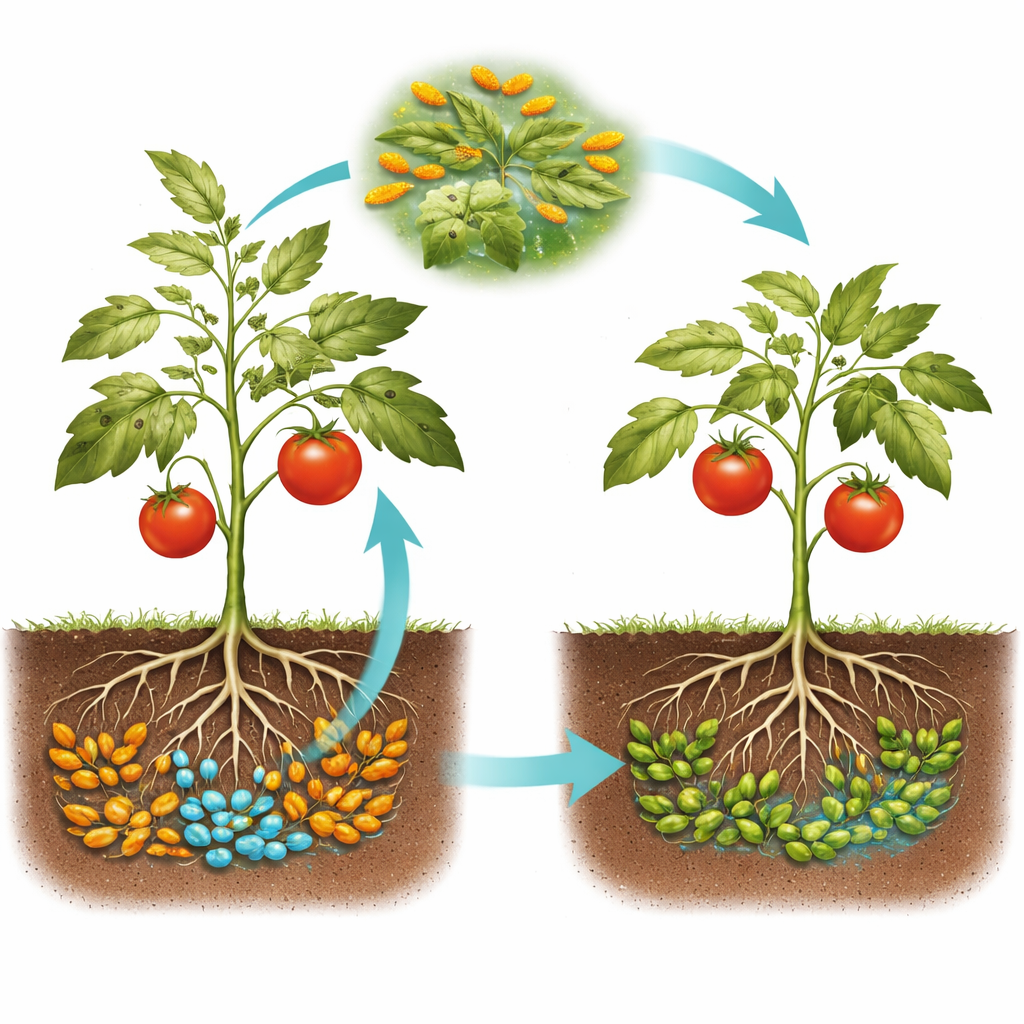
Tomato growers around the world struggle with a leaf disease called bacterial spot, which can ruin up to half of a harvest in warm, humid seasons. This study explores whether a naturally occurring soil bacterium, Pseudomonas soli VMAP1, can help protect tomato plants in a gentler, more sustainable way than traditional copper-based pesticides. Instead of trying to kill the harmful bacteria outright, the researchers ask if this helpful microbe can disarm the pathogen and rally the plant’s own defences.
A New Ally from Tomato Roots
The beneficial bacterium VMAP1 was originally found living in the soil clinging to healthy tomato roots. To understand what it can do, the team first decoded its entire genetic blueprint. They confirmed that VMAP1 truly belongs to the species Pseudomonas soli, a group known to produce many useful natural chemicals but still poorly studied. Its genome turned out to be rich in genes linked to environmental flexibility, movement, and the production of bioactive compounds, all traits that can help a microbe survive in fields and interact closely with plants.
How This Bacterium Survives and Fights
In laboratory tests, VMAP1 grew well over a wide range of temperatures, acidity, and salt levels, showing it can handle changing outdoor conditions. Under the microscope, the cells carried whip-like tails and other structures that let them swim, swarm, and crawl across surfaces, which may help them reach roots and leaves. The strain released tiny outer membrane vesicles—nanosized bubbles that can ferry molecules—and produced several potent natural products, including hydrogen cyanide, a family of soap-like compounds called xantholysins, and small ring-shaped molecules called pseudopyronines. These substances are known in other bacteria to damage microbial membranes, break up slimy biofilms, and sometimes trigger plant immune responses.
Disarming the Pathogen Rather Than Killing It
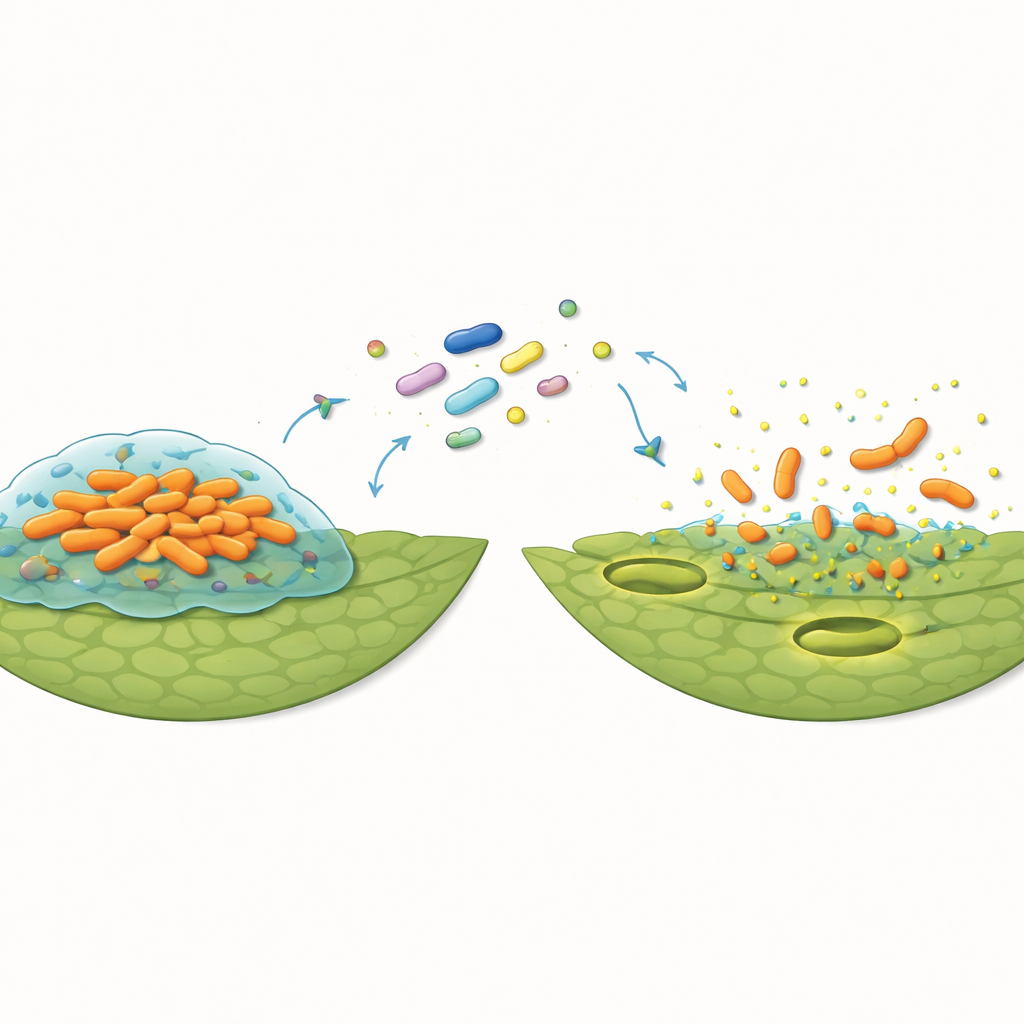
The tomato leaf disease is caused by the bacterium Xanthomonas vesicatoria, which enters through pores on the leaf surface and builds stable biofilms that help it colonize the plant. Surprisingly, when the researchers exposed this pathogen to concentrated culture fluid from VMAP1, its growth was not stopped, either in test tubes or on tomato leaves. Instead, the VMAP1-derived metabolites changed the pathogen’s behaviour: they made it more mobile but less able to form thick, well-organized biofilms. The usual sticky sugar coating that helps build these biofilms was not reduced, suggesting that VMAP1’s compounds interfere with other parts of the structure or with how the cells attach to the leaf.
Turning On the Plant’s Own Defences
The same VMAP1 metabolites also affected the plants directly. When applied to model plants and to tomato seedlings, extracts containing xantholysins and pseudopyronines triggered callose deposition, a kind of reinforcing material that plants lay down in their cell walls to block invading microbes. On tomato leaves, the mixtures caused the tiny breathing pores, called stomata, to close in a way comparable to a natural plant hormone that controls this response. Because stomata are major entry points for bacterial pathogens, tightening this gateway can slow or prevent infection even when the pathogen cells are still alive and present on the surface.
What This Means for Sustainable Farming
Altogether, the findings show that Pseudomonas soli VMAP1 helps tomato plants by weakening the disease bacterium’s ability to settle and spread, while simultaneously switching on the plant’s own protective barriers. Previous greenhouse work had already shown that VMAP1-derived products can cut disease severity by about three quarters. This study explains why: rather than acting like a classic antibiotic that kills on contact, VMAP1 works through “anti-virulence” and immune-boosting strategies. Such an approach may put less pressure on pathogens to evolve resistance and could become part of safer, longer-lasting tools for managing bacterial spot in tomato fields.
Citation: Galván, T.E., Conforte, V.P., Setubal, J.C. et al. Functional characterization of Pseudomonas soli VMAP1 as a biocontrol agent against Xanthomonas vesicatoria in tomato plants. Sci Rep 16, 10586 (2026). https://doi.org/10.1038/s41598-026-45489-y
Keywords: biocontrol, tomato disease, beneficial bacteria, plant immunity, sustainable agriculture