Clear Sky Science · en
Deciphering the mechanisms underlying the dual-target inhibition of carbohydrate-digesting and neurodegenerative enzymes by Syzygium aromaticum (L.) Merr. & L.M. via molecular docking and dynamics simulations
Why a kitchen spice matters for brain and blood sugar health
Many people know clove as a warm, fragrant spice for baking, but scientists are discovering that it may also influence two of today’s biggest health concerns: type 2 diabetes and Alzheimer’s disease. This study explores whether natural compounds in clove can act on both blood sugar control and brain function at the same time, using a mix of lab experiments and computer simulations to understand how these plant molecules work in the body. 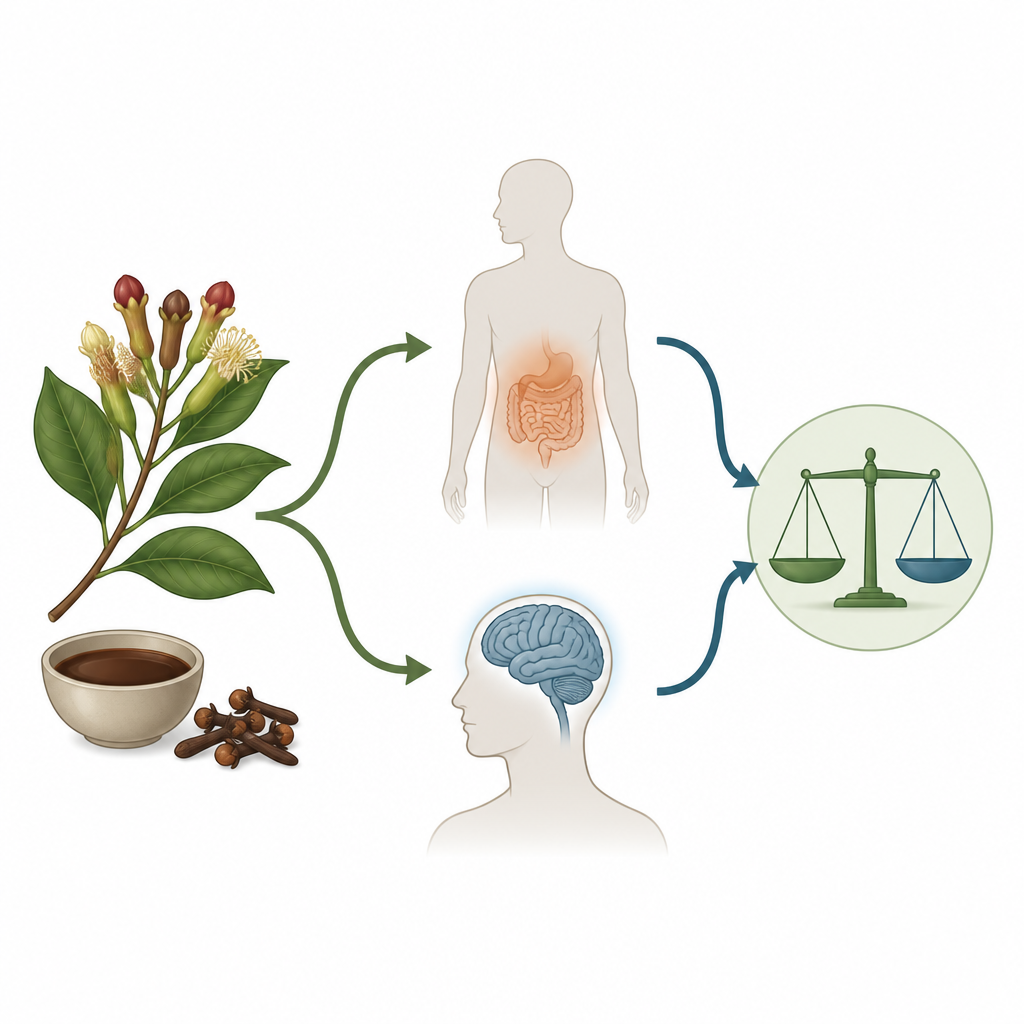
Two linked diseases in need of better answers
Type 2 diabetes and Alzheimer’s disease are usually treated as separate problems, yet they often occur together. Long term high blood sugar, insulin resistance, and inflammation appear to increase the risk of memory loss and other forms of dementia. Current medicines tend to tackle only one issue at a time, and they mostly ease symptoms rather than address the underlying links between these conditions. This has led researchers to look for multitasking treatments, especially from plants that may offer several helpful effects with fewer side effects.
Clove extract packed with active plant chemicals
The team focused on Syzygium aromaticum, better known as clove, a traditional spice rich in plant chemicals called flavonoids. They prepared a flavonoid rich extract from clove buds and analyzed it using a separation technique that revealed eight major compounds, including apigenin, myricetin, and quercetin. These flavonoids have been studied for antioxidant, anti inflammatory, and nerve protecting effects. By isolating and characterizing this single, well defined clove extract, the researchers could more clearly link its ingredients to specific biological actions.
Testing clove against sugar and brain related enzymes
Next, the scientists asked how the clove extract affected key enzymes involved in blood sugar control and brain chemistry. In test tube experiments, the extract slowed the activity of two digestive enzymes, alpha amylase and alpha glucosidase, which are responsible for breaking starch into glucose. It also reduced the activity of acetylcholinesterase and butyrylcholinesterase, enzymes that clear a messenger molecule important for memory, and dampened monoamine oxidase, which helps regulate mood related brain chemicals. While the extract was generally weaker than standard drugs at blocking the sugar enzymes, it matched or slightly outperformed a reference drug at blocking one of the memory related enzymes, suggesting meaningful activity on brain targets. 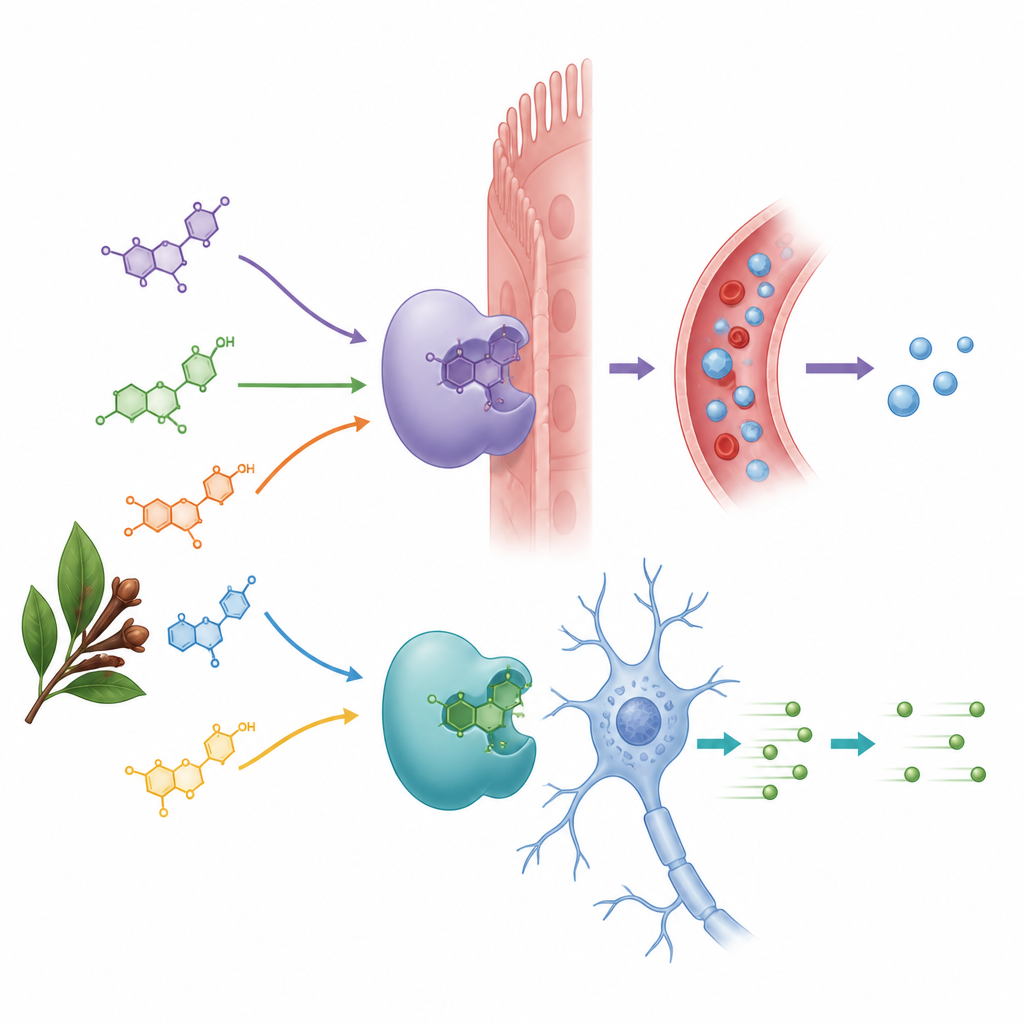
Using computers to see how clove molecules fit their targets
To move beyond these basic tests, the researchers turned to computer tools that let them visualize how clove flavonoids might physically interact with the enzymes. They virtually “docked” each compound into detailed three dimensional models of human enzymes related to starch digestion and brain signaling. Apigenin, myricetin, and quercetin consistently showed strong, stable binding at crucial pockets on several enzymes, often close to the performance of current drugs. Long computer simulations over tens of nanoseconds suggested that these plant molecules stay snugly in place, forming networks of noncovalent bonds that help them hold their position and potentially block enzyme activity in a real biological setting.
From plant compounds to future multitarget medicines
The researchers also simulated how easily these flavonoids might behave as drugs inside the body, checking properties related to absorption, distribution, and overall “drug likeness.” Apigenin scored best, with myricetin and quercetin showing acceptable but less ideal profiles, meaning they might still be useful with improved formulations. Taken together, the lab tests, computer docking, and simulations indicate that these clove compounds can act on multiple enzymes tied to both blood sugar spikes and brain decline, supporting the idea that one set of plant molecules could influence two interconnected diseases.
What this could mean for everyday health
For non specialists, the practical message is that clove contains natural chemicals that may help moderate sugar handling in the gut while also supporting brain signaling linked to memory. The study does not show that eating clove will treat diabetes or Alzheimer’s disease, but it does provide scientific backing for clove as a promising source of new multitarget drugs. Before any such treatment reaches the clinic, researchers will need to test individual clove compounds in animals and, eventually, in humans. Still, this work highlights how familiar foods and spices can guide the design of future medicines that tackle complex diseases on more than one front at a time.
Citation: Ojo, O.A., Gyebi, G.A., Iyobhebhe, M. et al. Deciphering the mechanisms underlying the dual-target inhibition of carbohydrate-digesting and neurodegenerative enzymes by Syzygium aromaticum (L.) Merr. & L.M. via molecular docking and dynamics simulations. Sci Rep 16, 14782 (2026). https://doi.org/10.1038/s41598-026-45482-5
Keywords: Syzygium aromaticum, flavonoids, type 2 diabetes, Alzheimer’s disease, enzyme inhibition