Clear Sky Science · en
Study on the relationship between coagulation function, homocysteine, serum oxidative stress and sudden deafness and its clinical implications
When hearing vanishes overnight
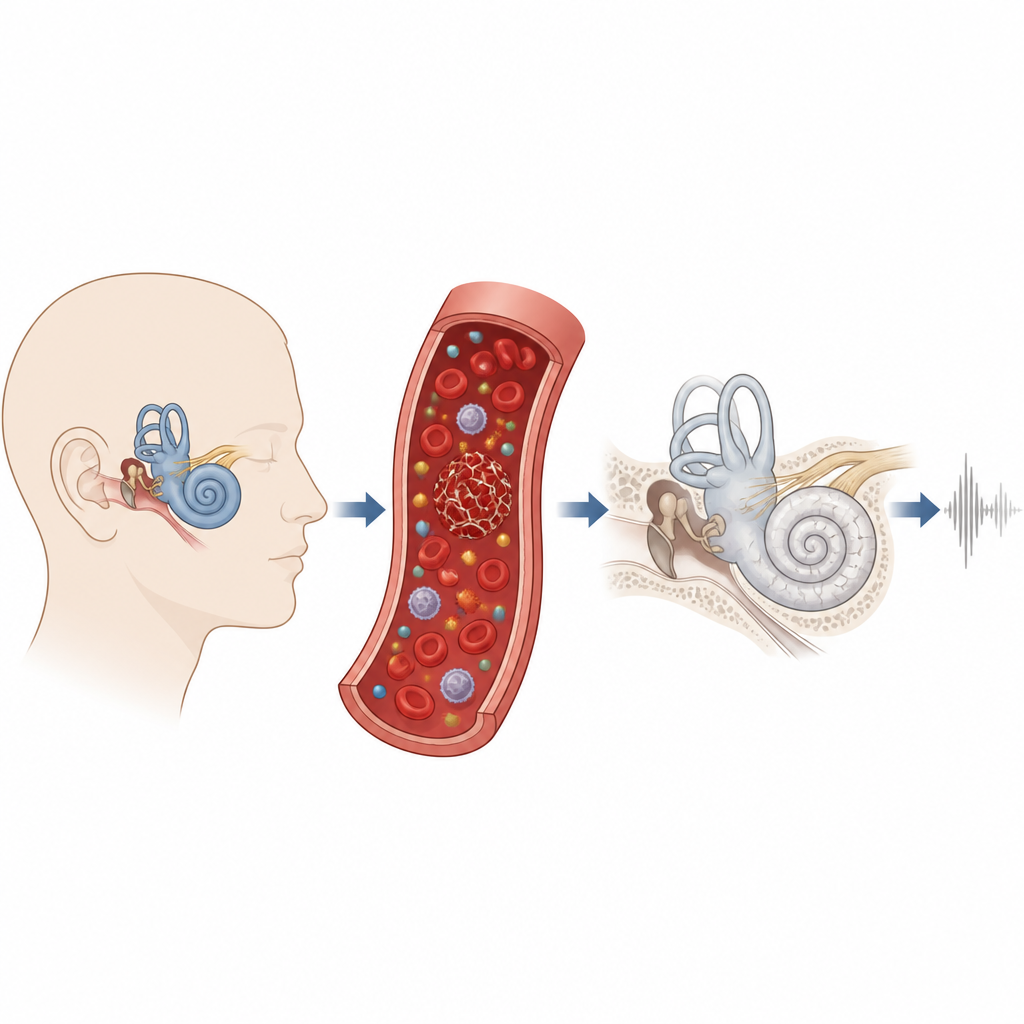
Waking up to find that one ear has suddenly gone quiet can be frightening, yet in many cases doctors still do not know why it happens. This study looks inside the bloodstream of people with sudden sensorineural hearing loss, a rapid drop in hearing in one ear, to see whether simple blood tests can help flag who is at risk and guide earlier care.
A closer look at sudden hearing loss
Sudden sensorineural hearing loss often strikes within hours, without a clear trigger. People may notice muffled sound, ringing in the ear, a feeling of fullness, or dizziness. Because the tiny artery that feeds the inner ear has no backup routes, even brief problems with blood flow or vessel health may damage the sound-sensing cells. Earlier work hinted that blood clotting, a blood chemical called homocysteine, and wear and tear from reactive molecules might all play a part, but it was unclear how these factors fit together or how useful they might be in diagnosis.
How the study was carried out
The researchers compared 95 adults with recent sudden hearing loss in one ear to 95 healthy people of similar age, sex, and body weight. They drew fasting blood samples and measured standard clotting factors, levels of homocysteine and blood fats, and several markers linked to damage from reactive oxygen molecules and the body’s defenses against that damage. By using statistical tools, they tested which measurements were linked to the illness and whether combinations of them could distinguish patients from healthy volunteers.
What the blood revealed
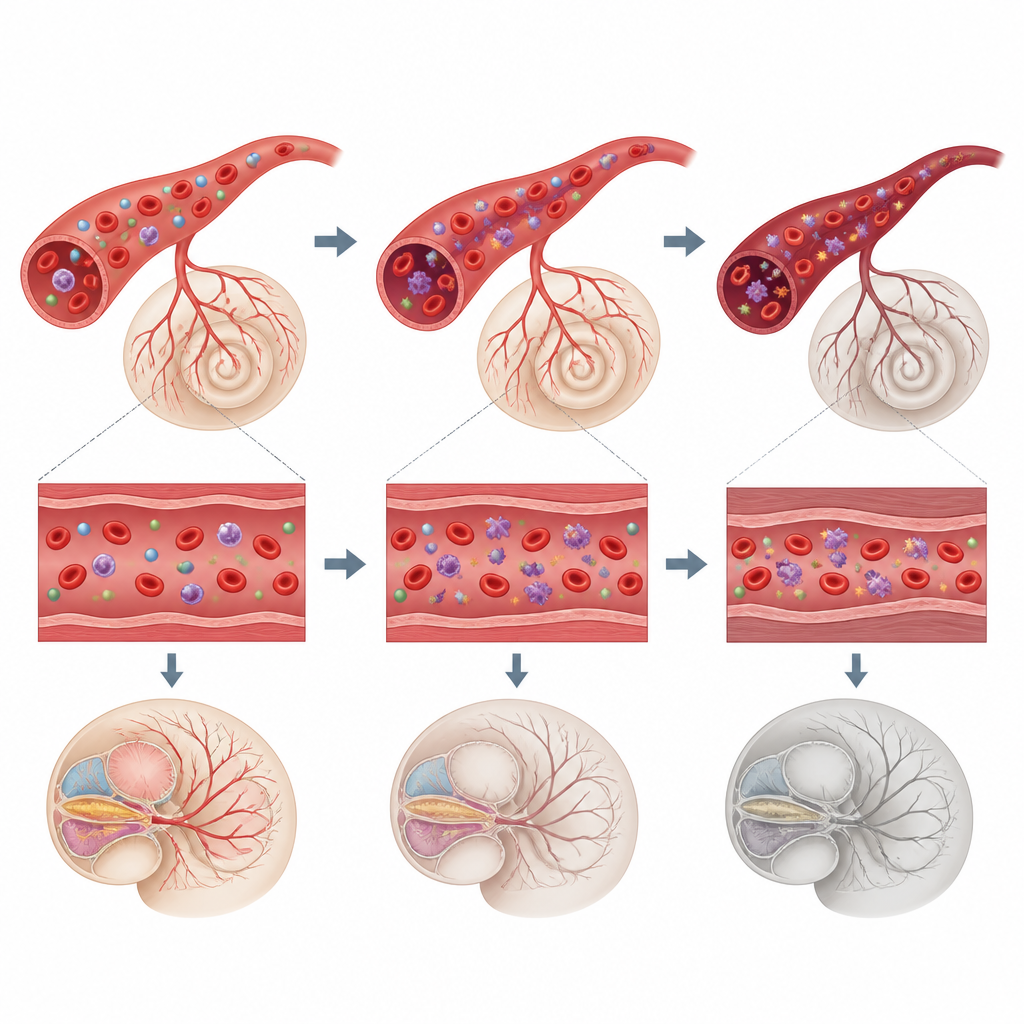
People with sudden hearing loss had a different blood profile from healthy controls. One clotting protein, fibrinogen, tended to be slightly lower, while D-dimer, a breakdown product of clots, was much higher, hinting at active clot formation and clean-up in small vessels. Homocysteine and several blood fats were raised, fitting with a picture of strained vessel lining and sluggish blood flow. At the same time, protective nitric oxide and the antioxidant enzyme superoxide dismutase were reduced, while endothelin, a strong vessel-tightening compound, was higher. Together these changes point to narrower, more fragile inner ear vessels exposed to more oxidative stress.
Finding the most telling markers
When the team accounted for multiple factors at once, three stood out. People with higher fibrinogen and higher superoxide dismutase were less likely to have sudden hearing loss, suggesting a protective role in keeping tiny vessels open and limiting oxidative injury. In contrast, higher homocysteine was linked with a much greater chance of illness. Each marker alone showed fair to strong ability to separate patients from controls when tested as a diagnostic signal. However, when the three were combined into a single model, the accuracy rose further, meaning the trio together captured the disease pattern better than any single test.
What this could mean for patients
Although this was an observational study and cannot prove cause and effect, it supports the idea that sudden hearing loss is closely tied to blood vessel health, clotting balance, and oxidative stress in the inner ear. For a layperson, the key message is that what happens in the bloodstream can rapidly influence hearing. A simple panel that measures fibrinogen, homocysteine, and an antioxidant enzyme in blood could one day help doctors spot people with a vascular form of sudden hearing loss sooner and tailor treatment. Larger, long-term studies will be needed before these tests become routine, but they offer a promising roadmap toward earlier diagnosis and more personalized care.
Citation: Wang, B., Huang, F. & Jiang, Y. Study on the relationship between coagulation function, homocysteine, serum oxidative stress and sudden deafness and its clinical implications. Sci Rep 16, 15384 (2026). https://doi.org/10.1038/s41598-026-45480-7
Keywords: sudden hearing loss, homocysteine, blood clotting, oxidative stress, inner ear circulation