Clear Sky Science · en
Palmatine ameliorates MASLD in type 2 diabetes by modulating hepatic apoptosis and inflammation
Why this matters for people with diabetes
Many people living with type 2 diabetes quietly develop a fatty, inflamed liver that can progress to scarring, liver failure, and heart problems. This condition, now called metabolic dysfunction-associated steatotic liver disease (MASLD), has no widely accepted, targeted drug treatment. This study explores whether palmatine—a plant-derived compound long used in traditional medicine—can protect the liver in diabetes, and uses modern data science plus animal experiments to uncover how it works deep inside liver cells.
A growing problem inside the liver
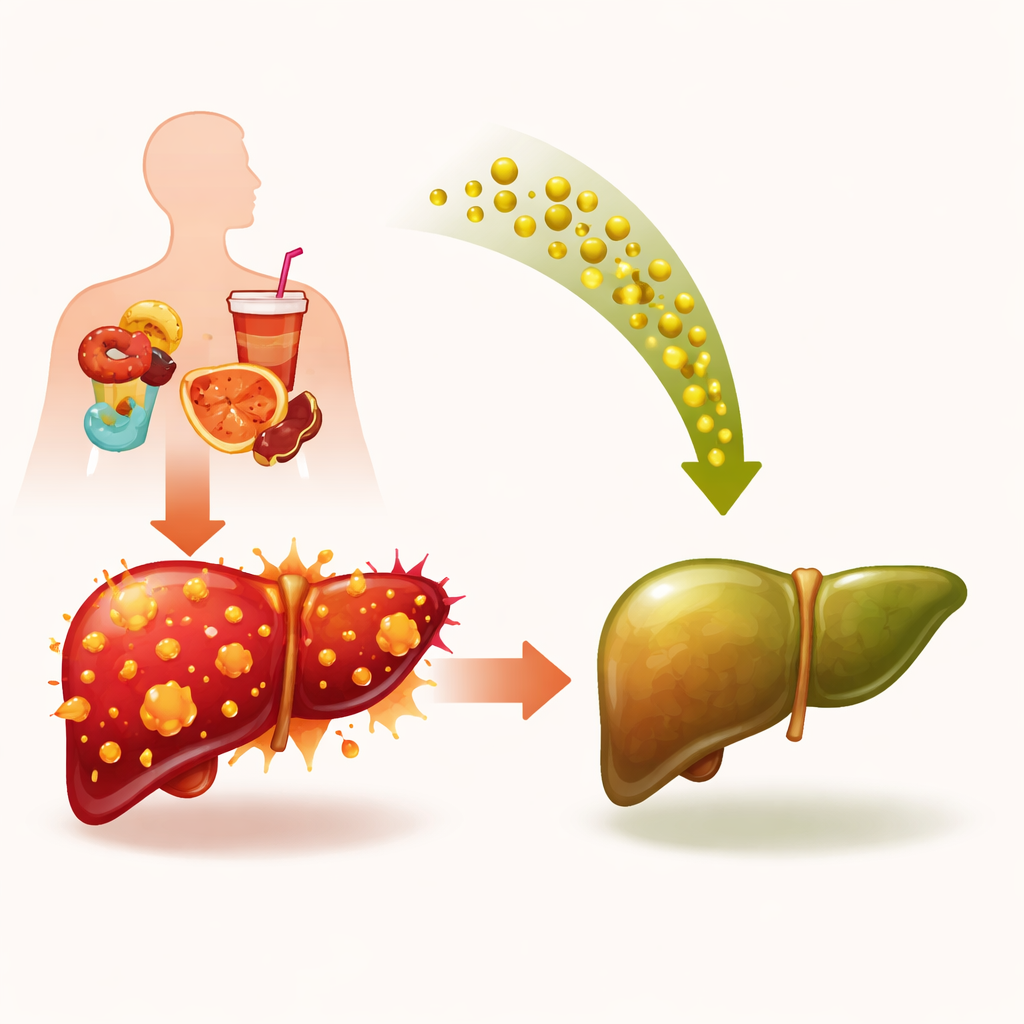
Type 2 diabetes and MASLD often travel together. High blood sugar and excess fat overload the liver, filling liver cells with fat droplets, disrupting their powerhouses, and triggering low-level, chronic inflammation. Over time, this can lead to cell death, scarring, and a higher risk of cirrhosis, liver cancer, and cardiovascular disease. Current drugs usually hit just one pathway and often fall short because the disease is driven by many overlapping processes—abnormal metabolism, inflammation, and tissue remodeling all feeding into one another.
A plant molecule with many jobs
Palmatine is an alkaloid found in medicinal plants such as Coptis and Phellodendron. Earlier work showed that it can improve blood sugar control, reduce fat build-up in the liver, and dampen inflammatory signals. But these results came mostly from isolated experiments, leaving unclear how all of its effects fit together in the living liver. The authors set out to build a more complete picture by combining bioinformatics—large-scale analysis of genes and proteins—with single-cell sequencing and controlled tests in rats that mimicked diabetes-linked MASLD.
Finding the liver’s key switches
First, the team used several public databases to predict which human proteins might interact with palmatine and which are tied to MASLD and cell death. They then overlaid these predictions with real gene activity data from liver tissue samples. Using ten different machine learning models, they repeatedly asked which genes best separated diseased from healthy samples. From hundreds of candidates, five "hub" proteins emerged as central switches in the diseased liver: ADRB2, BCL3, EGR1, FOS, and MAP3K8. Computer docking suggested palmatine could bind strongly to all five. Single-cell analysis of human liver data then mapped where these switches sit—mainly in immune cells, bile duct cells, and liver lining cells—showing that they occupy strategic positions in the liver’s inflammatory and cell death networks.
Testing palmatine in a living disease model
To see what this means in a whole organism, the researchers created a rat model of MASLD combined with type 2 diabetes using a high-fat diet and a diabetes-inducing chemical. These rats developed high blood sugar and insulin resistance, unhealthy cholesterol and triglyceride levels, and clear signs of liver injury: elevated liver enzymes in the blood, oxidative stress, heavy fat accumulation in liver cells, and fibrous scarring. When treated with palmatine for four weeks, rats showed lower blood sugar and blood fats, improved liver enzyme levels, less inflammation and oxidative damage, fewer fat droplets in liver tissue, and milder fibrosis. At the molecular level, palmatine sharply reduced the levels of the five hub proteins and also lowered key executioners of programmed cell death, including caspase-3, caspase-8, and the pore-forming protein GSDME.
How palmatine calms cell death and inflammation
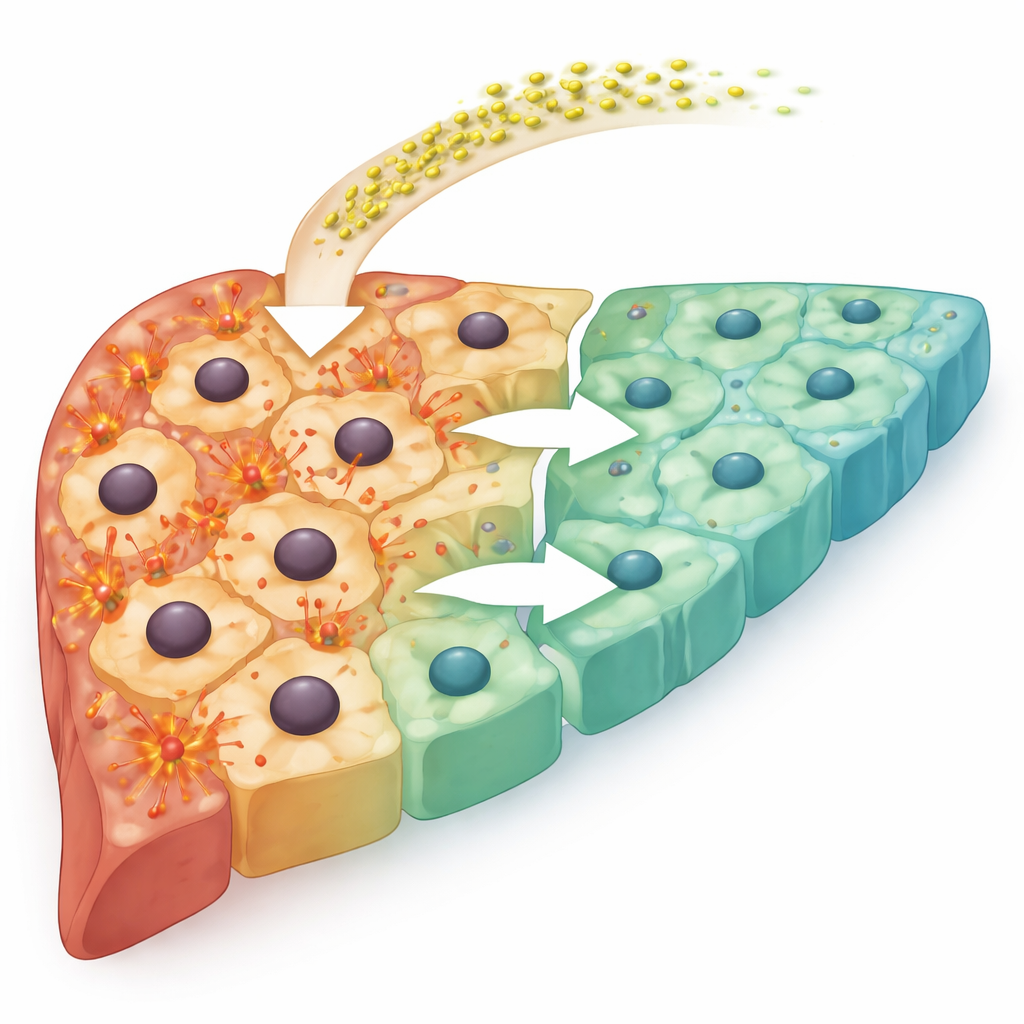
The data suggest that in MASLD, the five hub proteins form part of an overactive network that pushes liver cells toward death and stirs up immune cells. This fuels a vicious cycle: dying cells release danger signals that attract immune cells, which in turn release more inflammatory molecules that injure additional liver cells. Palmatine appears to act upstream in this network, turning down multiple switches at once. As this network quiets, the final "execution" machinery of cell death is less active, and fewer inflammatory cascades are triggered. The result is a calmer liver environment, with reduced fat overload, less inflammation, and slower scarring, even in the setting of diabetes.
What this could mean for future treatments
This work positions palmatine as a potential multi-target therapy for people with type 2 diabetes who also have MASLD. Instead of acting on a single pathway, it appears to coordinate changes across a small set of key proteins that control cell survival and inflammation in several liver cell types. While these findings are from animal studies and computational analyses—and human trials are still needed—they offer a mechanistic roadmap for turning an old herbal compound into a modern drug candidate for fatty liver disease in diabetes.
Citation: Yang, H., Shi, Z., Qi, Y. et al. Palmatine ameliorates MASLD in type 2 diabetes by modulating hepatic apoptosis and inflammation. Sci Rep 16, 12464 (2026). https://doi.org/10.1038/s41598-026-45476-3
Keywords: fatty liver disease, type 2 diabetes, palmatine, liver inflammation, hepatic cell death