Clear Sky Science · en
Integrated transcriptomic and metabolomic analyses reveal the regulatory network underlying NtGSTU10-mediated nicotine synthesis and transport in tobacco
Why this tobacco study matters
Nicotine is the molecule that gives tobacco its kick, shapes cigarette flavor, and helps the plant defend itself against insects. This study asks a simple but important question: what controls where nicotine is made in a tobacco plant and how it gets from the roots, where it is produced, to the leaves, where people encounter it? By tracking both genes and chemical compounds, the researchers uncover a control hub that shifts nicotine from roots to leaves and reshapes the plant’s internal chemistry.
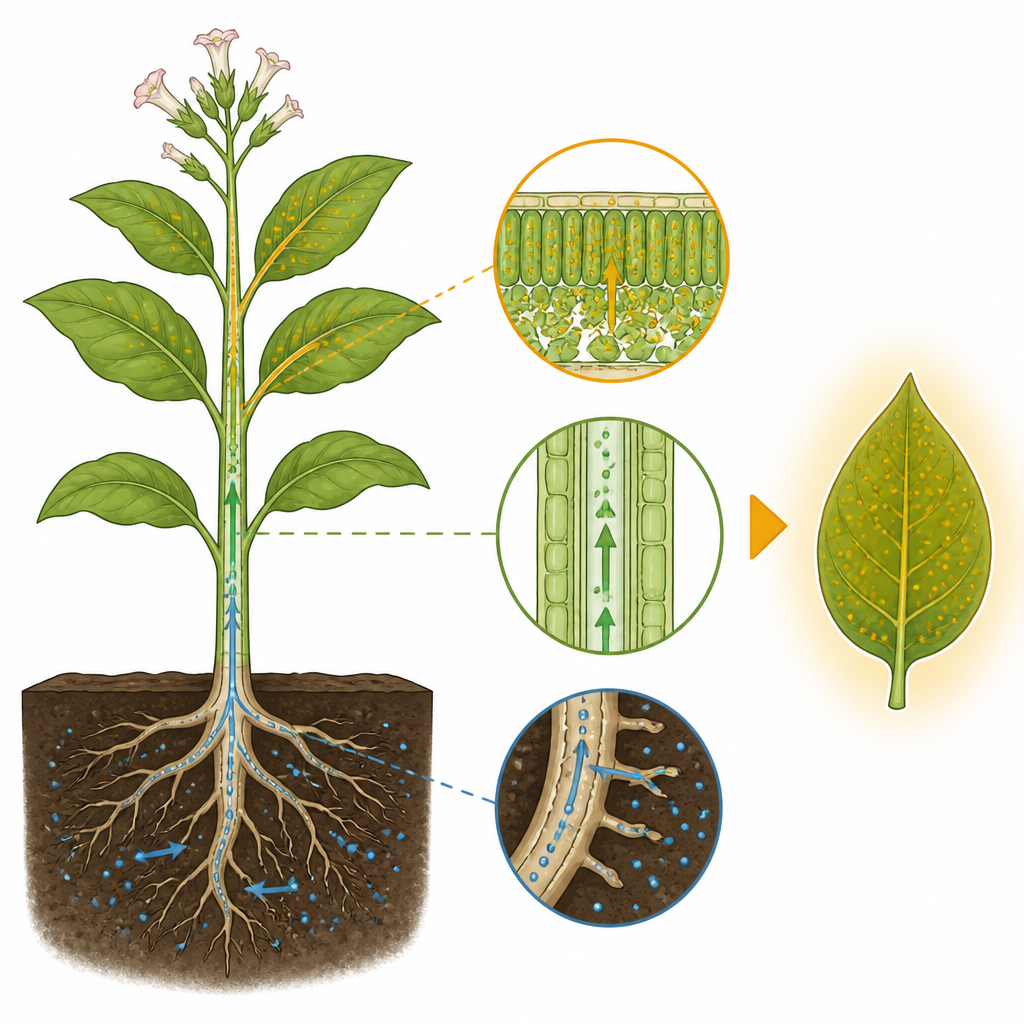
How tobacco makes and moves nicotine
Nicotine in tobacco plants is built from two small building blocks that come from regular plant nutrients. The finished molecule is produced mainly in the roots, then carried upward through the plant’s water pipes to the leaves, where it is stored in tiny internal compartments. This storage helps protect plant cells from nicotine’s toxicity while positioning it as a shield against hungry insects. Because both the amount made in the roots and the efficiency of transport to the leaves matter, scientists want to understand not just the assembly line but also the traffic system that delivers nicotine to its final destination.
A helper gene that boosts leaf nicotine
The team focused on a single tobacco gene called NtGSTU10, part of a large family known for helping plants handle stress and move specialized compounds inside cells. Earlier work suggested that plants with extra copies of this gene had more nicotine, but the reasons were unclear. Here, the researchers engineered tobacco plants to overproduce NtGSTU10 and then grew them in field plots. They measured nicotine in roots, stems, and leaves at several time points around the flowering stage. Plants with more NtGSTU10 shifted nicotine away from roots and toward leaves: leaf nicotine levels rose by roughly one third, while root levels dropped by about one fifth. A simple index that compares leaf to root nicotine confirmed that these plants sent a larger share of their nicotine upwards.
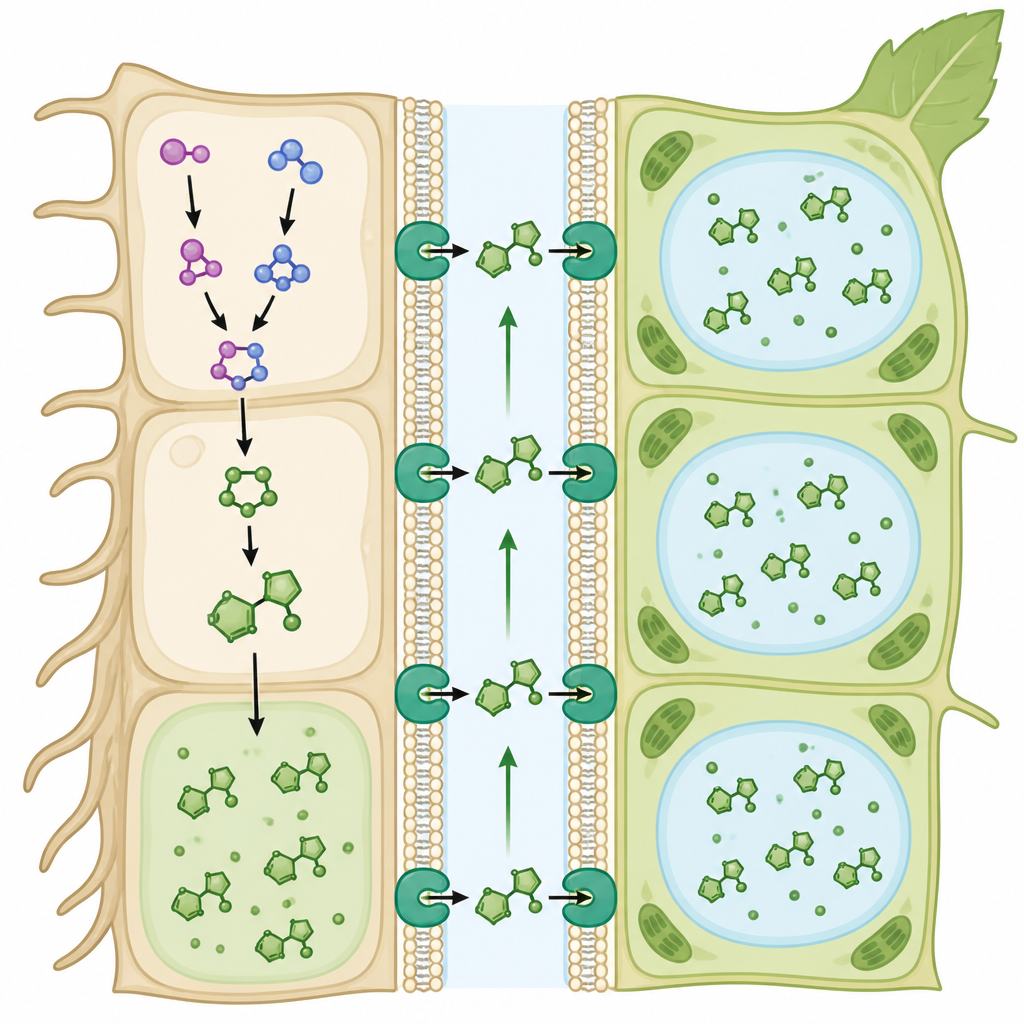
Looking inside with genes and metabolites
To understand how this shift happens, the scientists combined two powerful approaches. First, they examined which genes were turned up or down in roots and leaves. Thousands of genes changed activity in the modified plants, especially in roots where nicotine is made. Many of these genes belonged to pathways for building nicotine and other alkaloids, handling glutathione, and operating transporter proteins that sit in cell membranes and move chemicals around. Notably, genes for key nicotine making steps and for known transport families, such as ABC and MATE transporters, were more active in the roots of plants with extra NtGSTU10.
Chemical fingerprints of a rewired plant
Second, the team profiled hundreds of small molecules across roots and leaves. They found broad shifts in chemical categories that include alkaloids, amino acids, sugars, and compounds related to vitamin-like molecules such as nicotinic acid and nicotinamide. In leaves, alkaloids were especially affected, matching the higher nicotine content. In roots, pathways linked to amino acid use, glutathione handling, and the formation of several classes of alkaloids all changed. When the gene and metabolite data were analyzed together, certain routes stood out as shared hot spots: nicotine building steps, glutathione metabolism, and transporter pathways were all co-adjusted in the same plants, suggesting coordinated control rather than isolated tweaks.
What this means for nicotine control
The findings suggest that NtGSTU10 does not act as a simple on or off switch for a single nicotine pump. Instead, it appears to be part of a broader network that tunes how much nicotine is made in the roots and how efficiently it is shipped and stored in the leaves. By nudging this network, the researchers produced plants with more nicotine in the part of the plant people use, without raising overall nicotine in all tissues. For growers and regulators, such insights help explain why some tobacco lines naturally pack more nicotine into their leaves. For plant scientists, the work shows how a helper protein like NtGSTU10 can reshape both gene activity and chemistry to steer a defense compound through the plant’s internal highways.
Citation: Zhou, Y., Lou, Y., Xie, M. et al. Integrated transcriptomic and metabolomic analyses reveal the regulatory network underlying NtGSTU10-mediated nicotine synthesis and transport in tobacco. Sci Rep 16, 15003 (2026). https://doi.org/10.1038/s41598-026-45473-6
Keywords: tobacco, nicotine, plant metabolism, transport proteins, glutathione S transferase