Clear Sky Science · en
Immune-inflammatory profiles are associated with exercise capacity and psychological status in hospitalized patients with acute exacerbation of COPD
Why this matters for people with lung disease
Chronic obstructive pulmonary disease, or COPD, affects millions of people worldwide and often lands patients in the hospital when their breathing suddenly worsens. This study looks inside the body during those flare ups, asking how the body’s defense system and inflammation relate to how far patients can walk, how breathless they feel, and how anxious or depressed they are. The findings hint at how simple blood tests might one day help doctors see the full impact of a COPD attack, beyond what is visible on a breathing test.
The people studied in the hospital
The researchers followed 141 adults who were admitted to a hospital because their COPD had suddenly gotten worse, a phase called an acute exacerbation. All participants met standard international definitions for COPD, and everyone was enrolled after their condition had stabilized enough to answer questions and attempt a walking test. Doctors sorted patients into three groups based on how severe the flare up was, using breathing rate, blood oxygen and carbon dioxide levels, and how much breathing support they needed. The goal was to see whether blood markers of the immune system and inflammation changed across these severity levels and whether those markers tracked with daily functioning and emotional health.
Signals in the blood and what they might mean
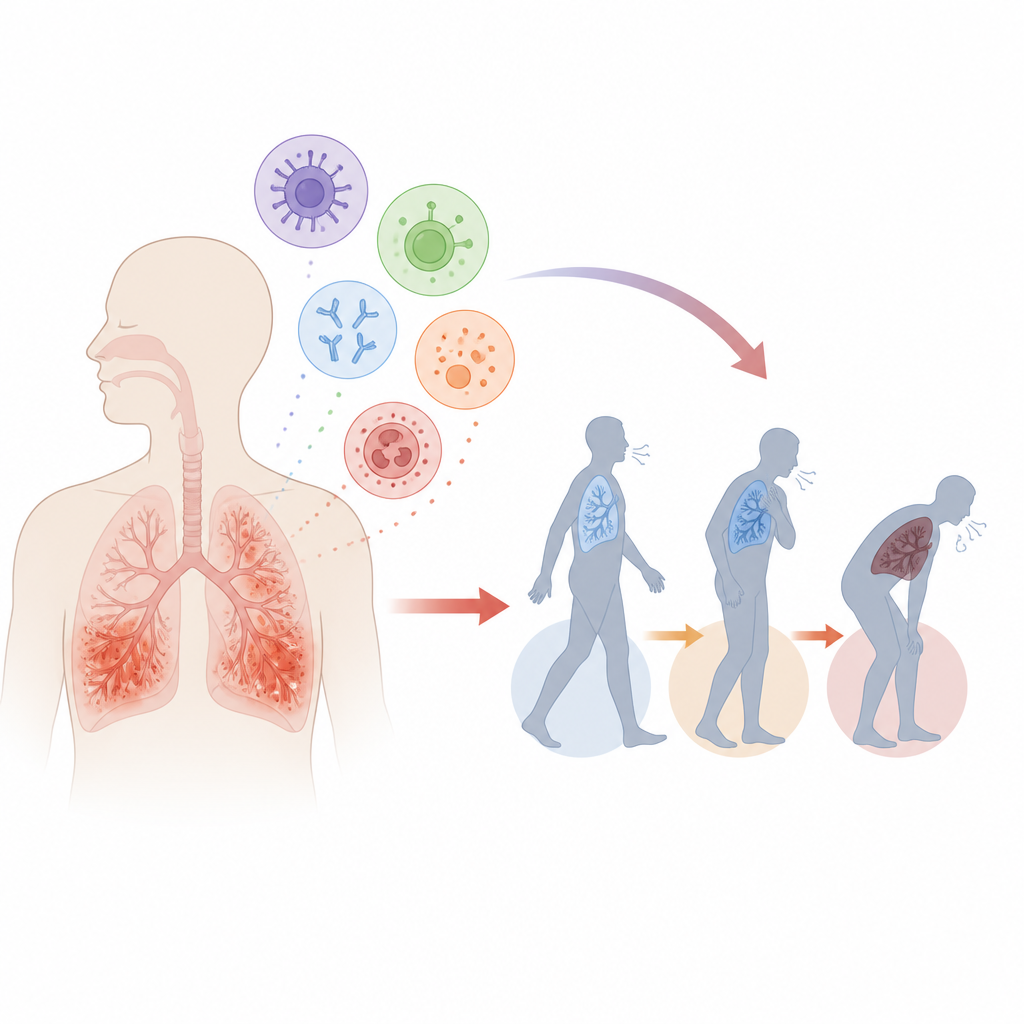
Blood samples were taken in the morning before strong anti inflammatory medicines and antibiotics were started. The team measured different types of T cells, which are white blood cells involved in defending the body, and common inflammatory substances in the blood. They found that patients with more severe attacks tended to have fewer helper T cells and a lower balance between helper and killer T cells, signs of a disturbed immune system. At the same time, several inflammation markers, including white blood cell counts, a protein called C reactive protein, and the signaling molecule interleukin 8, were higher in the more severe group. These patterns suggest that during a bad COPD flare, the body shows both stronger inflammation and a shift in its immune cell makeup.
Breathing, walking, and feelings during a flare
On the same day as the blood tests, patients completed a six minute walk test, in which they walked back and forth along a corridor while staff monitored their heart rate and oxygen levels. They also filled out questionnaires about breathlessness, everyday symptoms, mood, and how independently they could manage daily tasks such as dressing and walking. As expected, people with more severe flare ups walked shorter distances and reported heavier symptom loads. Feelings of anxiety and depression were more common in the higher severity groups, and scores reflecting ability to handle daily activities tended to be lower, although not all differences reached clear statistical significance.
How body defenses link to everyday limits
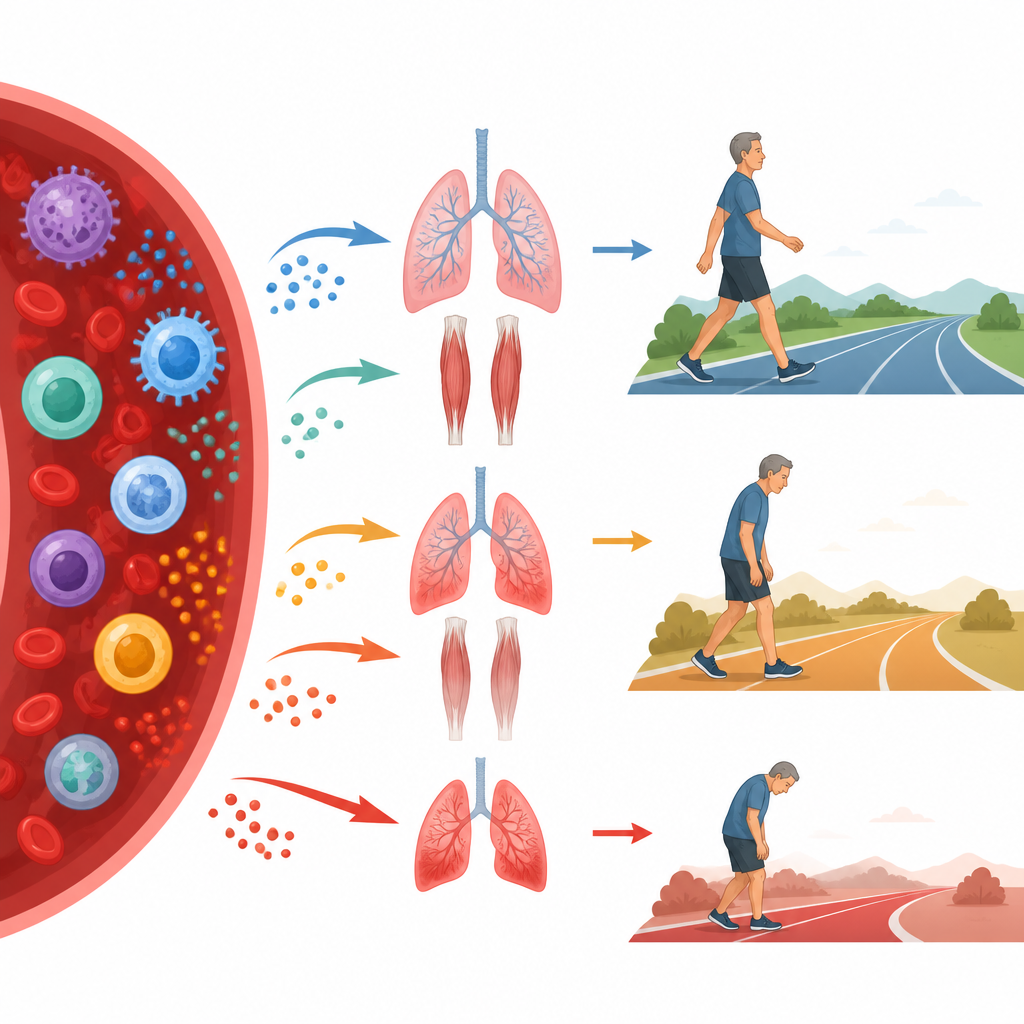
When the scientists compared the blood results with the walking and questionnaire scores, they found a consistent pattern. Patients who had more helper T cells and a healthier balance between helper and killer T cells tended to walk farther, feel somewhat less burdened by symptoms, and report better daily functioning. In contrast, higher levels of inflammatory markers were linked to shorter walking distances, worse breathlessness scores, more symptoms, and more anxiety and depression. These links were generally modest in strength, and when the team took into account other factors such as age, smoking history, and overall severity of the attack, most of the relationships became weaker and no longer reached statistical significance.
What this means for patients and doctors
The study suggests that during a hospital stay for a COPD flare, blood signs of inflammation and immune imbalance move in step with how limited, breathless, and emotionally distressed patients feel. However, because all measurements were taken at one point in time, the research cannot show whether these blood changes cause worse walking ability and mood, or whether they simply arise from the same underlying illness. For now, these blood tests are best seen as extra pieces of information rather than tools that should guide treatment on their own. Larger, long term studies will be needed to learn whether tracking these immune and inflammatory signals over time can help doctors better predict recovery, tailor rehabilitation, and support both physical and psychological health in people living with COPD.
Citation: Chen, Y., Wang, Y., Zhao, D. et al. Immune-inflammatory profiles are associated with exercise capacity and psychological status in hospitalized patients with acute exacerbation of COPD. Sci Rep 16, 15242 (2026). https://doi.org/10.1038/s41598-026-45461-w
Keywords: COPD, acute exacerbation, inflammation, exercise capacity, anxiety and depression