Clear Sky Science · en
Metagenomic and functional insights into root endophytic bacteria associated with drought stress in cowpea
Why Hidden Root Helpers Matter in a Thirsty World
As droughts become longer and more frequent, farmers face the challenge of growing enough food with less water. This study looks below ground, into the roots of cowpea—a hardy bean widely grown in dry regions—to ask a simple question with big implications: which “good” bacteria live inside roots during drought, and can they be used to help crops survive water shortages? By decoding these hidden communities and testing selected strains on another major crop, wheat, the researchers point to a new generation of natural, microbe-based helpers for agriculture.
Plants and Their Secret Partners
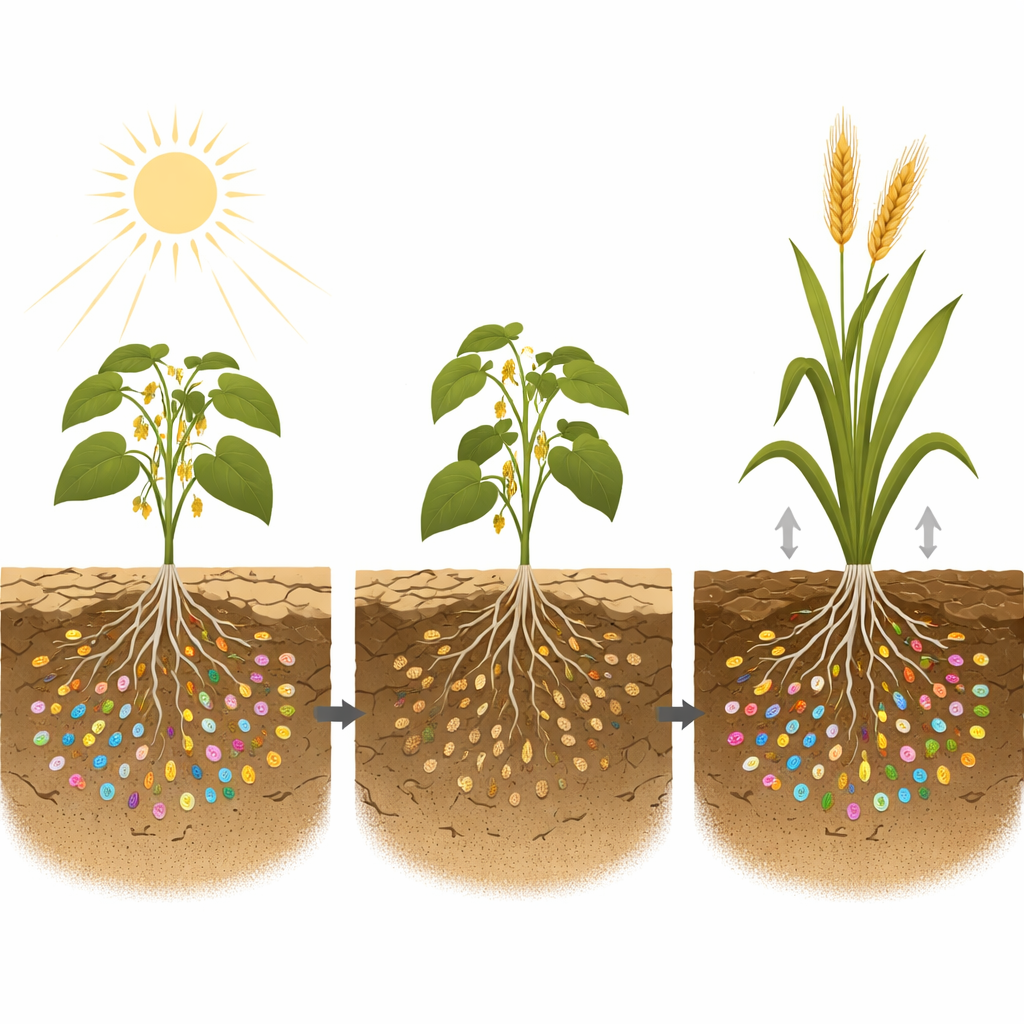
Plants do not face harsh environments alone. Many host harmless bacteria inside their tissues, including the roots. These internal partners can help plants draw in nutrients, make growth hormones, and cope with stress. Cowpea is already considered drought-tolerant and is a staple food and protein source in many dry parts of the world. Yet even cowpea can suffer severe yield losses when water is scarce, and little was known about the bacteria living inside its roots under drought conditions. Understanding which microbes stay, disappear, or become more common in dry roots could reveal natural allies that make plants more resilient.
Reading the DNA of Root Communities
To map these hidden partners, the team grew cowpea plants in controlled conditions with either regular watering or a three-week drought. They carefully cleaned the roots to remove surface microbes and extracted DNA from the tissues. Using high-throughput sequencing of a marker gene common to bacteria, they identified hundreds of distinct bacterial types living inside roots. By comparing well-watered and droughted plants, they measured both how many types were present and how evenly they were represented, building a detailed picture of how drought reshapes the internal root microbiome.
When Water Runs Out, Communities Shrink and Shift
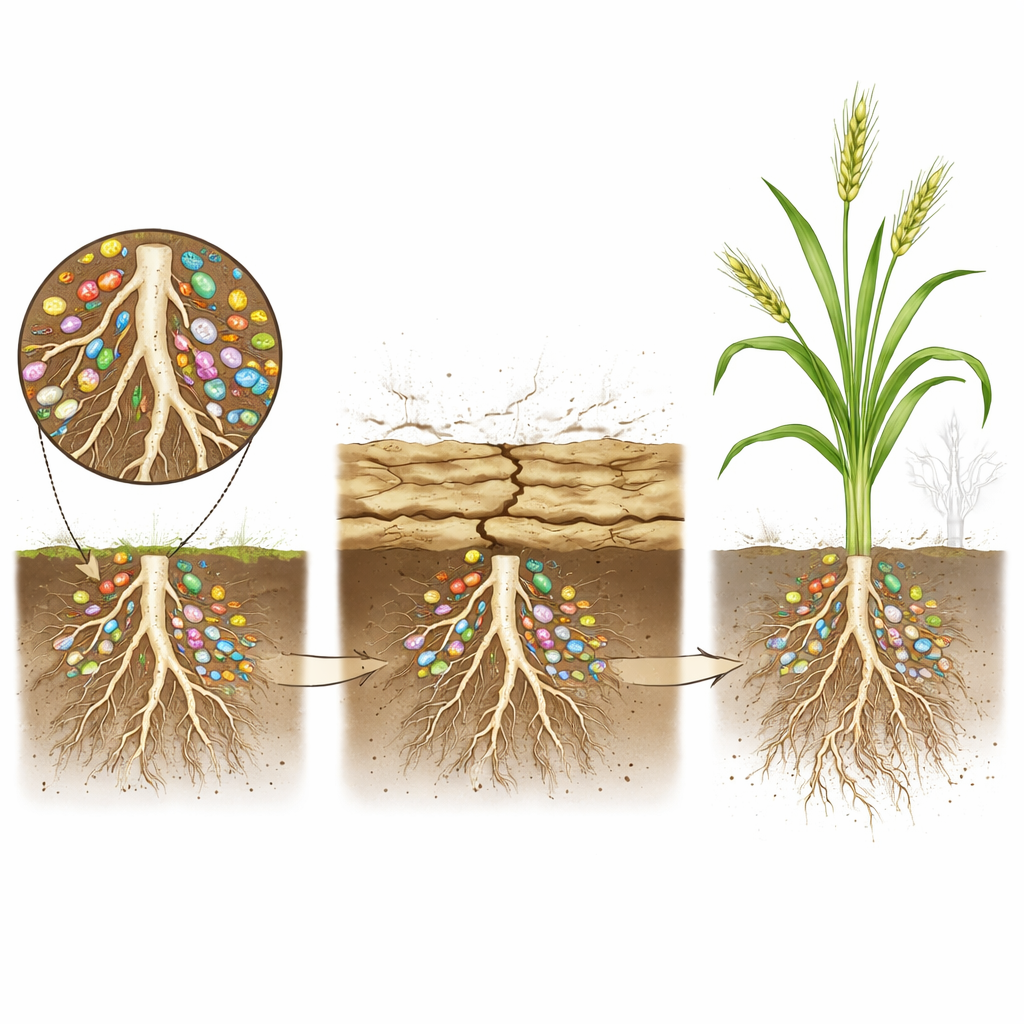
The DNA data showed that drought made the internal root communities simpler and more uniform. Under dry conditions, there were fewer distinct bacterial types, and the remaining community was less balanced, with certain groups becoming more dominant. Statistical analyses confirmed that the overall composition of bacteria in droughted roots was clearly different from that in well-watered plants. In particular, members of a group known as Cyanobacteriota—especially a species called Marileptolyngbya sina—became more abundant under drought, while many other species declined. This pattern suggests that water shortage acts as a filter, favoring a small set of drought-hardy lineages that may be especially helpful to their plant hosts.
From Root Residents to Growth-Boosting Allies
DNA sequences alone cannot reveal what bacteria actually do for plants, so the researchers also isolated living strains from droughted cowpea roots. They recovered 47 distinct endophytic bacteria, including species of Enterobacter, Bacillus, Leclercia, and Stenotrophomonas. In the lab, these strains were screened for traits linked to plant growth, such as making growth hormones, helping plants handle stress-related compounds, freeing nutrients like phosphorus, potassium, and zinc from soil minerals, and tolerating conditions that mimic drought. Several strains showed multiple beneficial features. The team then coated wheat seeds with selected strains and grew them in pots under both normal watering and drought. Some bacteria, notably strains labeled VU-E7, VU-E9, and VU-E44, consistently increased wheat seedling length and biomass in both moist and dry soil, demonstrating that helpers from cowpea roots can boost the performance of another crop.
What This Means for Future Farming
Viewed together, the results show that drought does more than stress the plant; it also prunes and reshapes the bacterial partners living inside its roots. While overall diversity drops, a few specialized groups, such as certain cyanobacteria and stress-tolerant growth-promoting strains, become more prominent. These survivors appear well equipped to help plants tap nutrients, manage stress signals, and maintain growth when water is limited. By combining DNA-based surveys with practical growth tests, this work points toward tailored microbial “inoculants” that could be added to seeds or soils to enhance drought tolerance in crops like cowpea and wheat, offering a promising, nature-based tool for more resilient agriculture in a warming, drying world.
Citation: Halo, B.A., Aljabri, Y.A.S., Glick, B.R. et al. Metagenomic and functional insights into root endophytic bacteria associated with drought stress in cowpea. Sci Rep 16, 14519 (2026). https://doi.org/10.1038/s41598-026-45459-4
Keywords: drought-tolerant crops, root microbiome, endophytic bacteria, plant growth-promoting microbes, cowpea and wheat