Clear Sky Science · en
Mediating role of rehabilitation self-efficacy in the relationship between stress perception and depression among Chinese patients with stroke during the recovery period
Why stress after stroke matters
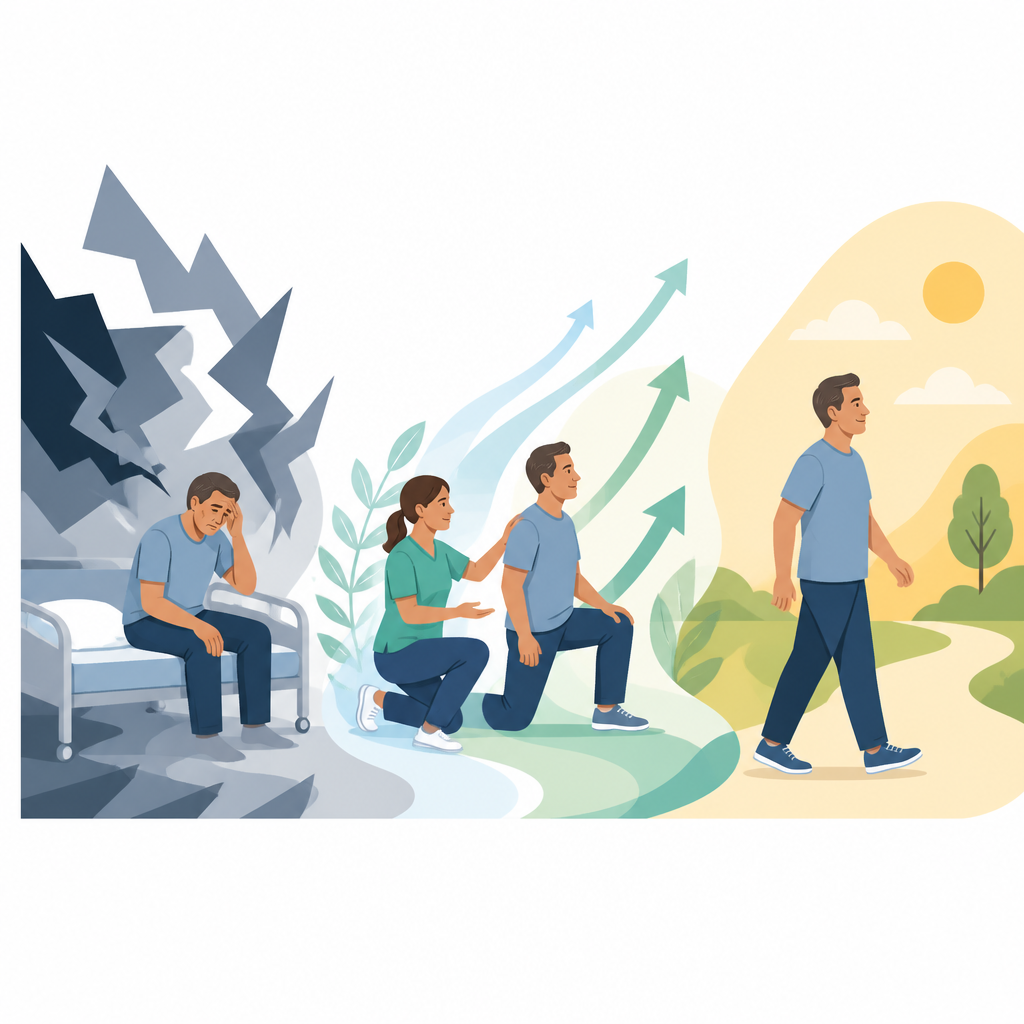
Life after a stroke can feel like waking up in a different body. Many people suddenly depend on others for basic tasks and worry about money, recovery, and the risk of another stroke. This study from China looks at how strongly stroke survivors feel stressed, how often they feel depressed, and how much they believe in their own ability to get better. Understanding these links can help families and health workers support recovery in both body and mind.
Stress, mood, and belief in recovery
The researchers followed 310 adults who were in the recovery period after a stroke. All were at least two weeks past the attack and receiving care at a hospital in Changsha, China. Each person filled out three standard questionnaires: one measured how stressful they felt their lives were, another scored signs of depression such as sadness and loss of interest, and a third asked how confident they felt about doing their rehab exercises and handling setbacks. Together, these tools painted a picture of daily pressure, emotional state, and belief in recovery.
Heavy emotional load during recovery
The results showed that many stroke survivors in this group carried a heavy emotional burden. On average, their stress scores were in the moderate range, especially in feeling helpless and out of control. Their depression scores fell in the moderate to severe range, which matches other studies reporting that three to seven out of ten people have depression after a stroke. People with certain backgrounds, such as older age, other long term illnesses, or lower income or education, tended to report more stress, more depression, or lower confidence in their rehab. These patterns suggest that social and health factors combine to shape emotional recovery.
Confidence as a missing link
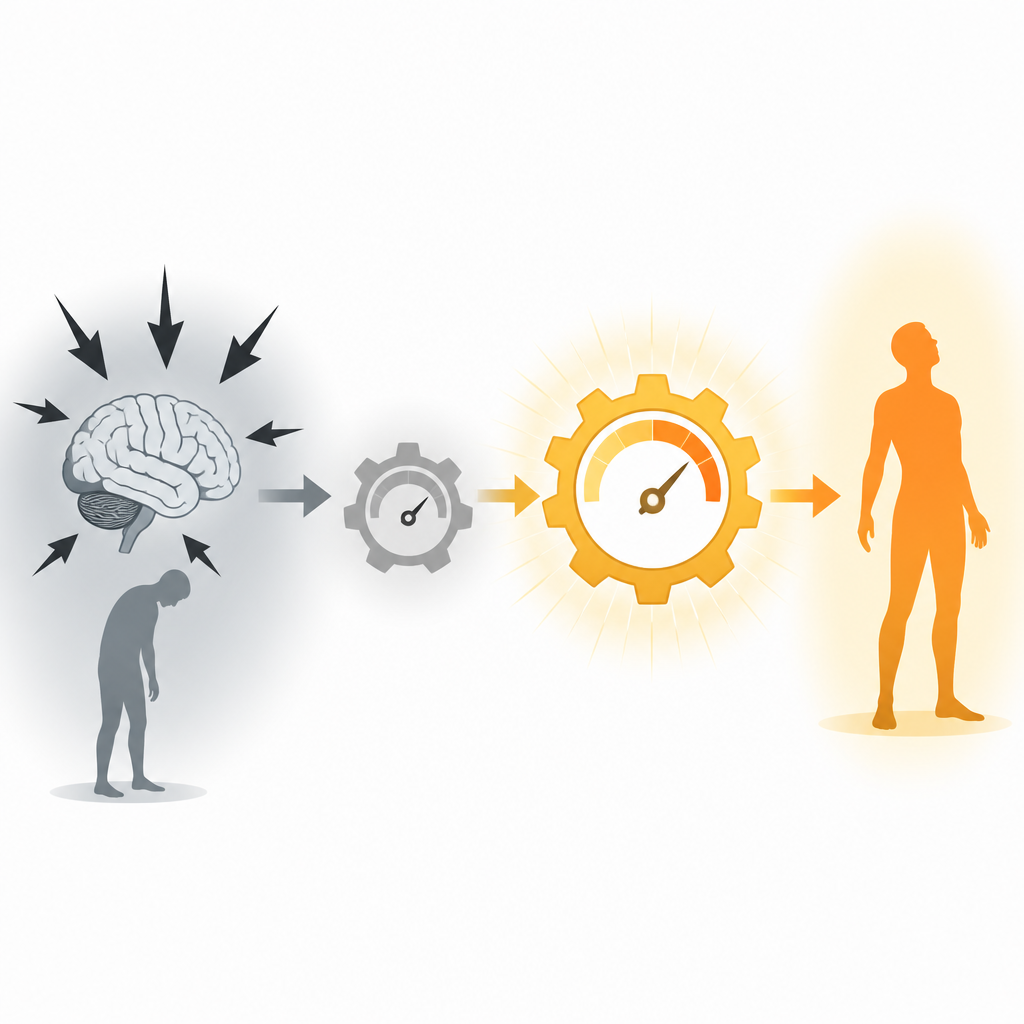
When the team examined how the three measures were related, clear patterns appeared. Higher stress was linked to more depression, and higher stress was also linked to lower belief in one’s ability to carry out rehabilitation. In turn, people with lower rehabilitation confidence tended to report more depression. Using a statistical method called mediation analysis, the researchers tested whether confidence acted as a bridge between stress and depression. They found that when stress rose, part of its impact on depression came from pushing down people’s sense that they could manage their rehab tasks and cope with slow progress.
How much the bridge matters
The numbers showed that this confidence bridge was not a small detail. Nearly half of the overall link between stress and depression ran through rehabilitation self belief. The rest was a direct effect of stress on mood. In simple terms, feeling overwhelmed after a stroke can lower a person’s faith in their own abilities, and this drop in confidence helps drive sadness and hopelessness. At the same time, stress can also darken mood more directly. The study suggests a feedback loop, where low confidence leads to less effort in rehab, slower physical gains, and even more negative thoughts.
What this means for stroke survivors
For people recovering from stroke, the study’s message is straightforward: how you feel about your ability to take part in rehab is closely tied to how stressed and depressed you feel. Building confidence will not remove all stress, but it may cushion its impact on mood. For health teams and families, this points to practical steps such as clear education about the illness, realistic goal setting, encouragement during small wins, and group or counseling programs that teach coping skills. By helping stroke survivors trust that their actions in rehab matter, it may be possible to ease depression and support better long term recovery.
Citation: Cheng, S., Gao, G., Guo, Y. et al. Mediating role of rehabilitation self-efficacy in the relationship between stress perception and depression among Chinese patients with stroke during the recovery period. Sci Rep 16, 15647 (2026). https://doi.org/10.1038/s41598-026-45452-x
Keywords: stroke recovery, post stroke depression, perceived stress, self efficacy, rehabilitation