Clear Sky Science · en
Low E-cadherin expression is associated with poor prognosis in pulmonal adenocarcinoma
Why this study matters
Lung cancer remains one of the deadliest cancers worldwide, and doctors still struggle to predict which patients will do poorly despite surgery and modern treatments. This study looks at a tiny structure on the surface of lung cells called E-cadherin, which helps cells stick together. By examining more than 850 lung tumors, the researchers asked a simple but important question: when this "cell glue" is missing or reduced, does lung cancer behave more aggressively and shorten patients’ lives?
The cell glue that keeps tissues in shape
E-cadherin is a protein that acts like molecular Velcro, fastening neighboring cells to one another and helping tissues maintain their normal architecture. In healthy lung tissue, the authors found that E-cadherin is strongly present along the borders of cells lining the airways and air sacs. This tight connection does more than keep tissue organized: it also helps restrain cell growth and keeps cells from wandering off into places where they do not belong.
When lung tumors loosen their grip
To see how E-cadherin behaves in cancer, the team used tissue microarrays—slides that hold hundreds of tiny tumor samples—to stain 857 lung cancers of 12 different types. In the two most common non-small-cell lung cancers, adenocarcinoma and squamous cell carcinoma, almost all tumors still showed E-cadherin at their cell borders. Only about 1 percent of adenocarcinomas completely lacked the protein, and none of the squamous cell cancers did. However, the intensity of staining varied: many adenocarcinomas showed very strong signals, while squamous cell cancers more often showed only moderate levels. In contrast, more than half of malignant mesotheliomas, a different cancer of the chest lining, showed no detectable E-cadherin at all. 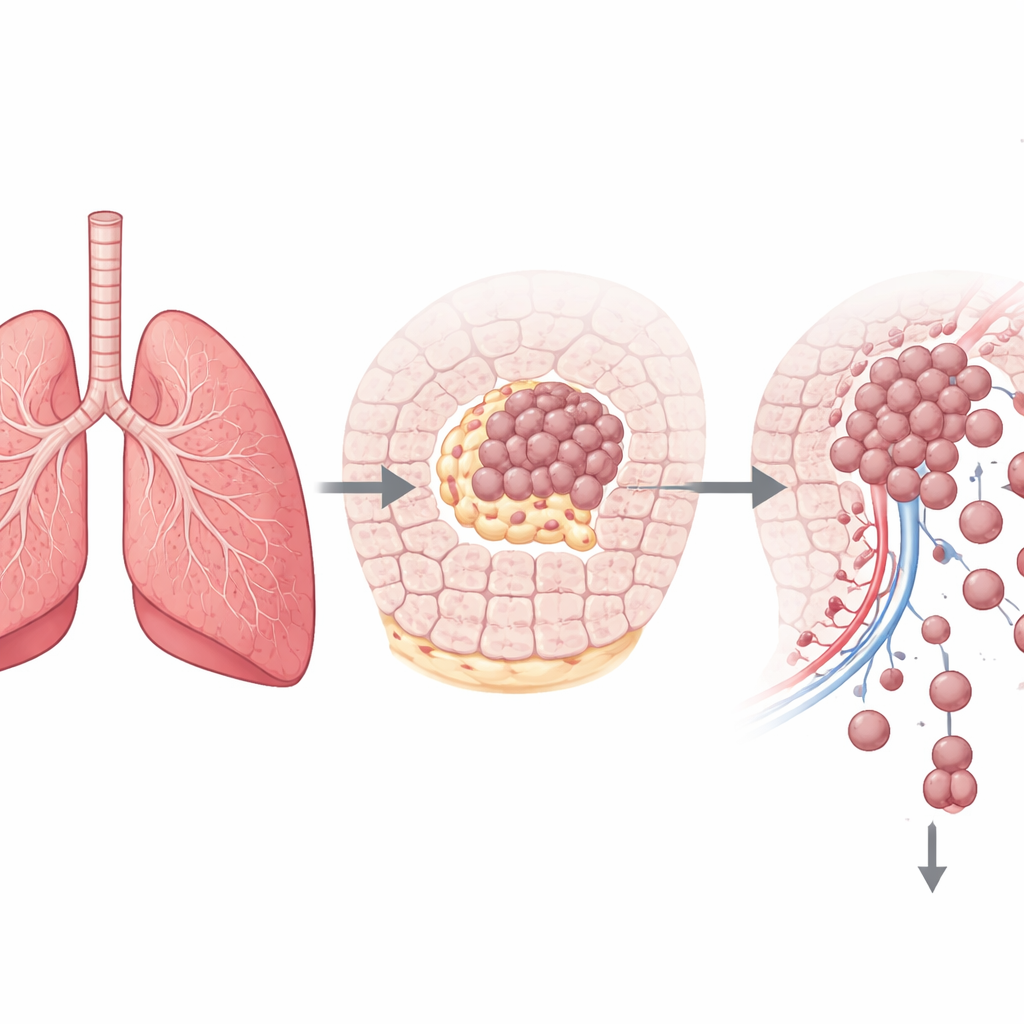
Weaker adhesion, more aggressive disease
The researchers did not stop at simple presence or absence. They graded each tumor as negative, weak, moderate, or strong for E-cadherin and then compared these categories with how advanced the cancer was under the microscope, as well as how long patients lived after surgery. In lung adenocarcinomas, weaker E-cadherin staining tended to appear in larger, more deeply invasive tumors and in those of higher grade, meaning the cells looked more abnormal and disorganized. Patients whose adenocarcinomas had low or absent E-cadherin had worse overall survival than those whose tumors kept strong expression. This link held up when all non-small-cell lung cancers were analyzed together. In squamous cell carcinoma, on the other hand, E-cadherin levels did not clearly separate patients with good versus poor outcomes, likely because outright loss of the protein was so rare in this group.
Clues to how cells break away and spread
The findings fit into a broader picture of how cancers spread. When E-cadherin is reduced, cells can slip out of their orderly, sheet-like arrangement and adopt a more mobile, invasive behavior sometimes referred to as an epithelial-to-mesenchymal transition. Without strong cell–cell contacts, tumor cells can migrate into surrounding tissue, enter blood or lymphatic vessels, and seed new tumors elsewhere. The study’s large size and carefully validated staining method lend weight to earlier, smaller reports that connected low E-cadherin to aggressive behavior in lung adenocarcinoma and other cancers. 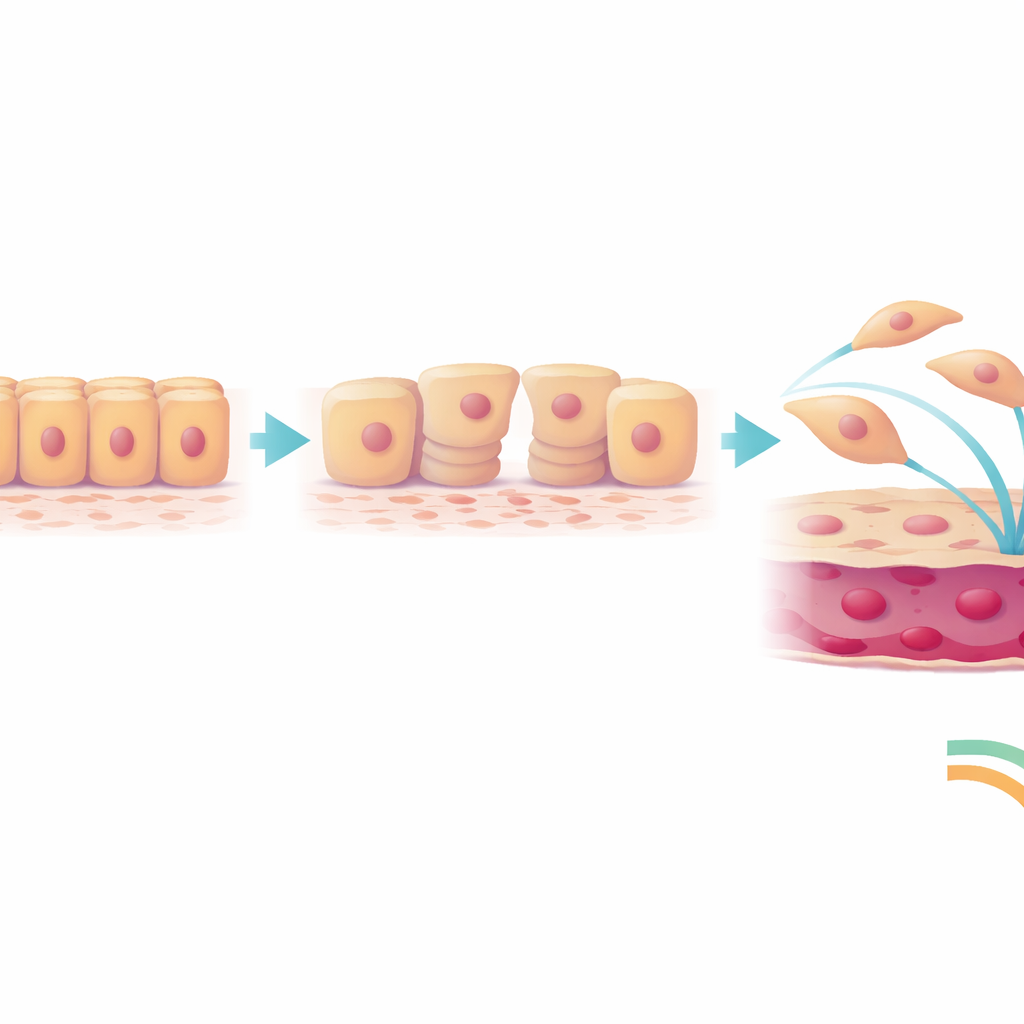
Looking ahead to targeted treatments
For patients and clinicians, the practical message is twofold. First, most common lung tumors still retain E-cadherin, but in the small fraction of adenocarcinomas where it is reduced or lost, the outlook is worse. These patients may benefit from closer monitoring or more aggressive treatment. Second, scientists are already exploring drugs that might restore or stabilize E-cadherin or block the signals that weaken it. Although such targeted therapies are not yet standard care, this study suggests that a select group of lung adenocarcinoma patients—and many with mesothelioma—could one day be candidates for treatments designed specifically to reinforce this critical cell glue and potentially improve survival.
Citation: Gehrisch, F., Schmid, K.A., Kluth, M. et al. Low E-cadherin expression is associated with poor prognosis in pulmonal adenocarcinoma. Sci Rep 16, 10663 (2026). https://doi.org/10.1038/s41598-026-45409-0
Keywords: lung adenocarcinoma, E-cadherin, non-small-cell lung cancer, cancer prognosis, epithelial-mesenchymal transition