Clear Sky Science · en
Metabolic reprogramming and functional trade-offs during domestication of Sechium edule
Why this study matters for everyday eaters
Many of the fruits and vegetables on our plates are the result of long human-guided history. In making crops larger, tastier, and easier to grow, we may have quietly changed their inner chemistry in ways that affect both plant health and our own nutrition. This study looks inside chayote, a squash-like fruit common in Mesoamerica, to reveal how domestication has shifted its chemical makeup away from wild resilience and toward farm-ready productivity.
From wild bitter fruits to mild garden staples
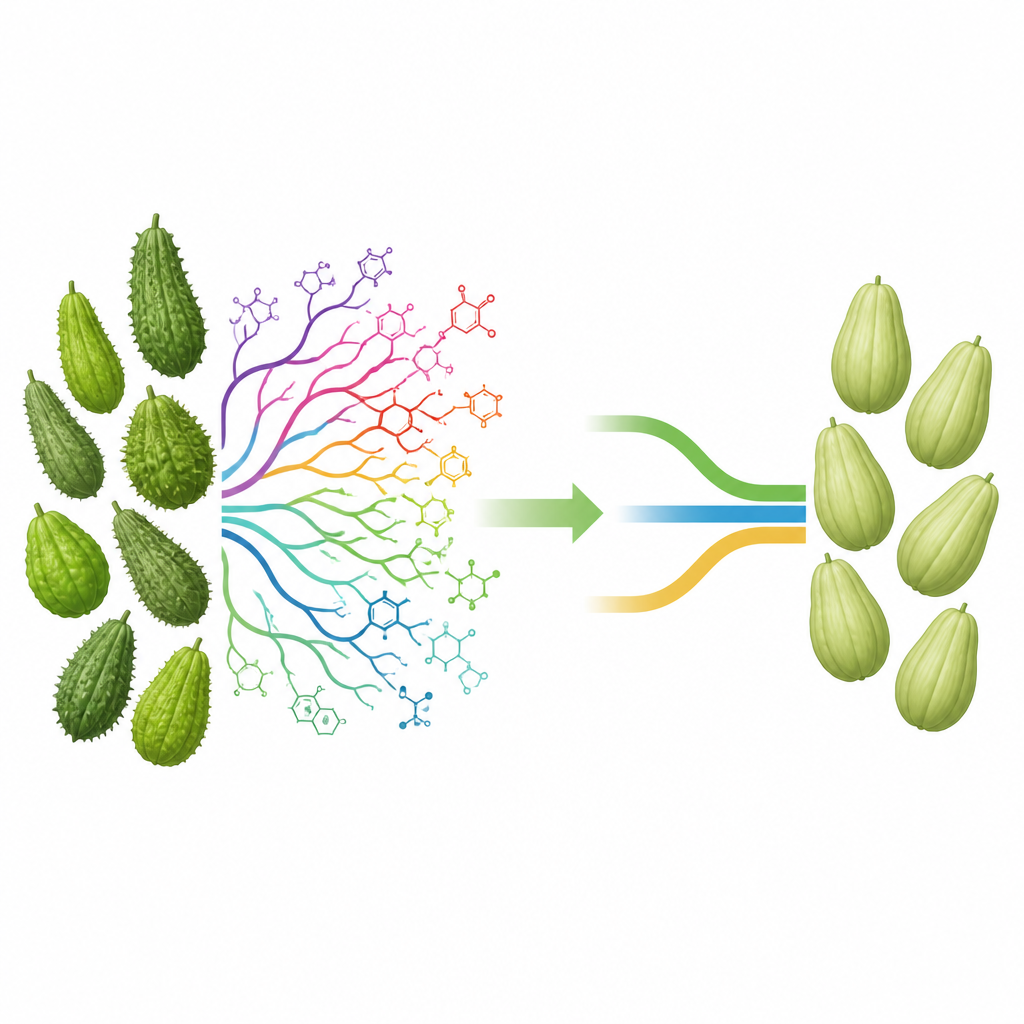
Chayote belongs to a group of plants with striking variety in shape, color, and flavor, ranging from small, spiny, bitter fruits found in nature to smooth, mild forms grown in fields. Traditional medicine has long used chayote and its relatives for issues such as inflammation and high blood pressure, benefits tied to a wealth of natural compounds. Earlier work suggested that the wilder, more bitter types hold higher levels of these compounds, while the familiar cultivated fruits offer better taste but simpler chemistry. This study set out to measure that contrast directly by comparing one wild and one domesticated chayote type.
A chemical census inside chayote
The researchers ground up fruits from both types and used sensitive instruments to detect thousands of chemical signals. They then used statistical tools to see how samples grouped together and which compounds were most responsible for differences. The two kinds of chayote separated cleanly, showing that domestication did not just tweak a few ingredients but rewired entire chemical networks. The wild fruits carried a more tangled web of connections among compounds, while the domesticated fruits showed a leaner, more streamlined chemical map.
Growth first, defense later
Digging deeper, the team mapped these compounds onto known plant pathways. In domesticated chayote, most overrepresented chemicals supported basic tasks such as building fats, amino acids, and genetic material, all crucial for growth, energy flow, and fruit development. The wild fruits, in contrast, devoted more chemical effort to colorful and often bitter molecules like flavonoids, terpenoids, and related families. These substances help plants fend off pests, cope with sun and drought, and manage internal stress, and many are also valued as antioxidants in the human diet. The pattern points to a trade-off: the cultivated fruits favor steady growth and appealing taste, while the wild fruits invest in flexible self-protection.
Bitterness, health value, and hidden costs
A targeted look at a smaller set of known compounds confirmed this picture. Domesticated chayote had more of certain flavonoids and phenolic acids linked to pleasant flavor and moderate antioxidant activity, as well as specific bitter cucurbitacins kept at levels acceptable for consumers. The wild fruits, however, contained a broader and richer mix of phenolic acids, flavonoids, and several cucurbitacins that can make them strongly bitter. These molecules support stronger natural defenses and may hold greater potential for future health products, but they also make the fruits less enjoyable to eat, which likely pushed farmers to favor milder types over generations.
What this means for future crops
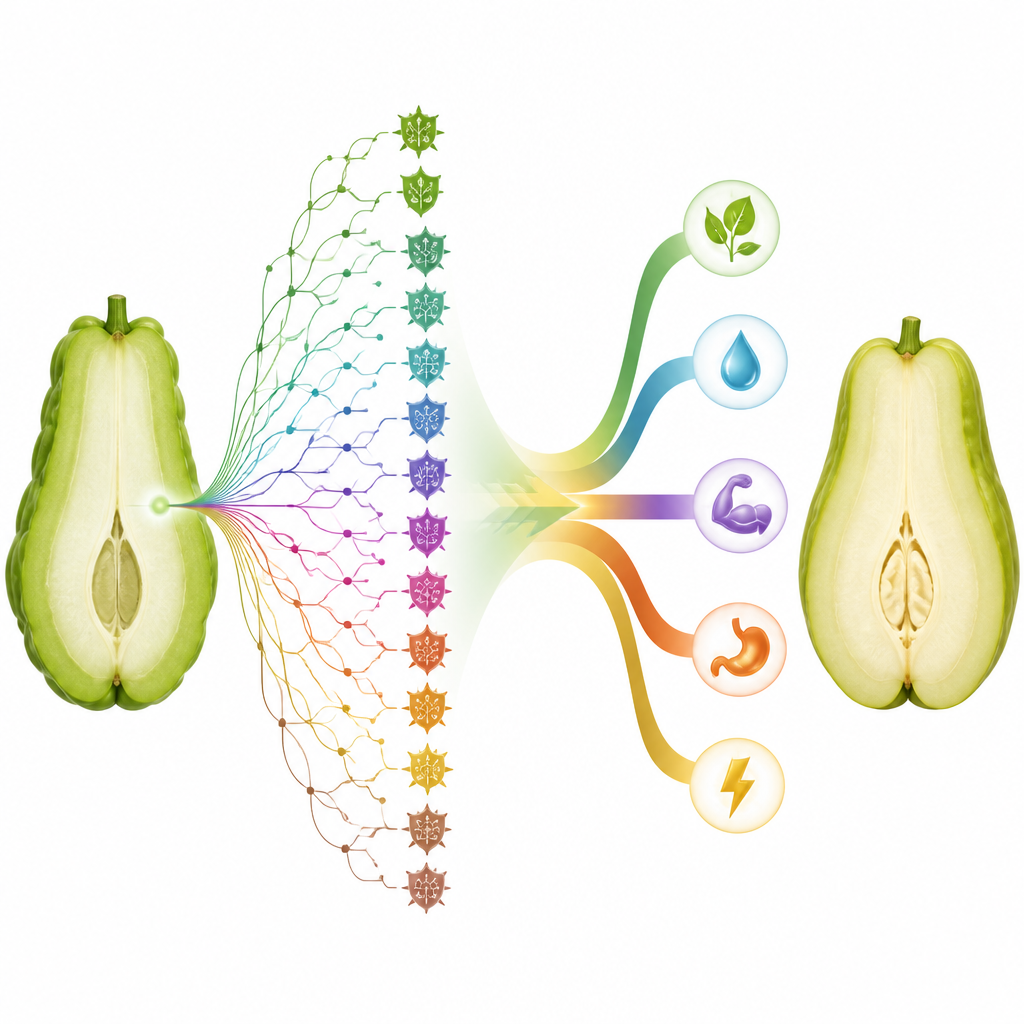
Overall, the study shows that in chayote, domestication has shifted chemistry from wide-ranging defense and flexibility toward a tighter focus on energy use and fruit quality. For farmers and plant breeders, the message is twofold. Modern varieties deliver yield and taste but may be more vulnerable to pests, disease, and changing climate. Wild relatives, although less palatable, store a reservoir of useful traits and health-related compounds. By conserving and carefully crossing these wild lines back into cultivated chayote, it may be possible to design future fruits that keep their pleasing flavor while regaining some of the toughness and nutritional richness that domestication has left behind.
Citation: Espinosa-Torres, S.D., Cadena-Zamudio, J.D., Soto-Hernández, R.M. et al. Metabolic reprogramming and functional trade-offs during domestication of Sechium edule. Sci Rep 16, 15657 (2026). https://doi.org/10.1038/s41598-026-45401-8
Keywords: chayote domestication, plant metabolism, secondary metabolites, crop resilience, nutraceutical potential