Clear Sky Science · en
Insights into the antibacterial mode of action of cress polysaccharide-mediated NiO nanoparticles
Why tiny green made particles matter
Antibiotic resistant infections are making many common medicines less effective, pushing scientists to search for new ways to stop harmful germs. This study explores a simple idea with big promise: using a natural gel from garden cress seeds to make tiny nickel based particles that can damage bacteria while remaining gentle to human blood cells.
Turning garden seeds into useful tools
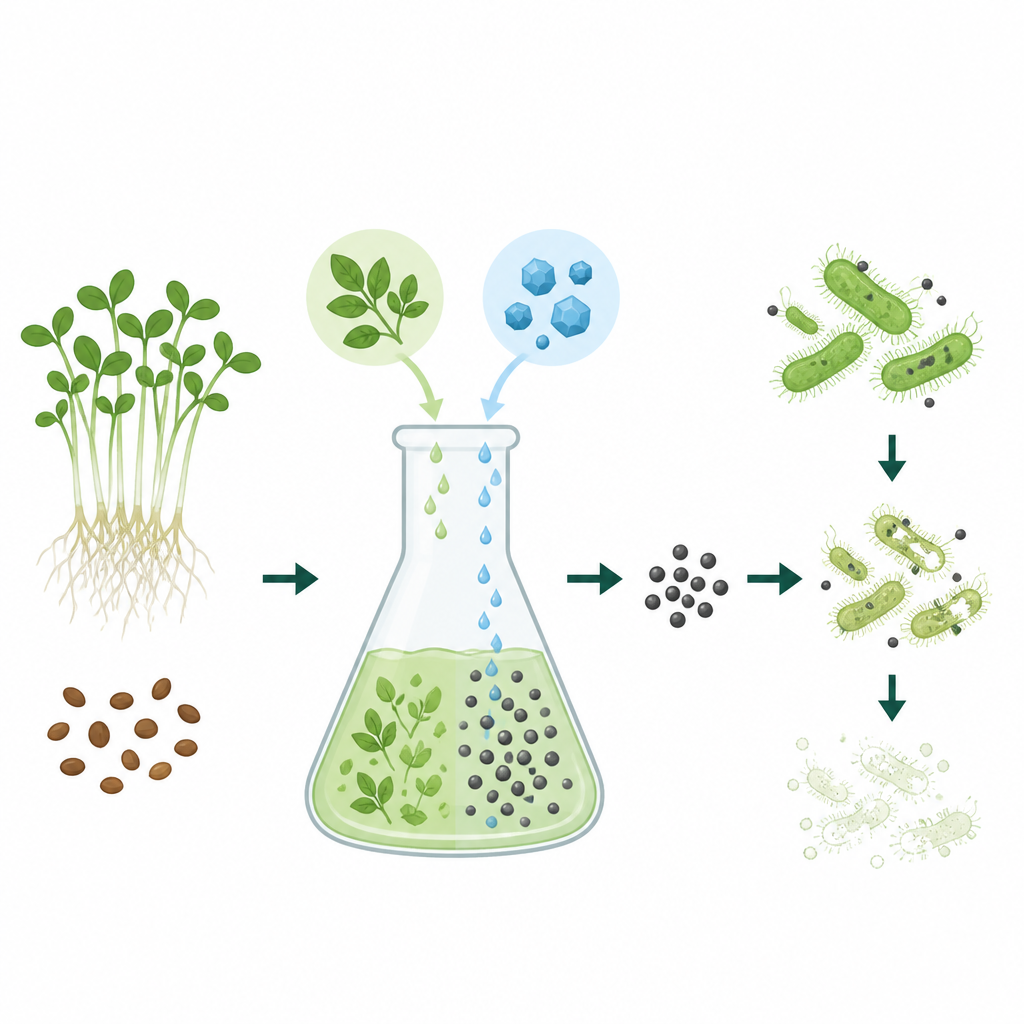
Garden cress seeds release a thick, slippery gel rich in natural sugars when soaked in water. The researchers purified these seed sugars and used them as a kind of kitchen helper in the lab to grow nickel oxide nanoparticles. When a nickel salt solution was slowly mixed with the cress sugar solution and heated, the mixture turned blackish gray, signaling that the tiny particles had formed. Standard tests of light absorption, crystal structure, surface chemistry, and elemental makeup confirmed that the team had successfully produced stable, sugar coated nickel oxide nanoparticles.
Checking safety for human blood cells
Any new germ fighting material must be safe for people. To test this, the team mixed their cress sugars and the nickel particles with human red blood cells and measured how many cells burst. Across the tested range, both the plain sugars and the sugar made nanoparticles caused very little damage, with less than five percent of cells breaking even at the highest nanoparticle dose. These results suggest that the cress coating helps keep the particles compatible with blood, at least under simple lab conditions.
Putting harmful bacteria to the test
The scientists then challenged four disease causing bacteria with either cress sugars alone or the cress nickel particles. They used two types with thick cell walls, Staphylococcus aureus and Clostridium tetani, and two with an extra outer film, Escherichia coli and Klebsiella pneumoniae. In plate tests, the nanoparticles created clear rings where bacteria could not grow, and these rings widened as the dose increased. More precise liquid tests showed that the particles could stop growth of the more fragile bacteria at lower doses than the tougher ones, and in every case they worked better than the sugars on their own.
How the tiny particles weaken germs
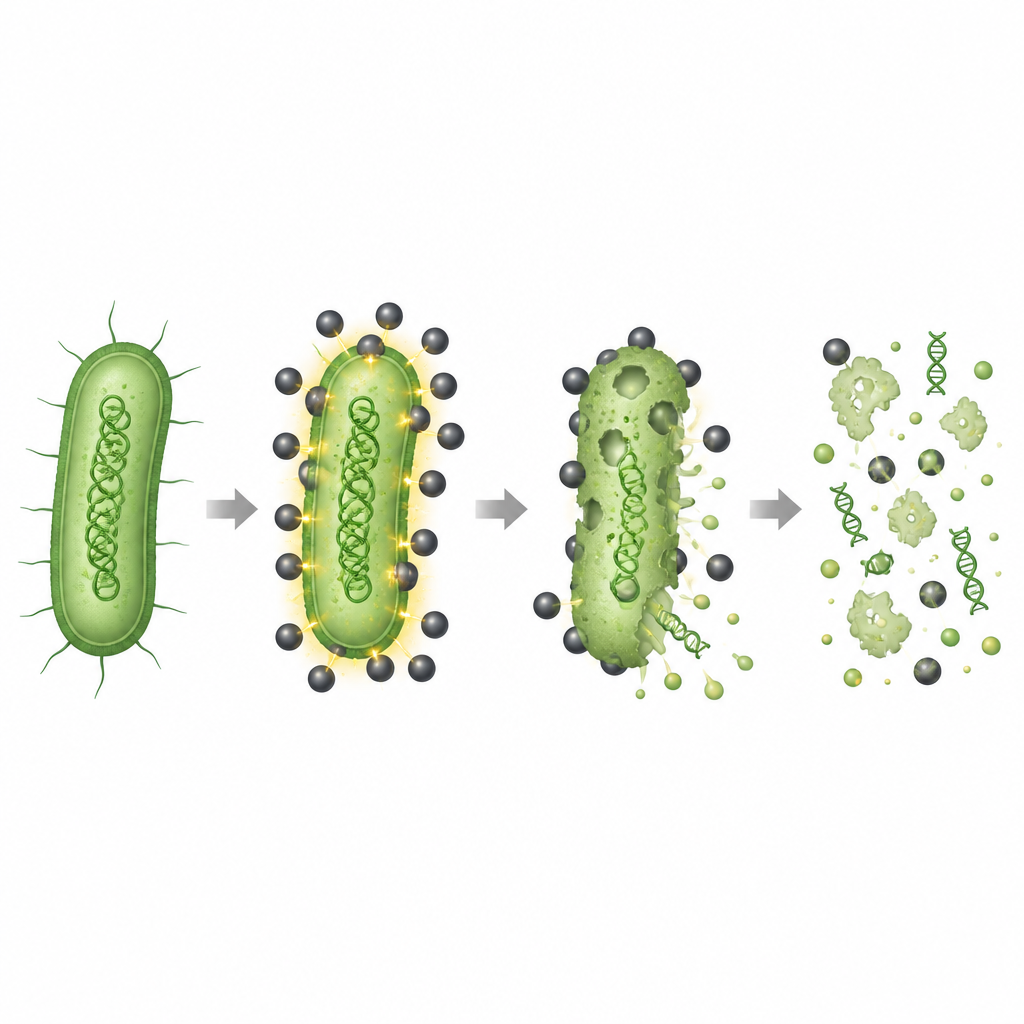
To uncover how these particles harm microbes, the researchers tracked several signs of stress inside treated cells. First, they measured reactive oxygen species, a kind of aggressive oxygen that can attack many parts of a cell. Bacteria exposed to the cress nickel particles lit up strongly in this test, showing much higher oxidative stress than those given cress sugars alone. Next, they checked whether the cell surface was leaking by measuring proteins that spilled into the surrounding liquid; leakage rose sharply with nanoparticle dose, especially in bacteria with thicker but simpler walls. Finally, they examined bacterial DNA and found that cells exposed to the particles showed smeared, broken genetic material, indicating that the damage went all the way to the cell core.
What this work means for future treatments
Together, the findings show that cress based nickel oxide nanoparticles can harm a range of bacteria mainly by stirring up damaging oxygen, punching holes in cell surfaces, and breaking apart their DNA, all while showing low immediate harm to red blood cells. For everyday readers, this means there may be eco friendly ways to turn common plant materials into new helpers against stubborn infections. Before such particles can move beyond the lab, however, they will need much more testing in living organisms and in the environment to ensure that what hurts germs does not also harm people or ecosystems.
Citation: Jamil, Y., Ali, M., Ali, S. et al. Insights into the antibacterial mode of action of cress polysaccharide-mediated NiO nanoparticles. Sci Rep 16, 14839 (2026). https://doi.org/10.1038/s41598-026-45381-9
Keywords: green nanomaterials, nickel oxide nanoparticles, antibacterial mechanism, reactive oxygen species, antimicrobial resistance