Clear Sky Science · en
Delay in seeking health facility and associated factors among tuberculosis patients in South Gondar Zone, Ethiopia, mixed methods study
Why delays in care matter
Tuberculosis is a curable lung infection, yet it still kills more than a million people every year. One hidden reason is that many people wait weeks or months before going to a clinic after symptoms begin. This study looks closely at that delay in one area of Ethiopia, the South Gondar Zone, to understand who waits, why they wait, and what could help them reach care sooner.
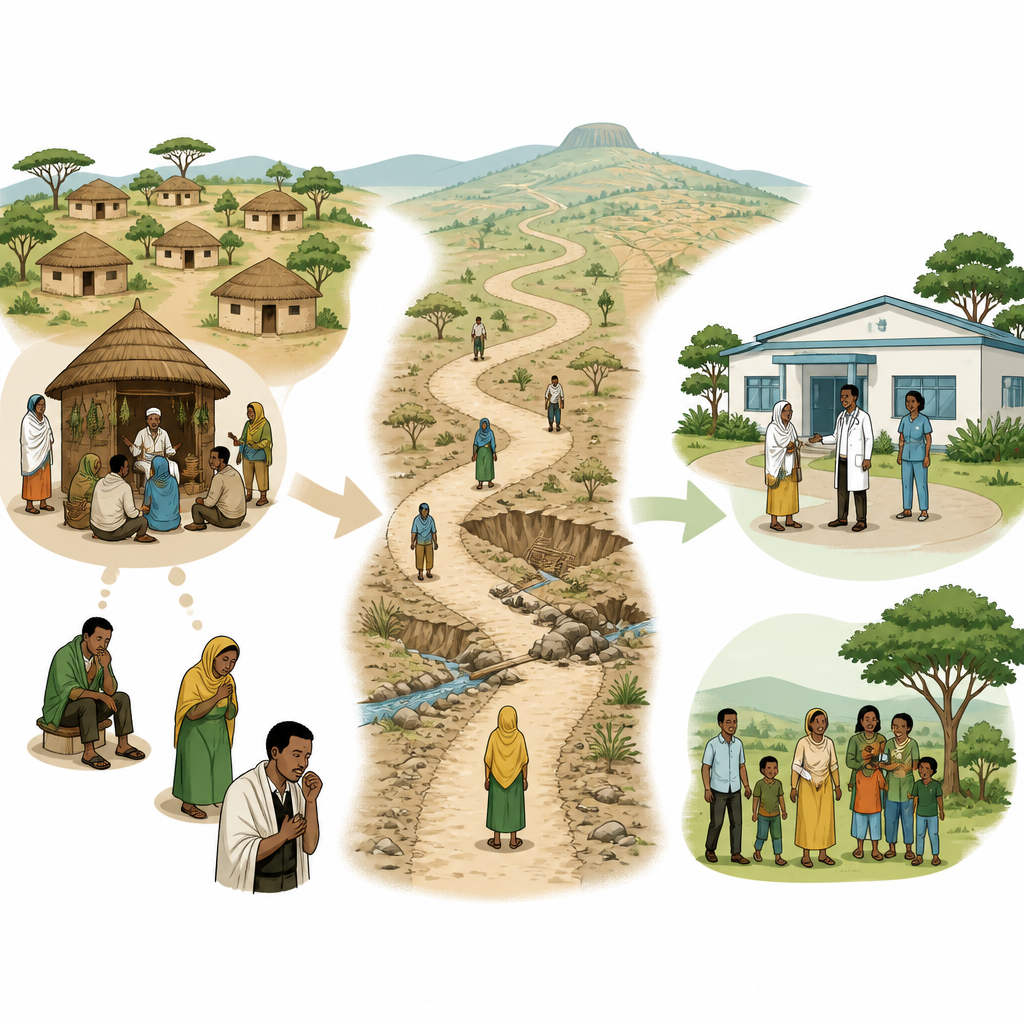
Looking at real patients in everyday clinics
The researchers followed 332 adults with tuberculosis who were already receiving treatment in 26 public health facilities across South Gondar. They first used a structured questionnaire to collect numbers on how long people had been sick before their first visit to a clinic and what their living conditions and health histories were like. Then they carried out in-depth interviews with ten patients to hear, in their own words, what kept them from seeking formal care. By combining numbers and personal stories, the team aimed to capture both the scale of the problem and the human realities behind it.
How long people waited and who was most at risk
The study found that nearly three out of four patients delayed going to a health facility for more than three weeks after their first symptoms. This high rate of delay was especially common among people with forms of tuberculosis that affect areas outside the lungs or that do not show clearly on simple sputum tests. People living in rural areas were about twice as likely to delay as those in towns, reflecting longer travel distances, higher transport costs, and weaker links with health services. Patients whose symptoms were moderate rather than very severe were also more likely to wait, suggesting that feeling only “somewhat unwell” can be deceptively dangerous.
Roles of symptoms, past care, and other illnesses
Not all patients behaved the same way. Those who had a clear, ongoing cough were more likely to visit health facilities sooner than those without this classic sign of tuberculosis. People who had visited a clinic at least once in the previous year also tended to seek care earlier, perhaps because they were already familiar with the system or had received information about warning signs. Interestingly, patients who were also living with HIV appeared less likely to delay. Regular follow up for HIV may have created more chances for screening, counseling, and early referral when tuberculosis symptoms appeared.
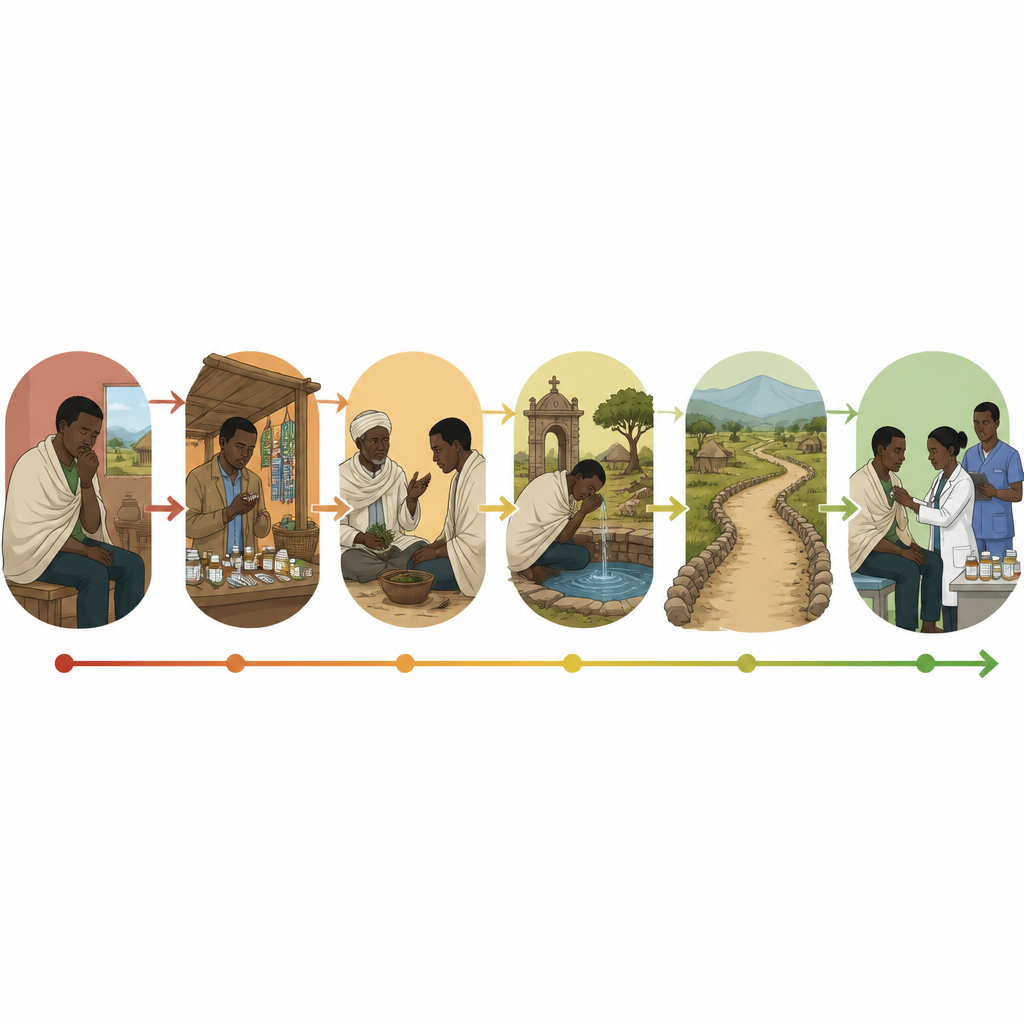
Tradition, self-treatment, and knowledge gaps
The strongest delays emerged when people turned first to options outside the formal health system. Many patients tried home remedies, bought medicines directly from shops, or visited traditional healers and holy water sites before ever entering a clinic. Those who used self-medication or traditional healing were several times more likely to arrive late for proper diagnosis and treatment. Interviews revealed that many patients did not recognize early tuberculosis symptoms, confused them with common colds, or believed the illness would pass on its own. Fear of costs, long travel, and shame or stigma in the community further discouraged early visits.
What this means for communities
Overall, the study shows that long delays in seeking care for tuberculosis are common in South Gondar and are shaped by where people live, how sick they feel, what kind of tuberculosis they have, and which helpers they turn to first. To shorten these delays, the authors suggest increasing public awareness of early symptoms, strengthening outreach in rural areas, involving health extension workers, and building better links between clinics and traditional healers. In simple terms, if people can recognize suspicious coughs sooner, feel supported to choose clinics over self-treatment, and find services within reach, many more cases of tuberculosis could be treated earlier, reducing suffering and cutting the spread of infection.
Citation: Yemata, G.A., Sitotaw, B.A., Alebachew, B. et al. Delay in seeking health facility and associated factors among tuberculosis patients in South Gondar Zone, Ethiopia, mixed methods study. Sci Rep 16, 14993 (2026). https://doi.org/10.1038/s41598-026-45371-x
Keywords: tuberculosis, health seeking delay, Ethiopia, rural health, traditional medicine