Clear Sky Science · en
Supplementary filling seedlings in secondary Pinus massoniana forests changed the structure of soil bacterial communities
Why new seedlings change more than the view
When forest managers plant extra young trees into a thinned or struggling pine stand, they are trying to boost timber yields and restore the landscape. This study shows that such gentle replanting in Chinese masson pine forests does not only change the look of the woods above ground; it also reshapes the hidden world of soil bacteria that help drive fertility, carbon storage, and long term forest health.
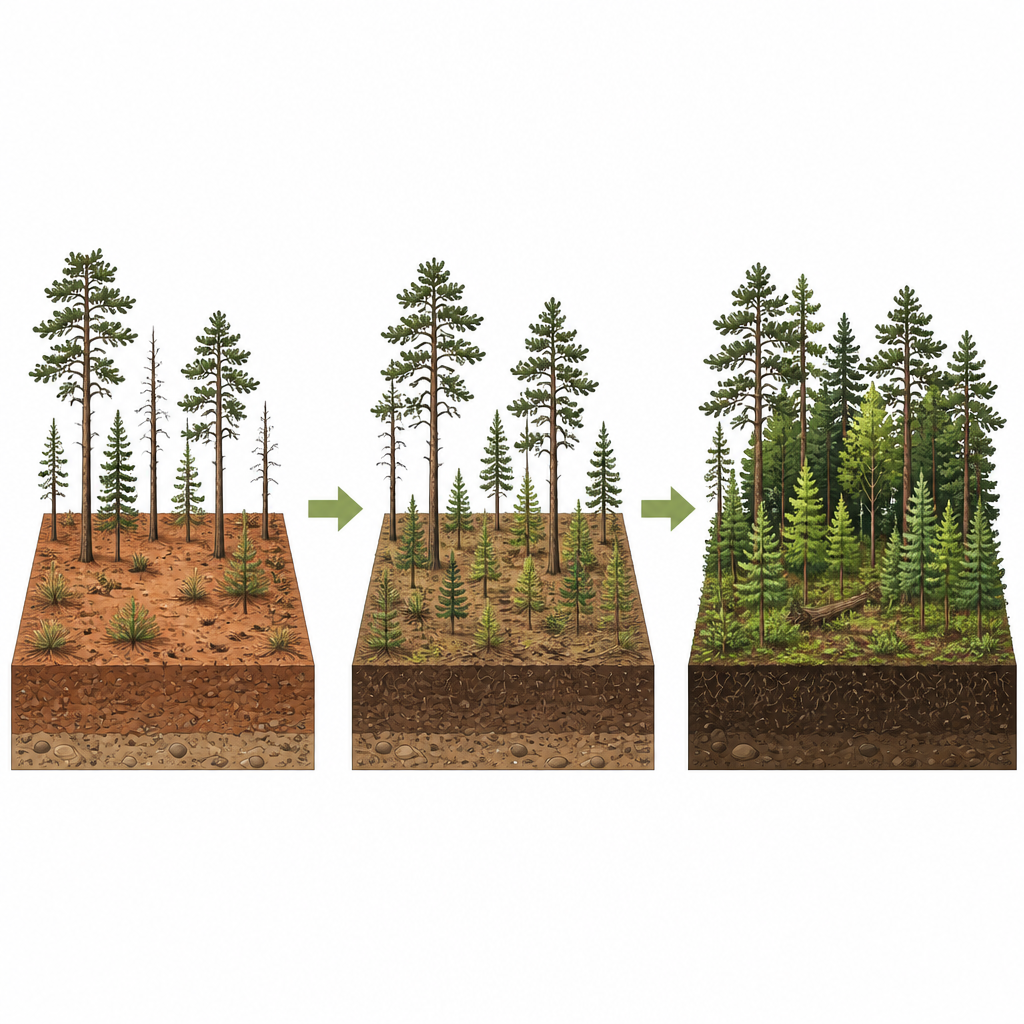
Bringing new life to tired pine forests
In southern China, many secondary Pinus massoniana forests suffer from poor growth and disease. Instead of clearing the land and starting over, managers often use a lighter touch called filling seedlings, where they cut only diseased trees and plant a small number of young pines in the gaps. The researchers wanted to know how this practice affects soil bacteria, which recycle nutrients and help plants grow. They compared undisturbed secondary forests with stands that had received extra seedlings two, four, or six years earlier, sampling soils in both summer and winter.
Tracking invisible residents in the soil
Back in the lab, the team measured basic soil properties such as acidity, organic matter, and forms of nitrogen and phosphorus. They then extracted DNA from the soils to identify which bacteria were present and in what numbers, and used quantitative PCR to estimate how many bacterial gene copies occurred in each gram of soil. By grouping similar DNA sequences, they could describe how rich and diverse the bacterial communities were, and by using statistical tools they could see how communities changed with time since replanting and with the seasons.
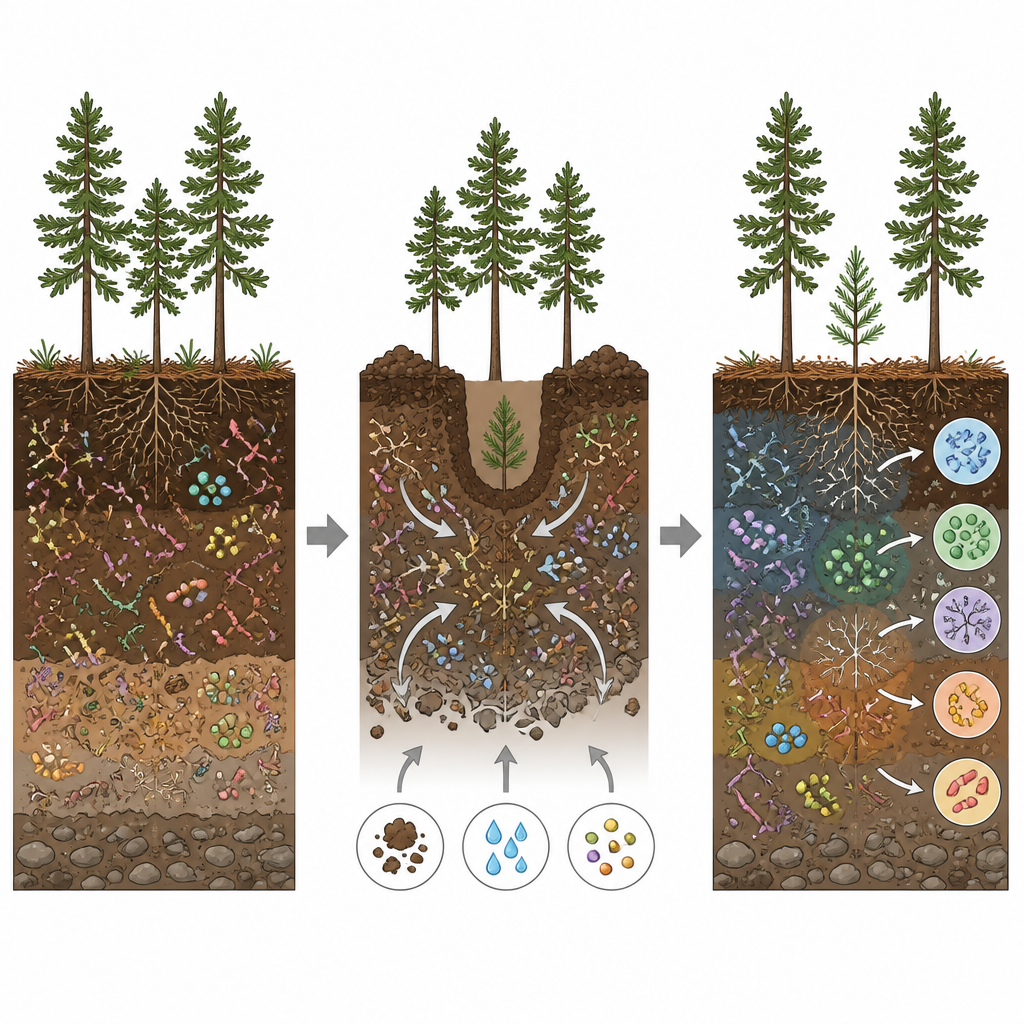
Community shake up after planting
Planting extra seedlings clearly disturbed the bacterial communities. Overall richness and diversity tended to rise in the first two years after planting, then decline again by year six, suggesting an initial burst of change followed by partial re organization. Total bacterial abundance dropped sharply over six years, falling by more than half in both summer and winter compared with the original forest. Some major bacterial groups lost ground while others expanded. For example, a dominant group known for helping break down tough plant material declined, while other groups linked to nitrogen transformations became more common, hinting that nutrient cycling pathways in the soil were being rearranged.
Soil conditions steer which microbes thrive
The study also showed that the planting work altered the soil’s physical and chemical setting, and these shifts helped explain the microbial changes. Digging planting holes likely mixed upper and deeper layers, slightly raising soil pH in these naturally acidic sites. Levels of organic matter and available phosphorus also changed over time, as did the forms of nitrogen present. These shifts in acidity and nutrients were closely linked to which bacterial lineages became more or less abundant. Some groups favored higher pH or richer organic matter, while others declined as ammonium or nitrate increased, underscoring how sensitive soil life is to even modest disturbance.
Seasonal rhythms in a changing forest floor
Season also mattered. Bacterial abundance was generally higher in winter than in the hot, wet summers typical of the subtropical monsoon climate, likely because cooler, more stable conditions reduce stress on microbes and help retain food sources in the soil. The strength of these seasonal swings depended on how long ago seedlings had been added, suggesting that as the reformed forest matures, its underground community settles into a new, but still seasonally pulsing, pattern.
What this means for forest managers
Overall, the work shows that filling seedlings in masson pine forests substantially reshapes soil bacterial communities and lowers their total abundance, while tying those changes to shifts in pH, organic matter, and key nutrients. Although the bacterial communities did not return to their original state within six years, they showed signs of recovery and rebalancing rather than runaway damage. For land managers, this suggests that carefully supplementing seedlings can be a viable way to upgrade low quality pine forests, provided that its subtle but important impacts on the soil’s living engine are considered in long term planning.
Citation: Pan, N., Zhang, YL., Jia, P. et al. Supplementary filling seedlings in secondary Pinus massoniana forests changed the structure of soil bacterial communities. Sci Rep 16, 15161 (2026). https://doi.org/10.1038/s41598-026-45370-y
Keywords: forest restoration, soil bacteria, Pinus massoniana, soil nutrients, microbial diversity