Clear Sky Science · en
Sleep stage-specific effects of 0.75 Hz phase-synchronized rTMS and tACS on delta frequency activity during sleep
Why tuning deep sleep could matter to you
Many of us think of sleep as simple rest, but the deepest stages of sleep are when the brain performs heavy-duty maintenance—stabilizing memories, supporting mood, and helping the body recover. This study tested a novel, non-invasive way to gently “nudge” the sleeping brain using weak magnetic and electrical stimulation, with the hope of strengthening the slow brain waves that mark deep sleep. If such techniques worked, they might one day help people with poor sleep or certain mental health problems. The researchers asked a straightforward question: can we boost these slow waves in a lasting, precise way, and does that actually sharpen memory after sleep?
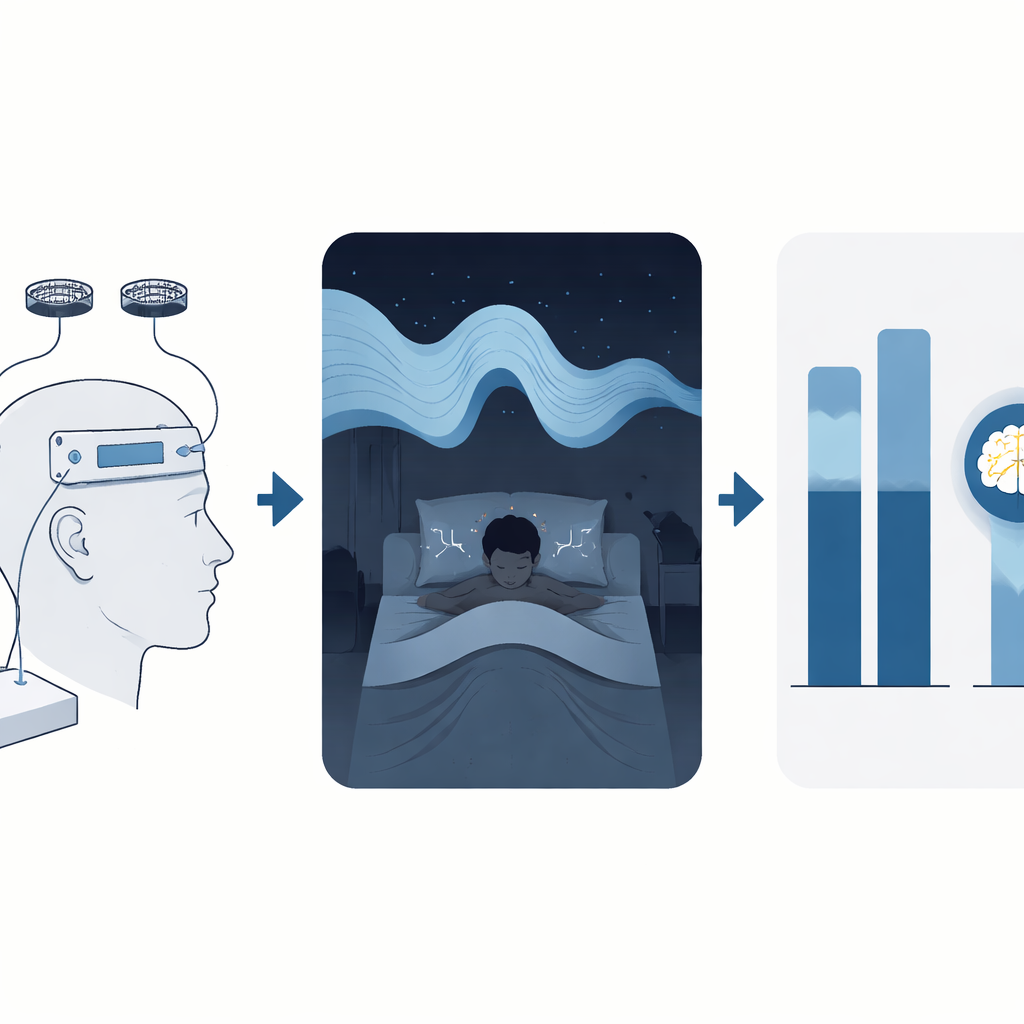
How the brain was gently pushed
Before sleep, healthy young adults received carefully timed pulses delivered through a cap placed over the front of the head. Two technologies were combined: repetitive transcranial magnetic stimulation (rTMS), which sends brief magnetic pulses through coils, and transcranial alternating current stimulation (tACS), which passes a very weak, rhythmic electrical current between surface electrodes. Both were tuned to about one cycle per second, matching the brain’s slowest sleep rhythm. Importantly, the magnetic pulses were locked to a specific phase—the trough—of the electrical rhythm, in an effort to reinforce a natural deep-sleep pattern. On a different day, the same participants went through a sham version that mimicked sensations and sounds but did not meaningfully stimulate the brain.
Watching brain waves while people slept
After the stimulation, participants took a roughly three-hour daytime nap while their brain activity was recorded with a high-density electroencephalogram (EEG). The team focused on “delta” activity, the slow waves that dominate the deepest non-REM sleep stage, called N3. They compared real stimulation with sham across all sleep stages, and also looked at how strongly different brain regions coordinated their slow waves, a measure of functional connectivity. To link these physiological changes to behavior, volunteers learned word pairs before sleep and were tested again after waking to see how many associations they could remember.
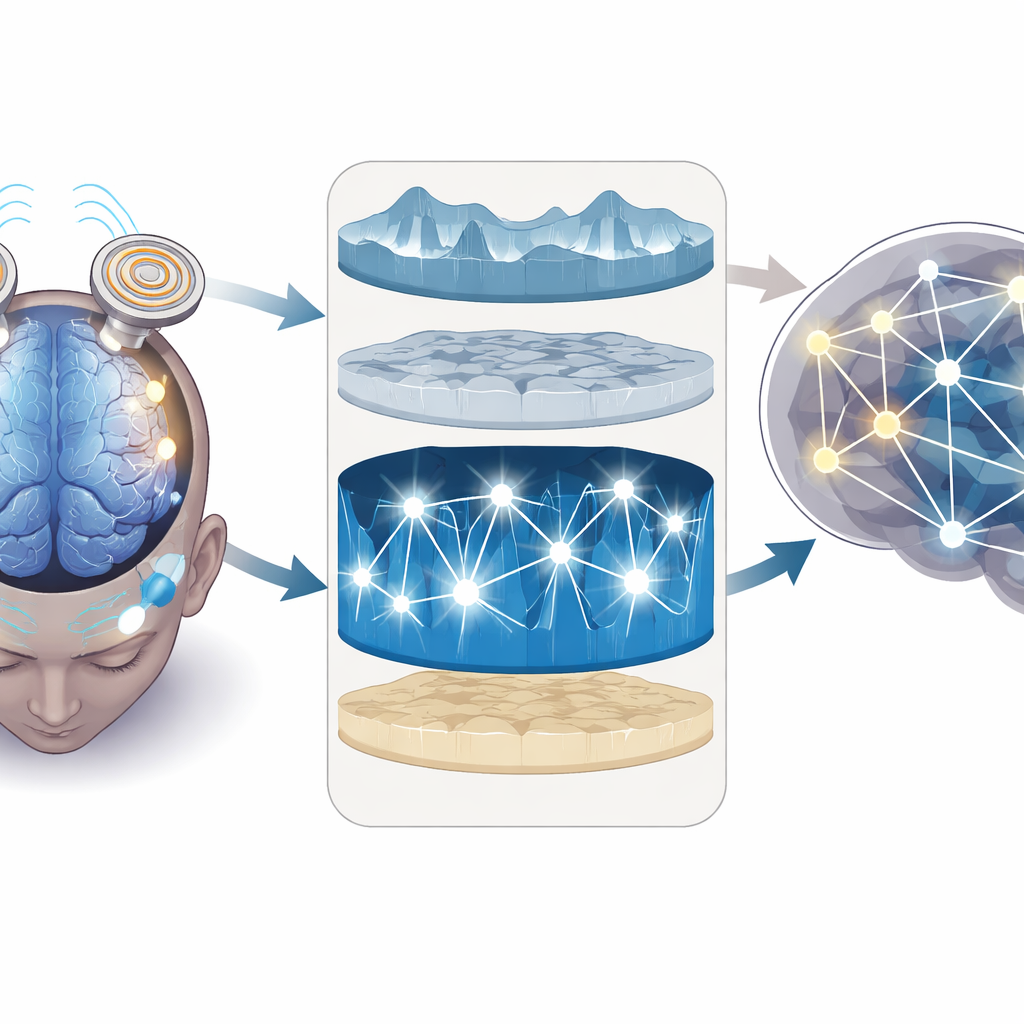
Deeper slow waves, but not better memory
The combined stimulation clearly changed the sleeping brain. During N3, delta power—the strength of slow waves—was significantly higher after real stimulation than after sham, particularly at the targeted frequency near 0.75 Hz and across the broader delta range. These increases outlasted sleep: even in resting EEG recorded after the nap, slow activity remained elevated in the real-stimulation condition. Connectivity told a complementary story. While overall network efficiency did not change dramatically across all stages, there was a selective boost in how efficiently brain regions communicated in the delta range during N2, a lighter non-REM stage. Despite these measurable shifts in brain activity, standard sleep architecture—how long people spent in each stage, how quickly they fell asleep, and how efficiently they slept—remained unchanged, and counts of sleep spindles, another key sleep rhythm linked to memory, did not differ between real and sham sessions.
What this tells us about sleep and memory
When it came to remembering the word pairs, participants did improve after sleep, but crucially they improved by about the same amount whether they had received real or sham stimulation. In other words, simply boosting slow brain waves before sleep was not enough, in this setup, to give people a memory advantage. This stands in contrast to earlier work using a different kind of stimulation that included a steady direct current component and was delivered during sleep itself, which had reported memory gains. The new results suggest that the fine details of how and when we manipulate brain rhythms—such as the exact waveform, which brain circuits are engaged, and how slow waves coordinate with spindles and faster bursts—may be critical for turning physiological changes into cognitive benefits.
Where this could lead
To a non-specialist, the main takeaway is that scientists can now selectively amplify the brain’s deepest sleep waves for several hours using gentle, surface stimulation applied before sleep, without disturbing overall sleep structure. While this did not enhance memory in healthy young adults under the conditions tested, it demonstrates a powerful handle on sleep-related brain activity. That control could be valuable for future clinical applications, for example in disorders where deep sleep is weakened, such as insomnia or aging. The work underscores both the promise and the complexity of “tuning” the sleeping brain: we can make its slow waves louder, but turning that into better thinking and memory will likely require targeting the entire orchestra of sleep rhythms, not just a single note.
Citation: Takahashi, K., Kuo, MF. & Nitsche, M.A. Sleep stage-specific effects of 0.75 Hz phase-synchronized rTMS and tACS on delta frequency activity during sleep. Sci Rep 16, 10520 (2026). https://doi.org/10.1038/s41598-026-45366-8
Keywords: deep sleep, brain stimulation, delta waves, memory consolidation, noninvasive neuromodulation