Clear Sky Science · en
Sustainable performance enhancement of a heat recovery ground source heat pump system using field data and machine learning
Why making better use of buried heat matters
As cities seek cleaner ways to keep buildings comfortable, systems that tap into the steady temperature underground are gaining attention. These ground source heat pump systems can cut energy use compared with standard air conditioners and boilers, but in hot-summer regions they face a hidden problem: over time, they dump more and more waste heat into the soil, which slowly warms up and drags down efficiency. This study explores a new design that not only curbs that underground heat buildup but also turns summertime waste heat into useful hot water, guided by real-world data and modern machine learning tools.
A smarter way to cool buildings and heat water
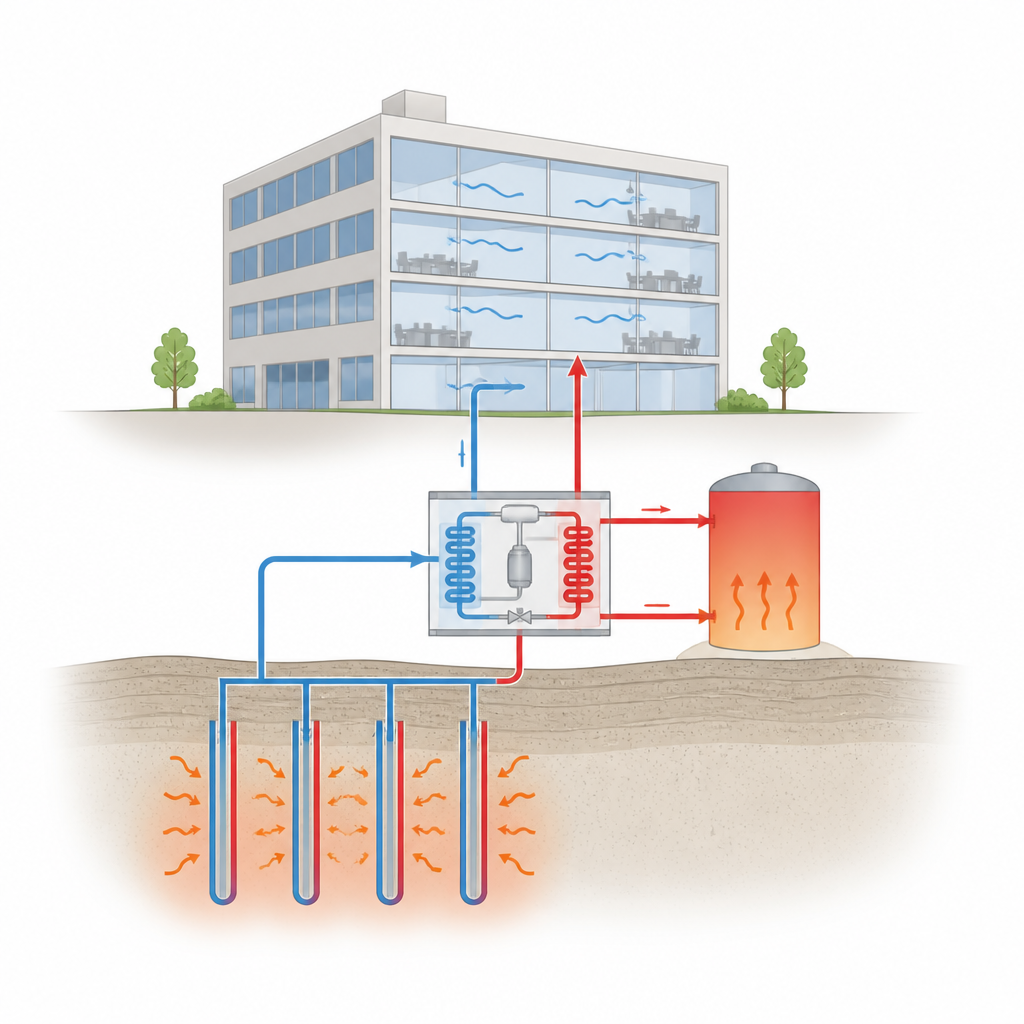
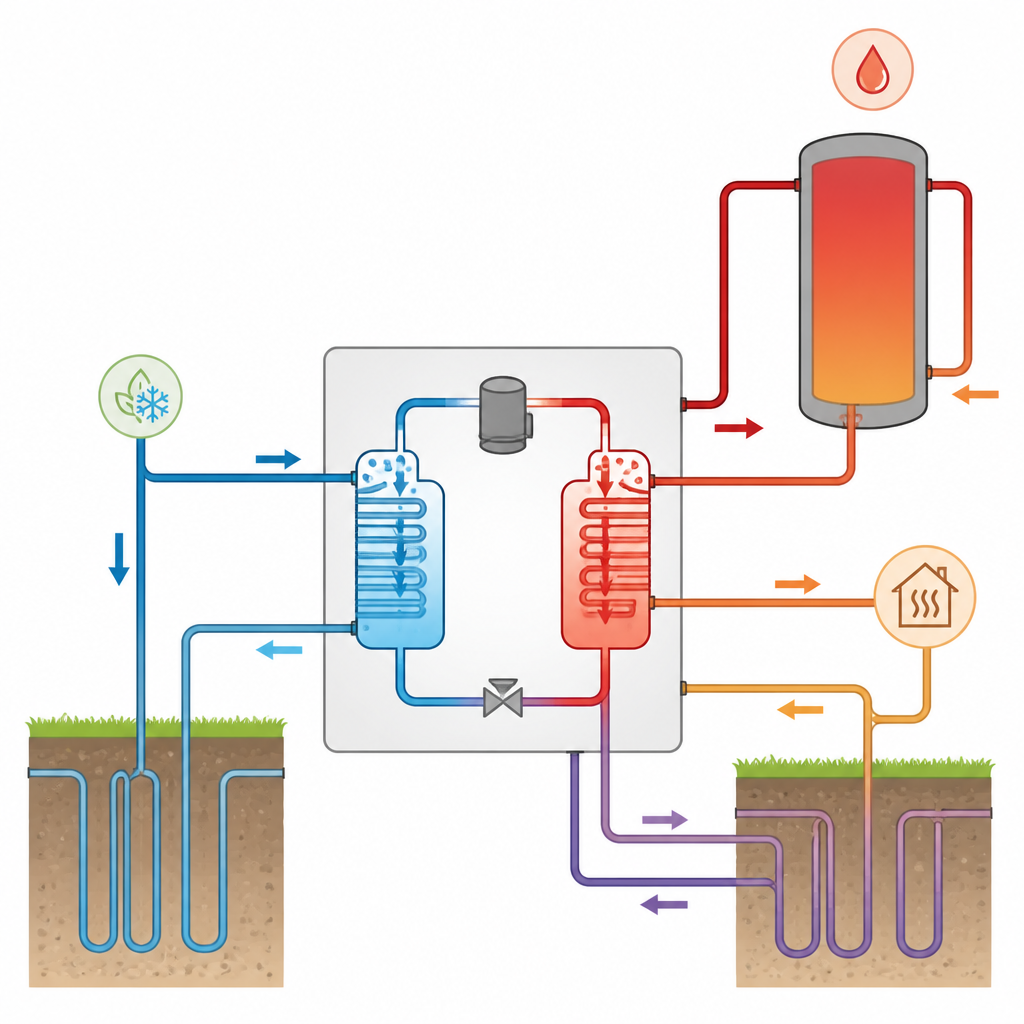
The researchers tested a heat recovery ground source heat pump, or HRGSHP, in a large industrial building in a Chinese city with hot summers and cold winters. Like a normal ground source system, it circulates water through deep vertical pipes in the ground to absorb or reject heat. The twist is that each heat pump unit contains two condensers arranged in parallel. With a set of valves, the system can either send unwanted heat into the ground or capture it to produce hot water for uses such as space heating, dehumidification reheat, or domestic hot water. In summer, when cooling needs are high and hot water is also useful, this design allows the same machine to chill indoor spaces and deliver 50 °C water at the same time.
How the system runs through the seasons
Over almost three years of operation, the system switched among four basic modes. In pure cooling mode, it worked much like a conventional ground source chiller, sending heat to the underground loop while supplying chilled water to the building. In a combined cooling plus hot water mode, part of the heat went to the ground and part went into a hot water tank. There were also a hot water only mode during mild seasons and a heating mode in winter, when the underground loop acted as a heat source and the system delivered hot water for space heating. By adjusting valve positions, water flow, and compressor capacity, the system matched changing outdoor weather and indoor demands without adding separate boilers or cooling towers.
What years of field data revealed
The team continuously recorded temperatures, flow rates, power use, soil conditions, and weather, amassing more than two hundred thousand data points. These measurements showed that, even under heavy cooling, the average soil temperature at 150 m depth rose by only about 0.45 °C over three years, far less than increases reported for standard ground source systems in similar climates. However, the overall efficiency of the real installation was lower than rated laboratory values, partly because pumps often pushed more water than needed, creating small temperature differences across the system and wasting electricity. Seasonal trends also emerged: gradual warming of the ground slightly hurt cooling efficiency but helped winter heating by raising the temperature of the underground heat source.
Letting algorithms tune the knobs
To squeeze more performance from the existing hardware, the authors built a data-driven optimization framework. They used a type of neural network to learn how the system’s efficiency indicators respond to conditions such as outdoor temperature, water temperatures, and flow rates. A genetic algorithm then searched for the best internal settings, and a decision method known as TOPSIS balanced multiple goals at once, including separate measures for the heat pump itself and for the entire plant. This virtual test bed allowed them to explore many operating combinations that would be impractical to try manually while still respecting realistic limits on temperatures and flows.
Energy savings and what they mean in practice
When they applied the optimized settings in their model, the results were striking. On average, the measures of heating performance in winter improved by up to 27 percent for the whole system, while cooling performance in summer improved by about 21 percent. At the same time, the analysis indicated that electricity use could fall by roughly one fifth, leading to an estimated 19 percent cut in operating costs compared with the current way of running the plant. Importantly, these gains did not require new equipment, only different choices of water temperatures and pump speeds guided by the data-driven method.
What this means for future buildings
For a non-specialist, the takeaway is that underground heat pump systems can be made both cleaner and more cost effective by reusing their own waste heat and by running them more intelligently. The tested design keeps the ground from overheating, reduces reliance on separate heating and cooling devices, and shows that machine learning can help operators find sweet spots that human trial and error might miss. While more work is needed to include detailed life-cycle costs and to test other building types, the study offers a practical path for turning buried pipes and digital models into real energy savings.
Citation: Cui, Y., Chong, W.T., Varman, M. et al. Sustainable performance enhancement of a heat recovery ground source heat pump system using field data and machine learning. Sci Rep 16, 15271 (2026). https://doi.org/10.1038/s41598-026-45353-z
Keywords: ground source heat pump, heat recovery, building energy, machine learning, HVAC optimization