Clear Sky Science · en
Co-pyrolysis of agricultural biomass for potentially functional biochar: combined influence of both feedstocks and structural characterization
Turning Farm Leftovers into Useful Carbon
Across the world, farms generate mountains of leftover plant material after harvest. Much of this “waste” is burned or left to rot, releasing carbon back into the air. This study explores a different path: gently baking corn stalks and rice husks together to make a charcoal-like material called biochar. The work asks a simple but important question: if we process these residues together instead of separately, do we get a special kind of biochar that is better suited for improving soils and protecting the environment?
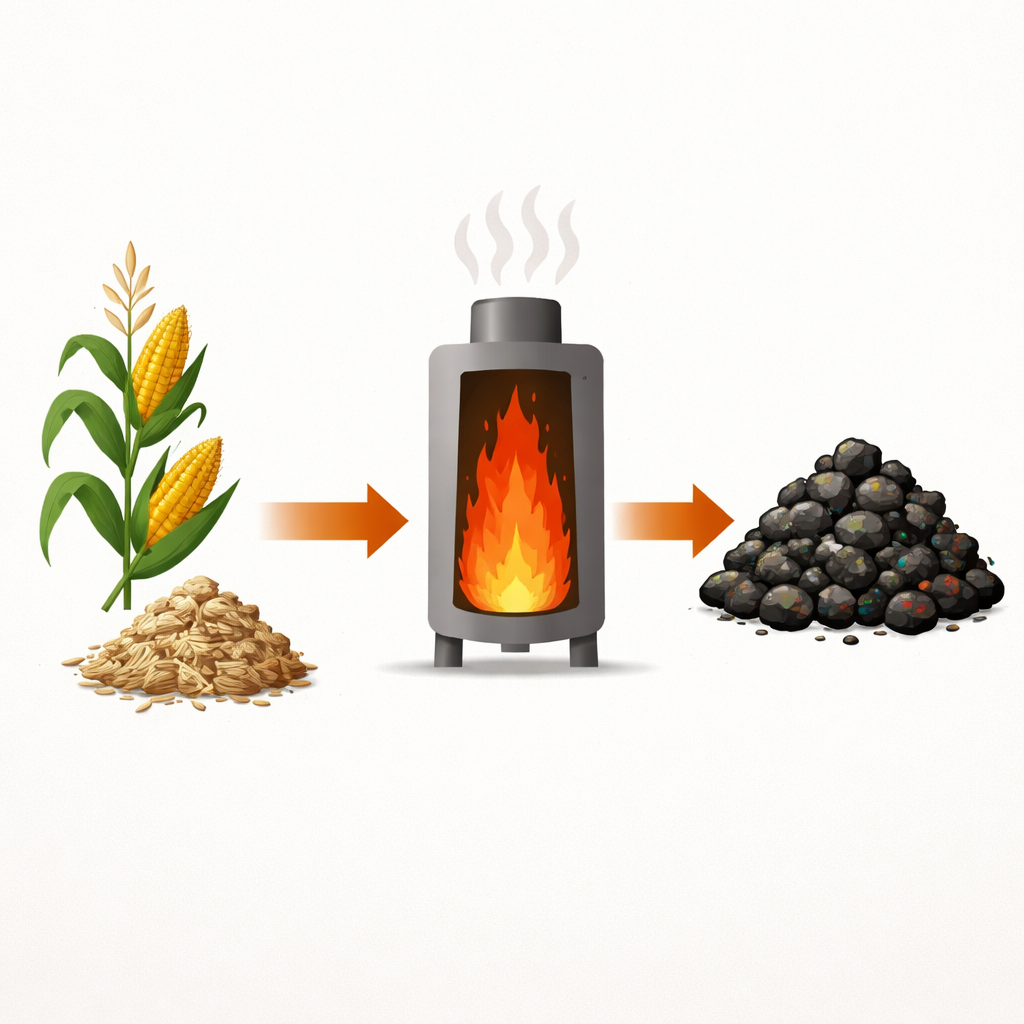
From Stalks and Husks to Charcoal-Like Grains
The researchers collected corn stalks and rice husks from farms in Türkiye and heated them slowly to 400 °C in low oxygen, a process known as pyrolysis. They did this three ways: corn stalk alone, rice husk alone, and a 50:50 mix of the two. This gentle baking drives off water and volatile compounds and leaves behind a carbon-rich solid—biochar. The team then measured many basic traits, including moisture, pH, salt content, and nutrient levels (such as nitrogen, phosphorus, and potassium), to see how the starting mix shaped the final material. All three biochars were dry, slightly alkaline, and contained useful plant nutrients, but the mixed biochar combined the carbon-rich nature of corn stalk with the mineral-rich nature of rice husk into a more balanced product.
What the Microscopes and Spectra Reveal
To look inside the biochar in more detail, the scientists used a suite of tools normally seen in materials science labs. Infrared measurements showed that heating stripped away many oxygen-rich groups from the plant surfaces and built up more stable, ring-like carbon structures. X-ray techniques confirmed that the carbon was largely disordered, as expected at moderate temperatures, but that minerals such as silica, potassium, and calcium survived the heat. Electron microscope images revealed that the mixed biochar had a more varied and irregular surface than either single-source char, with clear pores and bright mineral spots. Together, these observations show that when stalks and husks are heated side by side, their organic matter and minerals reorganize into a single, intertwined carbon–mineral network.
Size, Surface, and Charge: How the Grains Behave
The study also focused on traits that matter for how biochar behaves once added to soil or water. Measurements of grain size showed that the mixed biochar had a broader spread—from fine to relatively coarse particles—than the single-source chars. Surprisingly, even though its grains were coarser on average, the mixed biochar kept a surface area similar to that of the finer rice-husk char. This means much of the tiny internal pore structure was preserved during mixing, potentially keeping many sites where water and nutrients can interact. All samples carried a net negative surface charge in water, which helps them stay dispersed and interact with positively charged nutrients and metals. The mixed biochar was slightly less negatively charged, indicating subtle shifts in surface chemistry and minerals when the two feedstocks are processed together.
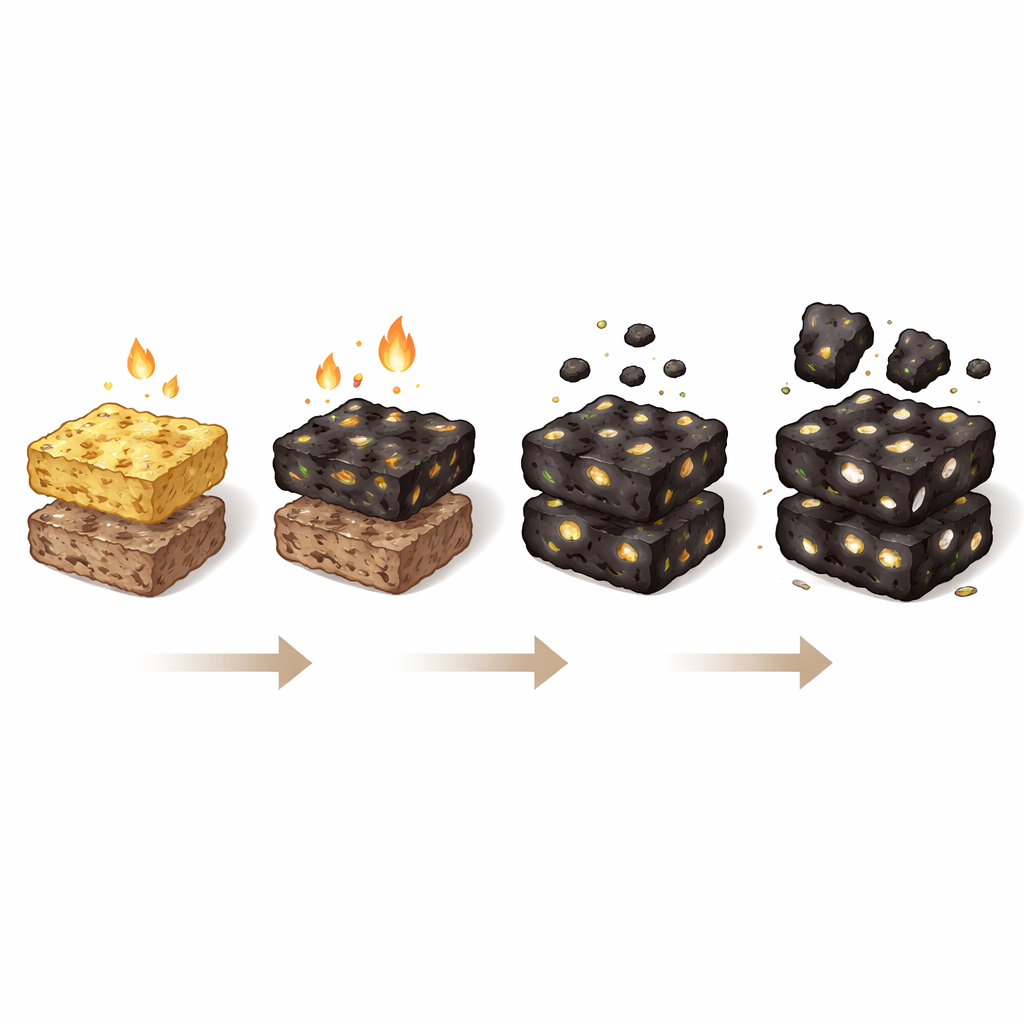
Why This Matters for Soils and Pollution Control
Beyond the lab numbers, the key outcome is that co-processing corn stalks and rice husks yields a biochar that blends the strengths of both: carbon-rich organic matter from the stalks and silica- and nutrient-rich ash from the husks. The result is a material that is moderately alkaline, contains useful nutrients, and has a diverse mix of particle sizes and pore structures. These features are promising for real-world uses such as improving acidic soils, helping soils hold onto water and nutrients, and possibly trapping pollutants. However, the authors stress an important caution: lab measurements alone cannot guarantee performance in fields, rivers, or treatment systems.
From Lab Promise to Farm and Field Proof
In plain terms, this work shows that how we combine plant wastes before heating can tune the texture and chemistry of the resulting biochar. The mixed corn–rice biochar is not simply an average of the two starting materials; its structure and mineral makeup reflect interactions between them during heating. That makes it a promising candidate for sustainable waste recycling and soil improvement. Still, the study stops short of claiming that this biochar will definitely boost crop yields or clean up contaminants. Those claims will require long-term trials in real soils and waters. For now, the message is clear: thoughtfully mixing farm leftovers before turning them into biochar can create more versatile, potentially useful materials from resources that might otherwise be thrown away.
Citation: Demir, Z., Bozkurt, P.A. Co-pyrolysis of agricultural biomass for potentially functional biochar: combined influence of both feedstocks and structural characterization. Sci Rep 16, 10947 (2026). https://doi.org/10.1038/s41598-026-45350-2
Keywords: biochar, agricultural waste, soil amendment, pyrolysis, sustainable farming