Clear Sky Science · en
Fermentation and chemical composition as determinants of genetic and biochemical variation in cocoa (Theobroma cacao L.) bean colour
Why the colour of cocoa beans matters
When you break open a cocoa pod, the beans inside are not the familiar chocolate brown we see in bars and powders. They can be pale, purple, or deep reddish-brown, and those colours quietly shape how our chocolate will look and taste—and how much it is worth. This study asks a deceptively simple question with big implications for farmers, chocolate makers, and consumers: what really controls the colour of cocoa beans, from the tree in the field to the final fermented bean ready for chocolate?
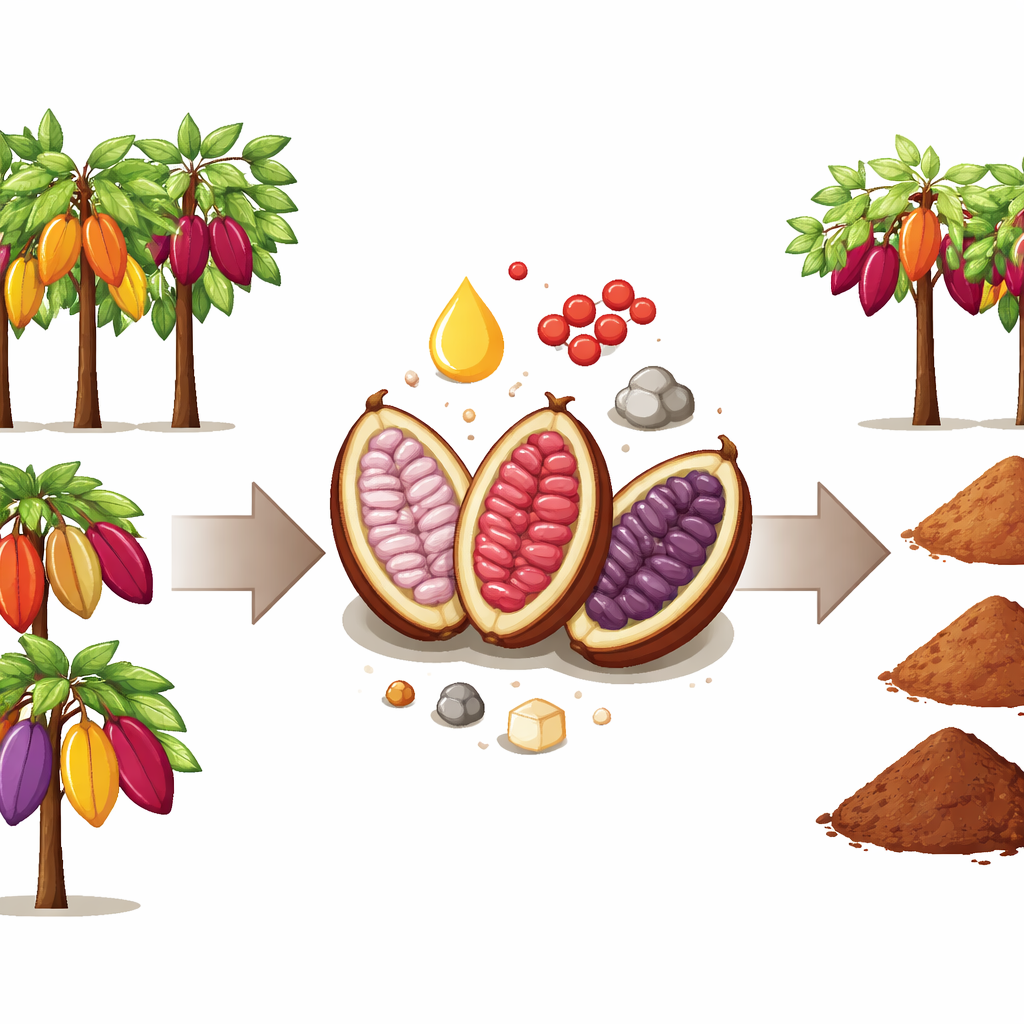
Many kinds of cocoa, many shades of colour
The researchers examined 38 different cocoa types, ranging from traditional germplasm collections to improved farm varieties. For each one, they carefully measured bean colour using a standardized method that captures how light or dark a sample is, and how much red, yellow, or brown it contains. Even before any processing, the beans showed striking differences. Some, like the type called Criollo, were relatively light, while others—such as MO 20—were naturally much darker. A few genotypes, especially EQX78, ARF 22, and MO 20, stood out for their vivid, attractive reddish-brown tones. By clustering all of these measurements together, the team could group the 38 genotypes into distinct colour families, revealing that some lines consistently produce more appealing bean colours than others.
What happens to colour during fermentation
Raw cocoa beans do not yet smell or taste like chocolate. That transformation happens during fermentation, a several-day, microbe-driven process inside heaps or baskets of beans. The study compared colour before and after fermentation in four representative cocoa types. Across the board, fermentation darkened the beans and pushed their colour toward the rich reddish-brown associated with quality cocoa. Lightness dropped, red and yellow tones increased, and the overall saturation of colour became stronger. In some Forastero types, such as CCRP 9, the shift was dramatic enough that even an untrained eye would easily see two different colours. Criollo, in contrast, remained relatively lighter even after fermentation, while Trinitario changed only modestly. These patterns show that fermentation does not act alone: the starting genetics of the bean strongly influence how far the colour can change.
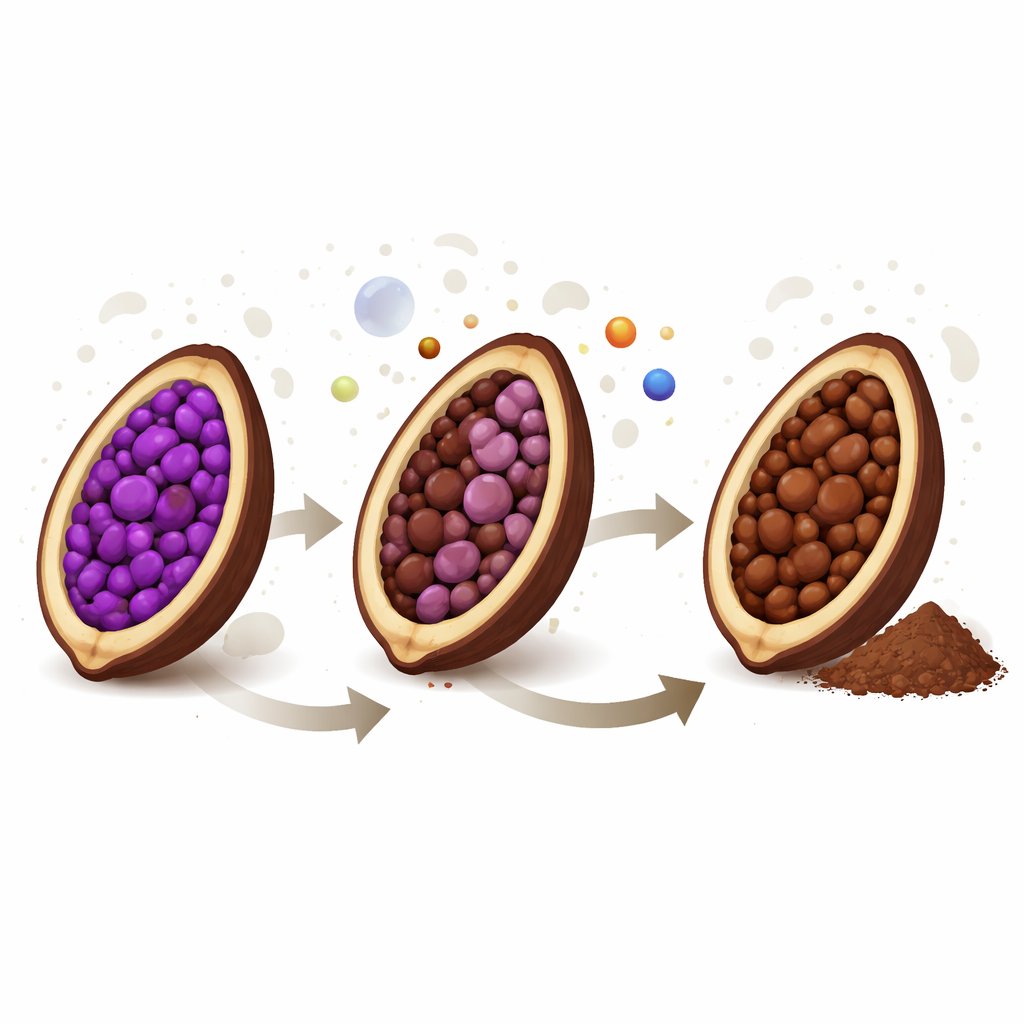
Pigments, fats, and minerals behind the hues
To understand why colours differ, the scientists looked inside the beans at their chemistry. They measured fat, total polyphenols, and key minerals such as iron, magnesium, calcium, sodium, phosphorus, and potassium. They also focused on a special group of plant pigments called anthocyanins, which give fresh cocoa beans their purple and red tones. In fermented powders from selected genotypes, the pigments cyanidin and delphinidin were found to be the main players, while others were present only in trace amounts. Beans with more of these pigments tended to end up darker and more intensely coloured after fermentation, especially in Forastero types. At the same time, minerals subtly steered colour expression: iron was linked with stronger, redder and yellower tones, while magnesium often muted colour. Sodium was associated with lighter beans, and phosphorus with darker ones, underscoring that minerals do more than just contribute to nutrition—they also help control how pigments behave during processing.
How genetics and processing work together
By combining colour measurements, chemical tests, and statistical correlations, the study paints a picture of cocoa bean colour as a finely tuned outcome of genetics, composition, and processing. Germplasm accessions tended to offer the best raw colour properties, whereas improved varieties often carried higher fat, polyphenols, and minerals—traits important for both health value and chocolate texture. The way fermentation reshaped colour depended on both the pigment content and the activity of biochemical pathways that differ among cocoa groups like Criollo, Forastero, and Trinitario. These differences trace back to gene families that govern the synthesis and breakdown of phenolic compounds, which in turn feed into browning reactions during fermentation.
What this means for future chocolate
For chocolate lovers, the message is that the rich brown colour of cocoa is no accident. It emerges from a complex partnership between the plant’s genes, the cocktail of fats, pigments, and minerals in each bean, and the way farmers ferment their harvest. The authors show that by choosing particular genotypes—such as EQX78, ARF 22, and MO 20—and tailoring fermentation to their chemistry, it should be possible to produce cocoa beans with more consistent, attractive colour while also enhancing nutritional qualities. In the long run, integrating this kind of biochemical insight with breeding and careful post-harvest handling could help farmers command better prices and give consumers chocolates whose appearance reliably matches their expectations.
Citation: K. S., S., J. S., M., Mohanan, S. et al. Fermentation and chemical composition as determinants of genetic and biochemical variation in cocoa (Theobroma cacao L.) bean colour. Sci Rep 16, 14492 (2026). https://doi.org/10.1038/s41598-026-45348-w
Keywords: cocoa bean colour, chocolate fermentation, anthocyanin pigments, cocoa genetics, food colour chemistry