Clear Sky Science · en
A possible role of Painless channel in the regulation of immune system activity in Tenebrio molitor L.
Why mealworm health matters
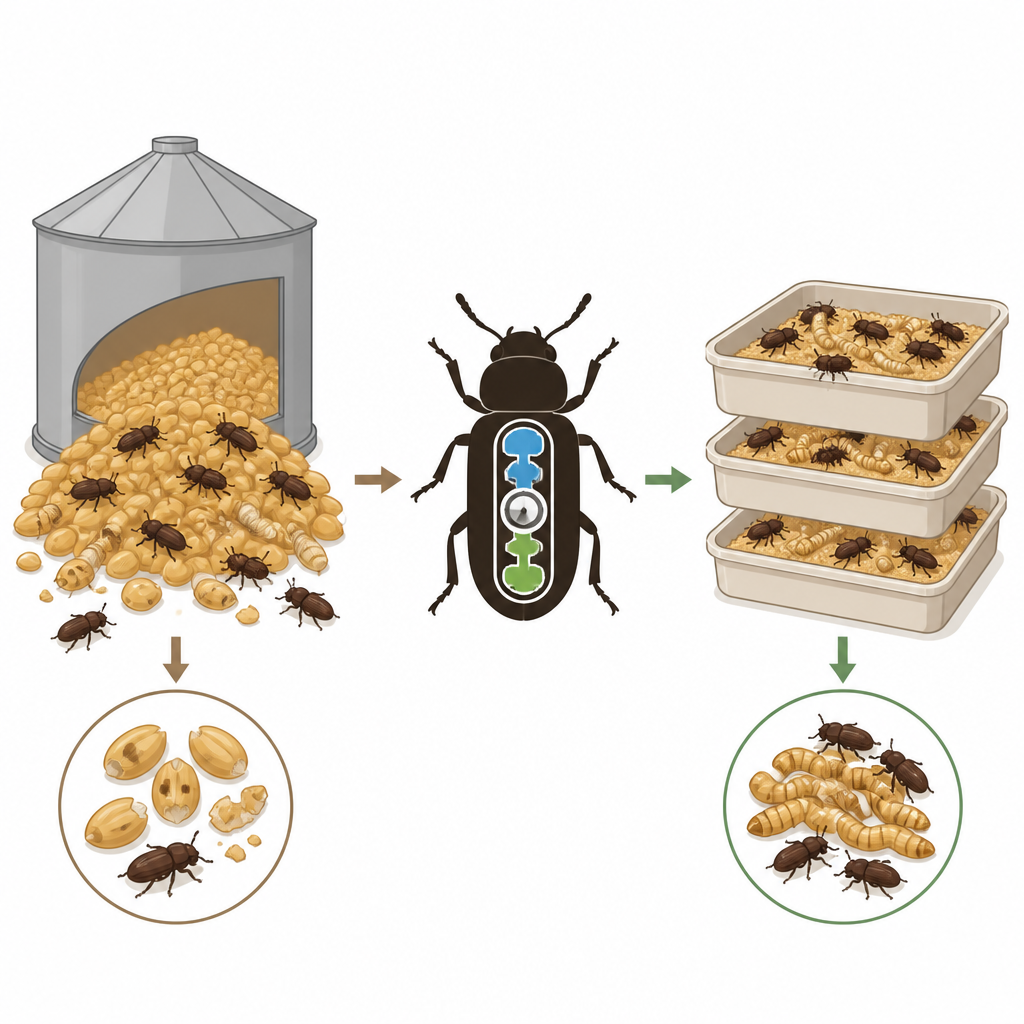
Mealworms are more than tiny pantry pests. The same beetle that can ruin stored grain is now being raised worldwide as a high protein, low footprint source of food and animal feed. To use mealworms safely and efficiently, we need to understand how their bodies fight infection. This study looks at a single molecular “gate” in mealworm cells, called the Painless channel, and asks how it helps control their immune system. The answers could inform both pest control and healthier mass rearing of these insects.
A hidden switch in beetle nerves and blood
The researchers focused on Tenebrio molitor, the yellow mealworm beetle, a well known grain pest and model organism. Inside its cells sits the Painless channel, part of a broader family of sensors that respond to heat, chemicals and other stimuli by letting charged particles into the cell. The team examined where the Painless gene is active, especially in the nervous system and in immune related tissues such as circulating blood cells and the fat filled tissue that also helps coordinate immunity. They then triggered the beetles’ immune system with bacteria, bacterial cell wall fragments and a natural immune signaling protein and tracked how Painless activity rose or fell over time.
Immune alarms and changing gene activity
When the beetles’ immune system was activated, Painless gene activity shifted in a time dependent and tissue specific way. In parts of the nervous system and in the fat body, the gene was often strongly reduced a few hours after exposure to immune stimulators. In blood cells, changes appeared later, and in some cases Painless stayed reduced for a full day. Correlations between tissues suggested that when Painless activity increased in one site, it could fall in another, hinting at coordinated control between brain, nerve cord, fat body and blood cells during the immune response.
Turning the channel on and off
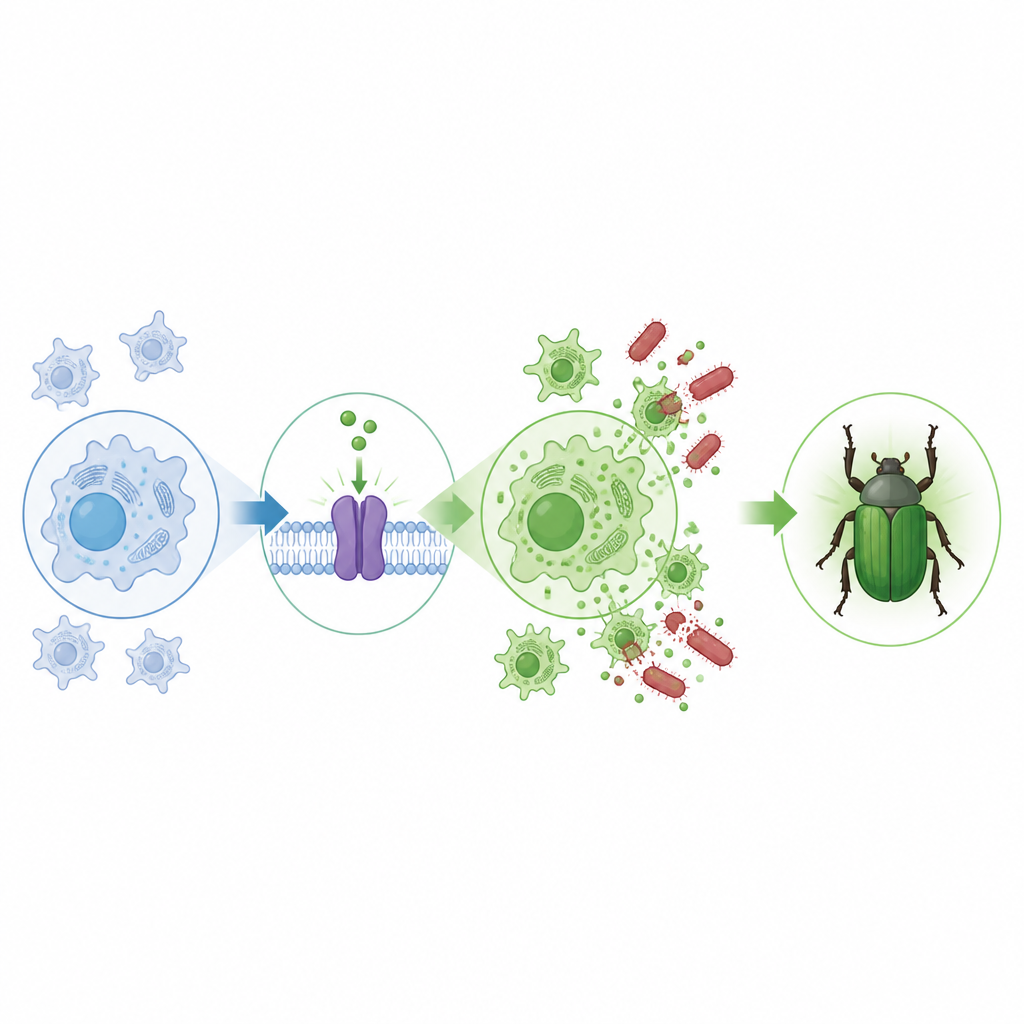
To test what Painless actually does, the team used two complementary approaches. First, they applied a chemical known to activate this family of channels and watched how blood cells responded. After exposure, calcium inside the cells rose, a classic sign that internal signaling has been switched on. The number of circulating immune cells in the beetles’ blood also increased briefly. At the same time, several key immune genes, including those linked to major defense pathways and to antimicrobial peptides that directly kill microbes, became more active in blood cells while often becoming less active in fat body tissue. Second, the researchers used a genetic method to reduce Painless production. This knockdown did not change the number of circulating cells, but it did lower the activity of several immune genes and of Calcineurin, a calcium sensitive regulator that can connect calcium signals to immune pathways.
From cell signals to survival
Changes at the molecular level only matter if they affect whole animals, so the team challenged beetles with a bacterial infection. When beetles received the channel activating chemical shortly before being injected with Escherichia coli, their chances of survival improved, especially at the lower chemical dose. In contrast, reducing Painless gene activity did not significantly change survival during infection, suggesting that other related channels can partly compensate. A separate comparison of Painless protein sequences across many insect groups showed that mealworm relatives form a distinct cluster, raising the possibility of designing species selective tools that target Painless in pest beetles while sparing other insects.
What this means for pests and protein
To a layperson, this work shows that a single microscopic gate in beetle cells can help tune their immune defenses, affecting both how they cope with germs and how they respond to chemical signals. By mapping when and where the Painless channel is active, and by showing that its activation boosts immune signaling and can improve survival during infection, the study points to new ways of either weakening pest populations or strengthening the health of farmed mealworms. In both cases, carefully targeting such channels could offer a more precise approach than broad spectrum chemicals.
Citation: Bylewska, N., Gmyrek, R., Konopińska, N. et al. A possible role of Painless channel in the regulation of immune system activity in Tenebrio molitor L.. Sci Rep 16, 15454 (2026). https://doi.org/10.1038/s41598-026-45339-x
Keywords: insect immunity, mealworm beetle, ion channels, pest control, insect mass rearing