Clear Sky Science · en
Exploring the synergistic effects of titanium dioxide reinforcements on microstructural and tribological behaviour of hybrid Al6061/5ZrO2 composite
Why tougher light metals matter
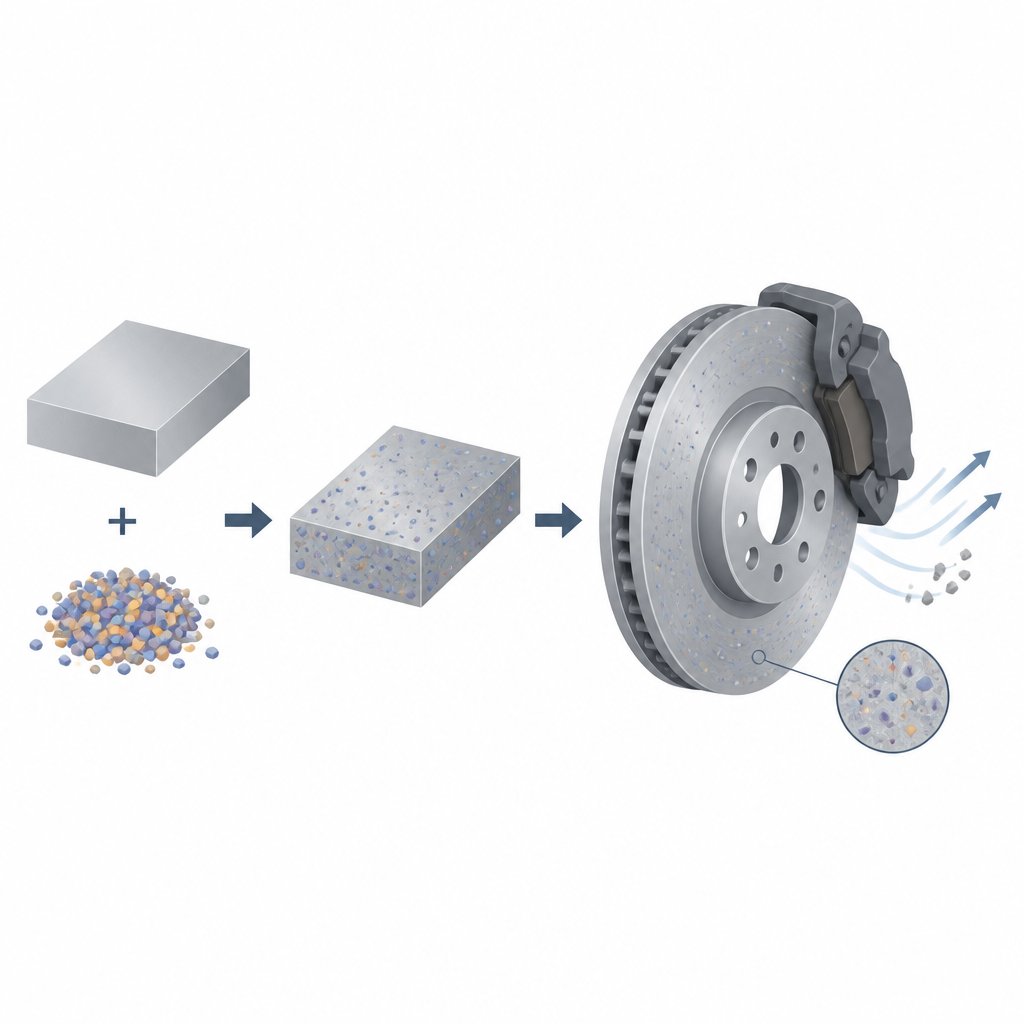
From car brakes to artificial joints, many parts in machines and medical devices must be both light and tough. Aluminium is already a favorite for cutting weight, but it can wear out quickly when surfaces slide against each other. This study explores how mixing tiny ceramic powders into a common aluminium alloy can make it harder, more wear resistant, and better suited for demanding friction situations such as automotive components.
Building a stronger metal mix
The researchers focused on a widely used alloy called Al6061 and turned it into a hybrid material by stirring in several kinds of ceramic particles. The main additions were nano sized titanium dioxide and zirconia, along with small amounts of yttrium oxide and strontium oxide. Using a controlled stir casting process, they melted the aluminium, preheated the powders, mixed them into the liquid metal, and cast the mixture into solid bars. Careful preparation and temperature control helped spread the ceramic particles evenly, keeping pores and defects to a low level.
What happens inside the new material
To see how the new mixture behaved on the inside, the team used X ray diffraction and electron microscopes. These tools confirmed that the ceramic particles survived the high temperatures without breaking down or reacting badly with the aluminium. Maps of the elements showed that zirconia, titanium dioxide, yttrium oxide, and strontium oxide were well distributed throughout the metal. As more titanium dioxide was added, the overall density rose slightly, and the amount of tiny voids remained below one percent, a sign of generally sound casting quality.
Harder surface, slower wear
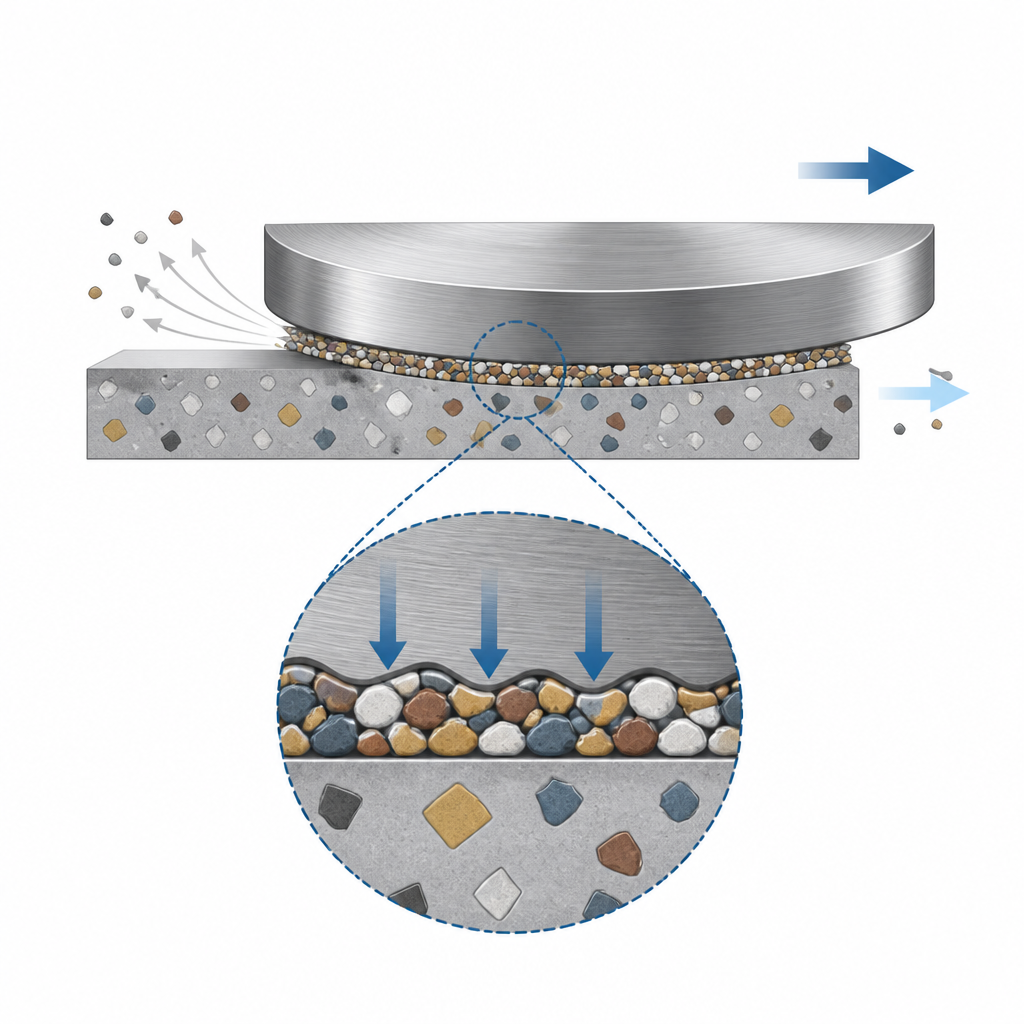
The most noticeable change was in hardness, which is a measure of how strongly a material resists indentation and local deformation. When the researchers increased titanium dioxide from zero to twelve weight percent, hardness climbed from 74 to 94 on the Vickers scale. The ceramic particles act like hard pebbles in a softer ground, blocking the motion of defects in the metal and forcing the alloy to carry load more evenly. This strengthening makes the surface less likely to deform and gouge when rubbed against another solid surface.
How the composite slides and wears
To mimic real use, the team ran dry sliding tests, pressing rectangular samples against a hardened steel disc while changing the load, sliding speed, and distance. They measured how much material was lost and how the friction changed. In all cases, samples with more titanium dioxide lost less material, meaning better wear resistance. At moderate speeds, a protective film, or tribolayer, formed between the aluminium composite and the steel, helped by the hard particles. This thin layer reduced direct metal to metal contact and lowered both wear and friction. At the highest sliding speed, the layer became unstable and broke apart, causing friction to rise again.
Peering at worn surfaces
Microscope images of used samples showed how the wear mechanisms changed. The plain alloy tended to suffer adhesive wear, where fragments tear off and smear along the sliding path, leaving deep grooves and cracks. As ceramic content increased, the surfaces showed more signs of shallow ploughing, micro cutting, and fine surface fatigue instead of heavy tearing. The hard particles helped carry the load and supported the tribolayer, limiting deep damage. Chemical analysis of the worn tracks confirmed that ceramic particles remained embedded in the contact zone and took part in protecting the aluminium underneath.
Finding the best recipe
Because many factors influence wear, the researchers used a statistical design approach called Taguchi analysis combined with variance analysis to sort out which ones matter most. They found that titanium dioxide content had the largest impact on wear performance, followed by the load on the surface, sliding speed, and sliding distance. An intermediate titanium dioxide level of around eight weight percent, combined with specific test conditions, produced the lowest measured wear rate, and follow up tests closely matched the predicted behavior. This agreement suggests that the optimization method can guide future design of similar composites.
What this means for everyday technology
In simple terms, this work shows that carefully adding tiny amounts of hard ceramic powders to a standard aluminium alloy can turn it into a tougher, more durable material for parts that slide and rub. By tuning the amount of titanium dioxide and other particles, engineers can significantly raise hardness and slow wear without making the metal too heavy or porous. Such hybrid aluminium composites could extend the life of brake parts, bearings, and other friction heavy components in vehicles and machinery, helping equipment run longer with less maintenance.
Citation: Shekhawat, D., Aherwar, A. & Pathak, V.K. Exploring the synergistic effects of titanium dioxide reinforcements on microstructural and tribological behaviour of hybrid Al6061/5ZrO2 composite. Sci Rep 16, 15889 (2026). https://doi.org/10.1038/s41598-026-45337-z
Keywords: aluminium composites, titanium dioxide, wear resistance, tribology, hybrid materials