Clear Sky Science · en
Foliar application of chitosan nanoparticles and N-ATCA enhances olive yield and oil quality
Better olives from tougher lands
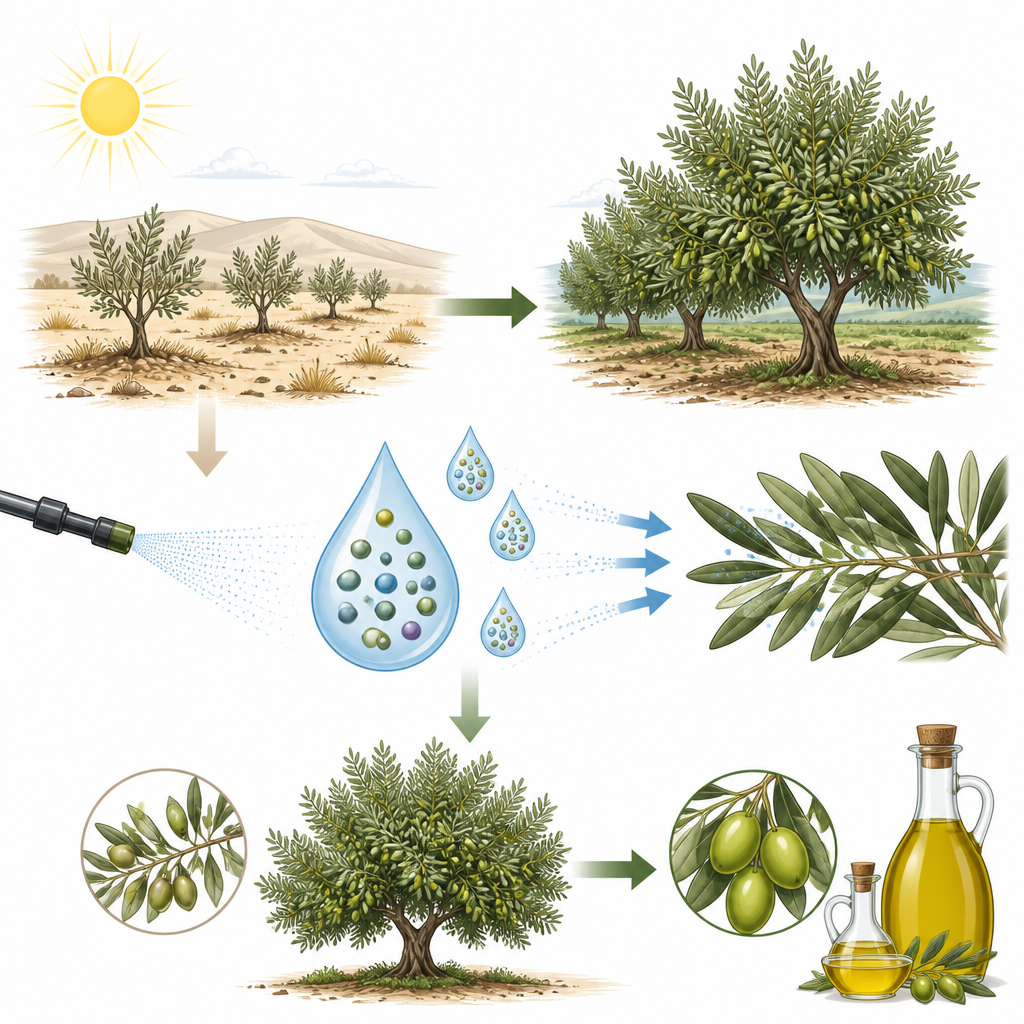
Many new olive groves are being planted on dry, newly reclaimed soils where trees struggle to grow and produce high quality oil. This study explores a gentle, nature inspired way to help olive trees cope with poor soil and harsh weather so they can yield more fruit while still producing extra virgin oil of good taste and stability.
A gentle boost sprayed on leaves
The researchers worked with Arbosana olive trees, a compact variety valued for its flavorful oil and suitability for dense orchards. Instead of changing the soil or irrigation, they sprayed the leaves with two types of plant friendly helpers. One was made from chitosan, a natural material derived from shrimp and crab shells, turned into extremely small particles called nanoparticles. The other was a small sulfur rich molecule called N ATCA that plants can convert into useful building blocks for proteins and natural antioxidants. Both are considered biostimulants, meaning they nudge the plant’s own systems rather than acting like traditional fertilizers or pesticides.
Testing many spray recipes in the field
The team set up a two year field trial in a semi arid region of Egypt using 16 different spray treatments, including a water only control. They varied the amounts of chitosan nanoparticles and N ATCA, applying them three times between late summer and early autumn, a key period when fruits fill with oil and buds for the next season are formed. They then measured shoot growth, leaf nutrient levels, fruit yield, fruit firmness and color, and the detailed fat makeup and stability of the extracted oil. This real farm setting allowed them to see how the sprays performed under the same demanding conditions growers face.
Stronger trees and bigger harvests
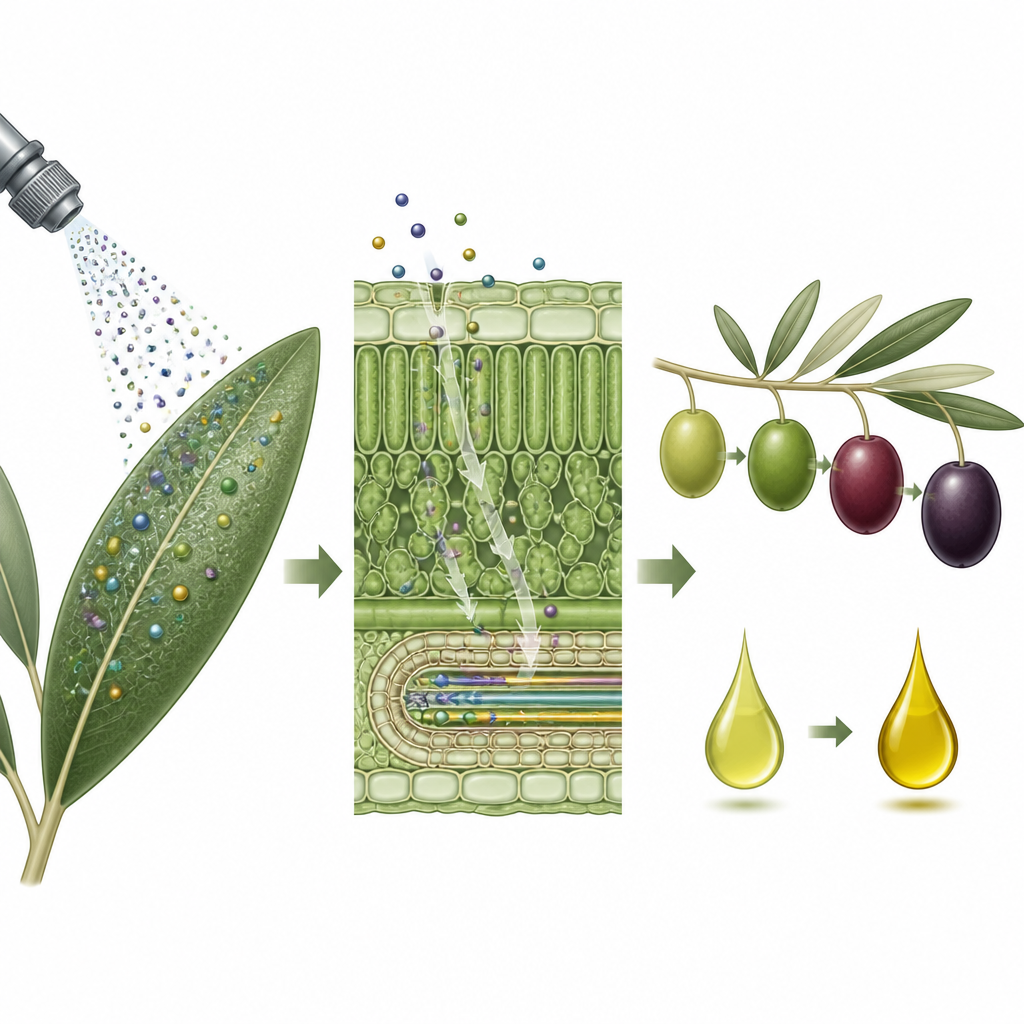
All sprayed trees did better than untreated ones, but the most striking gains came when both biostimulants were used together. The highest dose combination gave the tallest shoots and the most leaves, and leaves on those trees stored more nitrogen, phosphorus, and potassium, the key nutrients for growth. Another high dose mix produced the heaviest fruit and oil harvest, raising yields by about 30 percent per tree compared with the control. The sprays also fine tuned ripening. Chitosan on its own tended to keep fruits firmer for longer, while N ATCA encouraged faster color change and softening. Combined, they produced well colored olives with firm enough flesh, a sign of good oil fill without the fruit becoming overly soft before harvest.
Keeping oil healthy and stable
Because olive oil is valued for its healthful fats, the researchers checked whether the sprays altered this delicate balance. Across all treatments, oleic acid remained the main fatty acid, and the overall pattern of fats stayed within the range expected for extra virgin olive oil. Some N ATCA only sprays slightly increased measures linked to faster rancidity, but pairing N ATCA with chitosan reversed this effect. The best combined treatments not only preserved the oil’s desirable fat profile but also kept calculated oxidation levels low, suggesting longer shelf life. Statistical analysis of many traits at once confirmed that higher dose combinations gave the clearest improvements in growth, nutrition, and oil related qualities.
A practical path for dry region growers
For farmers cultivating olives on poor, sandy soils with limited water, this study points to a practical and relatively low impact strategy. Spraying a carefully chosen mix of chitosan nanoparticles and N ATCA on leaves during late summer and early autumn helped Arbosana trees grow more vigorously, produce more fruit, and maintain extra virgin oil quality, including its resistance to oxidation. In simple terms, these leaf applied helpers let the trees use nutrients more efficiently and cope better with stress, turning challenging land into a more reliable source of high quality olive oil.
Citation: Elkelish, A., Abd El-Wahed, A.EW.N., Elnaggar, I.A. et al. Foliar application of chitosan nanoparticles and N-ATCA enhances olive yield and oil quality. Sci Rep 16, 15727 (2026). https://doi.org/10.1038/s41598-026-45318-2
Keywords: olive trees, chitosan nanoparticles, biostimulants, olive oil quality, semi-arid agriculture