Clear Sky Science · en
Impact of individualized colored spectacle filters on photophobia and visual comfort in central visual field defect patients: a one-year study
Seeing Comfort as Well as Clarity
For many people living with serious central vision loss, bright light is more than a nuisance—it can be painful and exhausting. This study explores whether carefully customized colored glasses can make everyday seeing more comfortable for such patients, even if they do not actually sharpen eyesight on standard eye charts. The work focuses on two common causes of central vision loss and asks a simple but powerful question: what if eye care paid as much attention to comfort as it does to sharpness?
Everyday Strain Behind Damaged Central Vision
When the central part of our vision is damaged, as in Age-related Macular Degeneration (AMD) or Leber Hereditary Optic Neuropathy (LHON), tasks like reading, recognizing faces, or watching television become slow and tiring. Patients often report sore eyes, mental fatigue, and strong sensitivity to light, known as photophobia. Traditional eye care is very good at measuring things like visual acuity and contrast sensitivity, but these tests do not capture the constant effort and discomfort people feel while trying to function with a damaged visual system. This study set out to make those subjective experiences visible and measurable.
Custom Tints Tailored to the Individual
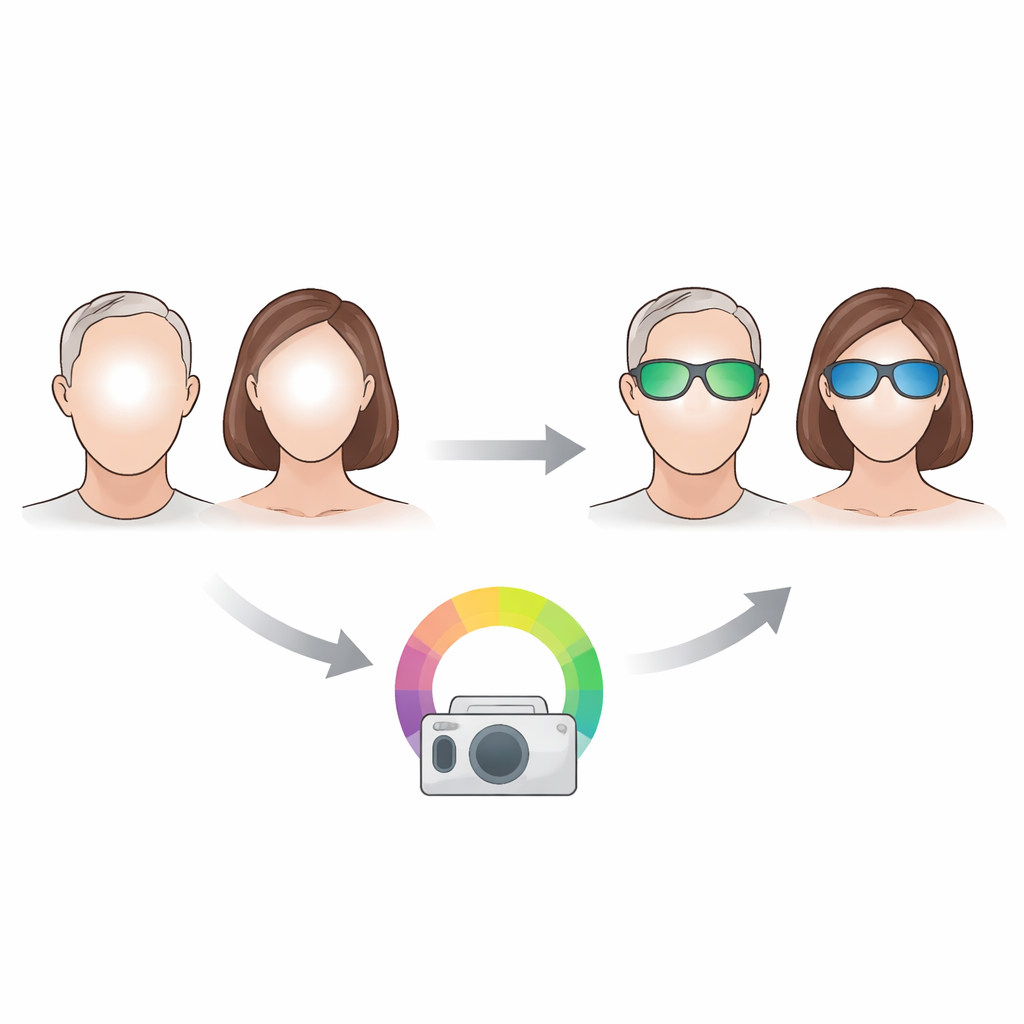
The researchers enrolled 21 people with stable central visual field loss—some with AMD, typically older adults, and some with LHON, usually younger and working-age. Using a device called an Intuitive Colorimeter, they fine-tuned colored illumination around a picture until each person found the hue and strength that felt most comfortable, and separately the one that made things look as clear as possible. These settings were used to order precision-tinted spectacle lenses, which patients then wore in everyday life for about a year. Throughout the study, the team measured standard visual performance, glare sensitivity, and self-reported symptoms of light sensitivity, and they interviewed participants about how the glasses affected their daily routines.
Comfort Improves Even When Sharpness Does Not
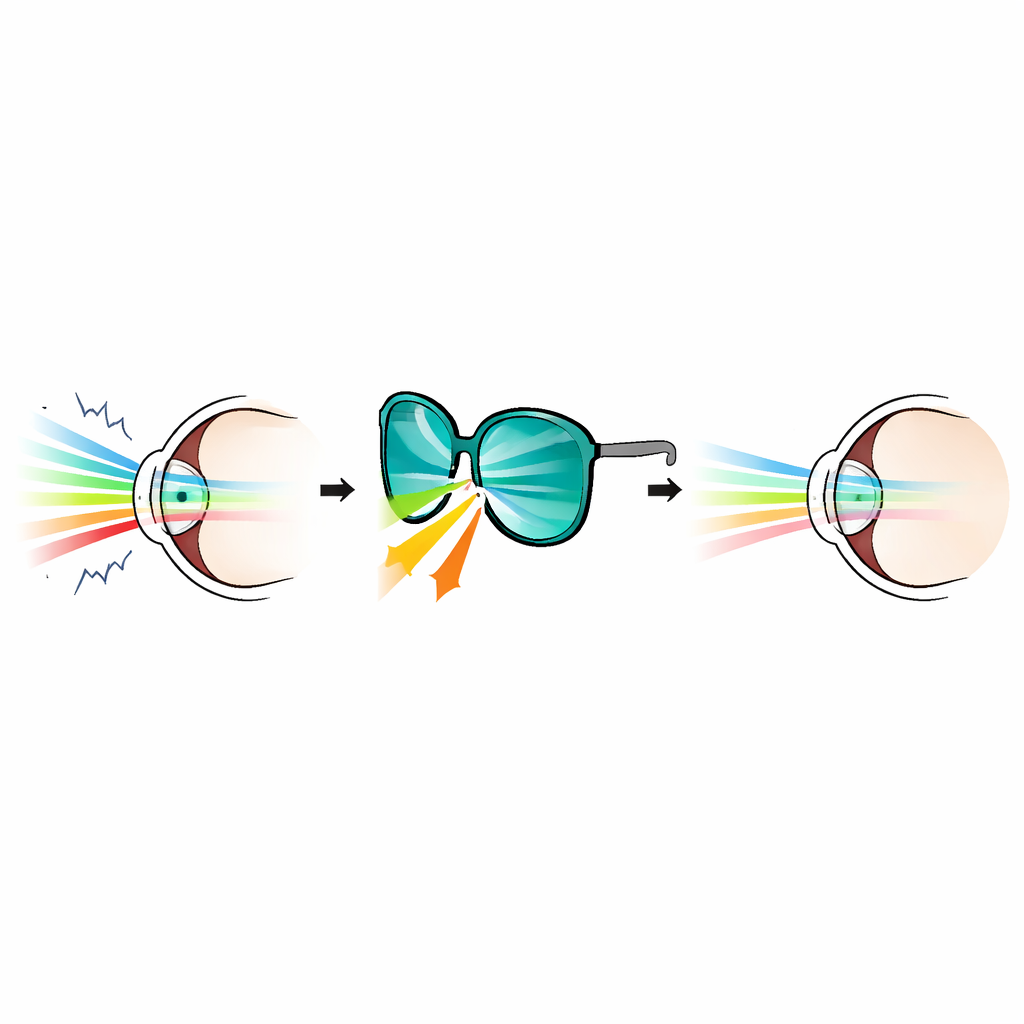
On classic eye tests, the results were surprising: the colored filters did not significantly improve visual acuity or contrast sensitivity, whether tested with or without glare. In some individual cases, scores were even slightly worse. Yet most participants reported that the glasses helped them. People with LHON, who tended to have stronger photophobia, showed a statistically clear drop in light-sensitivity scores after a year of wearing their comfort-tint glasses. Patients with AMD reported milder but still noticeable relief, often using the glasses for specific tasks like watching television or working outdoors. Interview comments described less squinting, fewer episodes of glare discomfort, and a sense that visual tasks took less effort, even though the charts did not reflect sharper sight.
Unexpected Colors and What They Might Mean
Perhaps the most striking finding was the kind of colors people chose. Instead of the yellow tints commonly prescribed in low-vision clinics to increase contrast by blocking blue light, both AMD and LHON groups gravitated toward green-turquoise hues for comfort and more bluish tints when asked to optimize vision appearance. Yellow filters were rarely chosen at all. These preferred colors tended to cluster in specific regions of the color wheel and stayed remarkably stable over a year, suggesting that choices were not random. The authors discuss possible biological explanations, including changes in light-sensitive cells and brain circuits after central vision loss, and even how disease-related stress on the eye’s energy-producing mitochondria might alter how certain wavelengths feel or function.
Rethinking Success in Vision Care
In the end, this study shows that individualized colored spectacle filters can meaningfully reduce light sensitivity and improve perceived comfort for people with central visual field loss, especially those with LHON, even when standard measures of visual sharpness do not improve. For patients, that can mean less fatigue, more ease with daily tasks, and feeling less conspicuously impaired. For clinicians, the work is a reminder that success in vision care is not only about reading smaller letters on a chart; it is also about how sustainable and comfortable seeing feels over the course of a day. Integrating visual comfort into routine eye care, using tools like precision colorimetry, may offer a more complete and humane approach to helping people live with long-term vision loss.
Citation: Krasniakova, M., Pansell, T. & Gustafsson, J. Impact of individualized colored spectacle filters on photophobia and visual comfort in central visual field defect patients: a one-year study. Sci Rep 16, 10504 (2026). https://doi.org/10.1038/s41598-026-45302-w
Keywords: photophobia, colored lenses, low vision, macular degeneration, optic neuropathy