Clear Sky Science · en
LOC100912399 regulates osteogenic differentiation of bone marrow mesenchymal stem cells through modulating p38MAPK signaling-mediated oxidative stress and apoptosis
Why bone health needs more than just calcium
Broken bones in older adults are often blamed on weak bones and too little calcium, but the real story is more complex. Inside our bones live stem cells that can build fresh bone tissue throughout life. This study looks at how a subtle piece of genetic control, a long RNA molecule called LOC100912399, helps decide whether those stem cells stay healthy builders or are pushed toward damage and death when they face chemical stress. Understanding this switch could point to new ways to protect bones in conditions such as osteoporosis.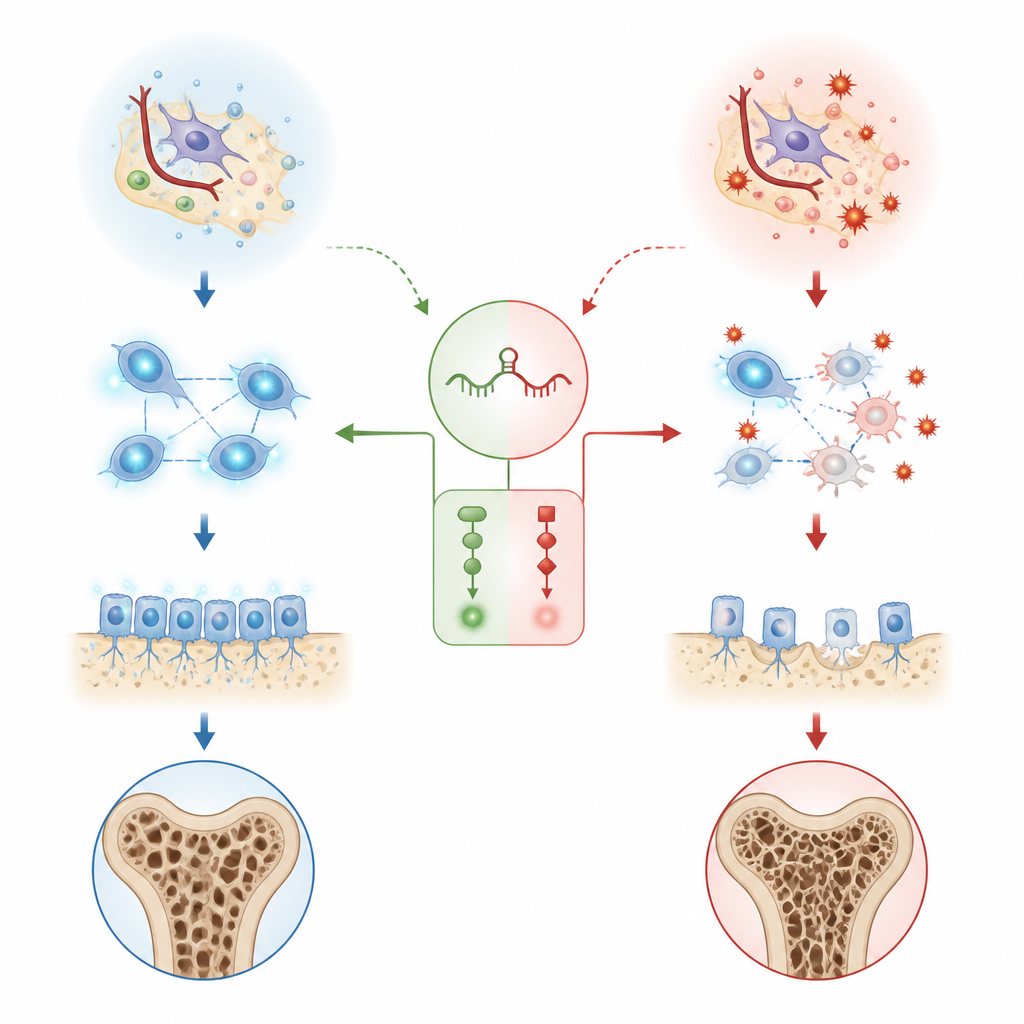
When cellular rust tips the balance
Our cells constantly juggle harmful oxygen byproducts, similar to tiny sparks from a fire, and protective systems that put those sparks out. When the sparks win, the result is oxidative stress, which can damage cell parts and trigger cell death. In bones, oxidative stress is now recognized as a key player in osteoporosis, a disease where bone becomes fragile and prone to fracture. The researchers created a lab model using rat bone marrow stem cells, exposing them to hydrogen peroxide to mimic oxidative stress. Under this stress, the cells showed lower levels of natural protective enzymes, more signs of programmed cell death, and reduced ability to start forming new bone.
A quiet RNA with a loud impact
Beyond the well-known protein-coding genes, our DNA produces many long RNA molecules that do not make proteins but still influence how cells behave. LOC100912399 is one such molecule. The team found that its levels rose when bone stem cells were placed under oxidative stress. To test what this meant, they used viral tools to either boost or reduce LOC100912399 in the cells. When LOC100912399 was turned up, the cells became more vulnerable: they died more readily under stress, produced fewer protective enzymes, and showed weaker signals of turning into bone-forming cells. When LOC100912399 was turned down, the opposite occurred, with better survival, stronger antioxidant defenses, and higher levels of bone-related markers.
A stress pathway that acts like a traffic light
Cells rely on internal signaling routes to decide whether to grow, repair, or self-destruct. One such route is the p38 MAPK pathway, which often responds to stress and can steer cells toward death. The researchers discovered that LOC100912399 and this pathway are closely linked. Under oxidative stress, both p38 activity and LOC100912399 levels rose together. Lowering LOC100912399 reduced p38 activity, increased survival proteins, boosted antioxidant enzymes, and supported bone-building markers. When they forced p38 activity back up, much of this protection disappeared. Likewise, dialing down p38 softened the harmful effects of LOC100912399 overactivity. This pattern suggests that LOC100912399 harms bone stem cells largely by pushing the p38 pathway into a more destructive mode.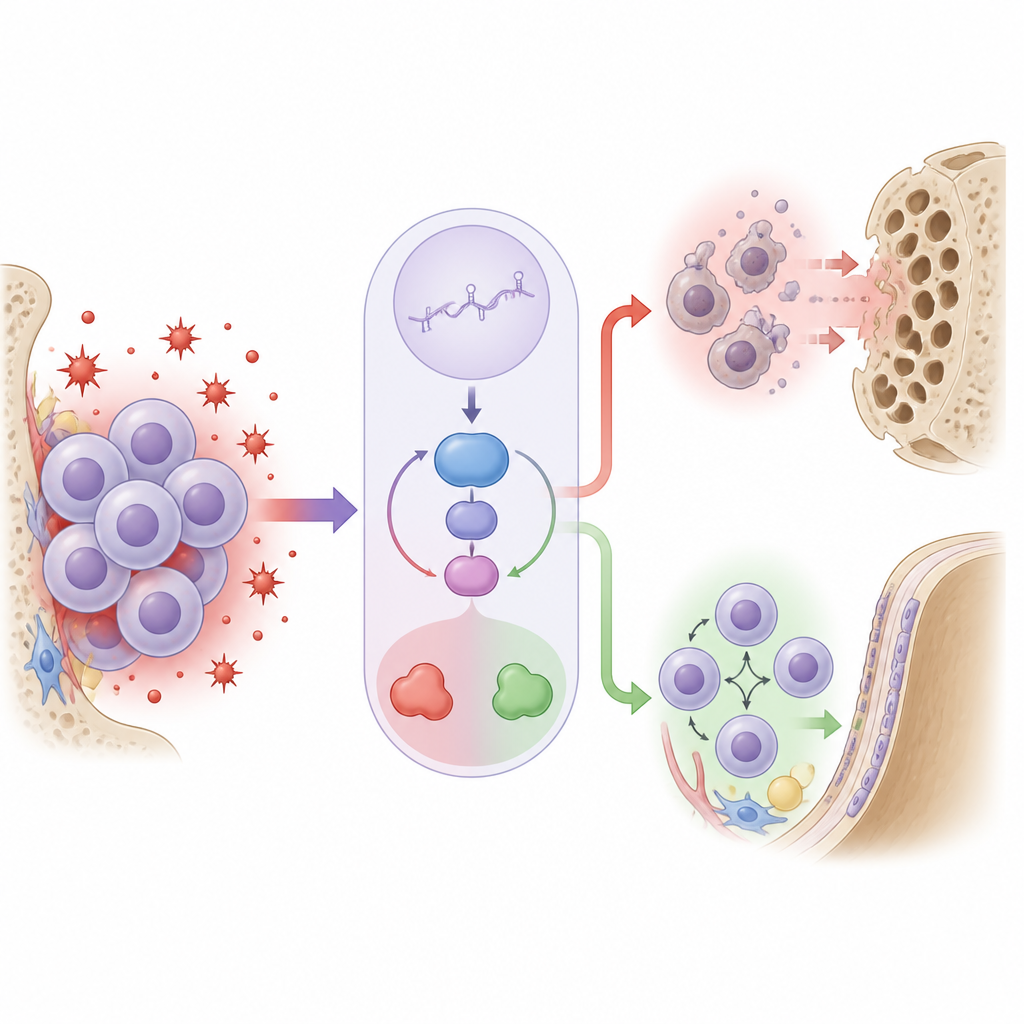
From cell cultures to potential bone therapies
Although this work was done in rat cells in dishes rather than in people, it offers a clear map of how one RNA can tip the balance between bone loss and bone renewal. The study shows that reducing LOC100912399 helps bone stem cells better handle oxidative stress, avoid unnecessary cell death, and commit to becoming bone-building cells, largely by calming the p38 stress pathway. For a layperson, this means researchers have identified a new molecular handle that might one day be turned to protect bones, especially in conditions like osteoporosis where oxidative stress is high. Future therapies might not only focus on minerals and hormones, but also on tuning this RNA switch so that our bone stem cells keep building rather than breaking down.
Citation: Lan, CS., Wang, P., Kang, T. et al. LOC100912399 regulates osteogenic differentiation of bone marrow mesenchymal stem cells through modulating p38MAPK signaling-mediated oxidative stress and apoptosis. Sci Rep 16, 15375 (2026). https://doi.org/10.1038/s41598-026-45292-9
Keywords: osteoporosis, bone stem cells, oxidative stress, long noncoding RNA, p38MAPK signaling