Clear Sky Science · en
VMD-LSTM based water level prediction of aquifer in mining working face
Why safer mining depends on knowing the water below
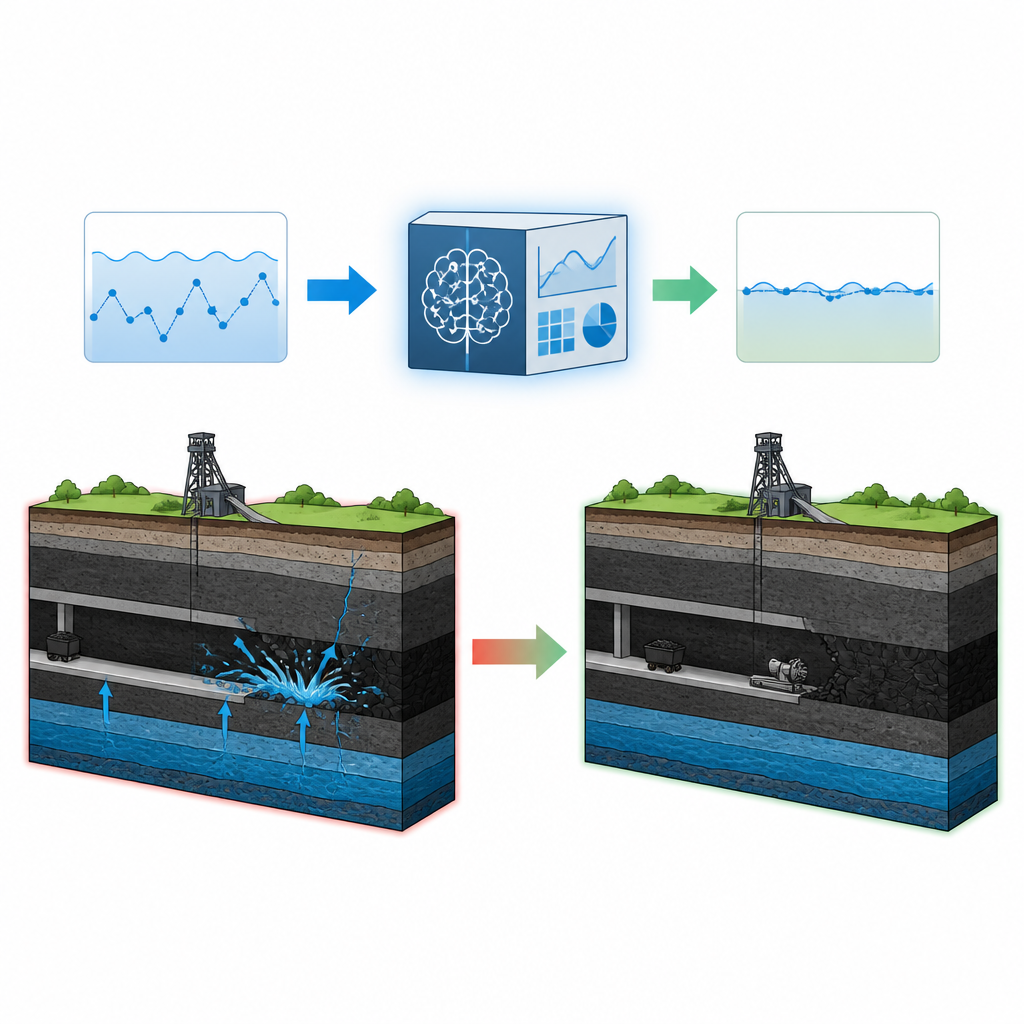
Deep underground, coal mines often sit above water soaked rock layers. If that water suddenly rushes into a tunnel, it can flood equipment, threaten workers, and halt production. This study explores a smarter way to predict how the water level in these underground layers will rise and fall near an active mining face, helping mine operators act early to avoid dangerous surprises.
Hidden waves under the mine
In the mine studied, a coal seam lies above a limestone layer that stores groundwater like a hidden reservoir. As coal is removed, stresses in the rock change and water can move toward the tunnels. Directly measuring water pouring into a tunnel is tricky because many factors interfere with sensors. By contrast, tracking the water level in the nearby limestone layer is cleaner and more stable. The authors therefore focus on predicting this aquifer level as a stand in for the risk of sudden water inflow.
Breaking a complex signal into simpler parts
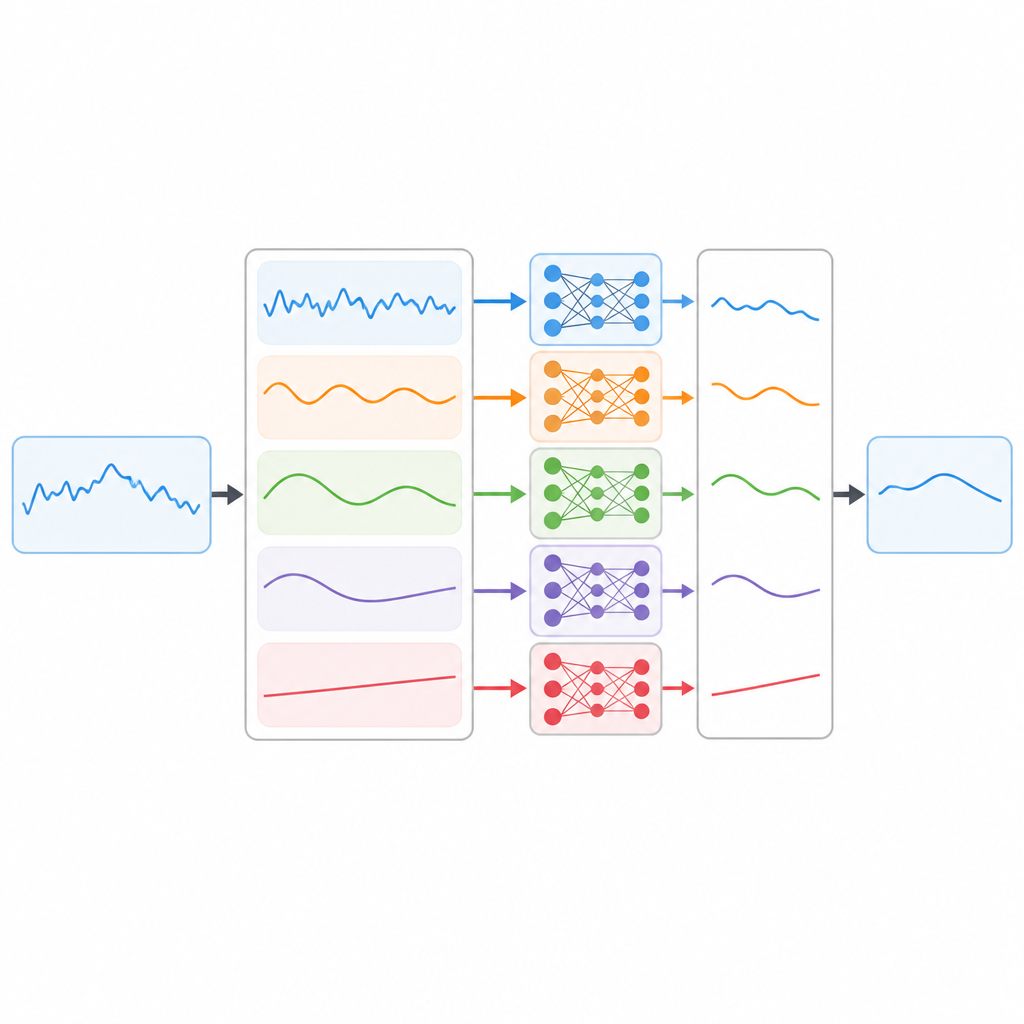
The daily water level record is bumpy and irregular, with slow trends mixed together with sharp swings. To handle this, the researchers first clean the data, removing obvious errors and filling in missing days. Then they use a method called variational mode decomposition, which treats the water level record like a blend of several overlapping waves. It separates the original curve into eight simpler components, each representing changes on a different time scale, from long term trends to short term ripples. This makes it easier for a computer model to recognize patterns that might otherwise be buried in noise.
Teaching a network to remember the past
After decomposition, each of the simpler water level curves is fed into a type of artificial neural network designed for time series, known as a long short term memory network. This network is built to remember important information from many days back while ignoring less useful details. The model is trained on most of the recorded data and then tested on the remaining days. The team compares several approaches, including versions built with other popular sequence models and versions that skip the decomposition step entirely.
Clear gains in prediction accuracy
The combined variational mode decomposition plus long short term memory model delivers the most accurate predictions among all tested methods. It tracks the overall rise and fall of the aquifer level and performs especially well when the level changes quickly, such as around large drops or sudden peaks. When the authors compare standard error measures, their hybrid model consistently shows lower errors and a closer match to actual measurements than models without decomposition or those using other network designs. This suggests that first untangling the mixed signal and then using a memory based network makes it easier to capture the true behavior of the underground water.
What this means for mine safety
For mine operators, the study points to a practical tool for watching the hidden water beneath working faces. By giving earlier and more reliable warnings about future water levels, the model can support decisions about drilling, pumping, and reinforcement before water breaks into tunnels. Because the method is relatively simple once set up and runs on daily measurements, it offers a convenient way to strengthen water hazard prevention and support safer, more efficient coal production.
Citation: Zhang, G., Jiao, B., Ji, X. et al. VMD-LSTM based water level prediction of aquifer in mining working face. Sci Rep 16, 15088 (2026). https://doi.org/10.1038/s41598-026-45287-6
Keywords: mine water, aquifer level, time series prediction, deep learning, coal mining safety