Clear Sky Science · en
Biological characteristics of transgenic glyphosate-resistant semiwild soybean and its competitive ability against weeds for survival
Why this soybean story matters
Genetically modified crops are part of many people’s daily food, yet questions remain about how they behave outside farm fields. This study looks at a “semiwild” soybean that carries a gene for resistance to the herbicide glyphosate and appeared near a test site. The researchers asked whether this plant acts more like a tame crop or a wild weed, and whether it could outcompete the weeds around it. Their findings help clarify both the farming potential and the ecological risks of such plants.
Where the semiwild soybean comes from
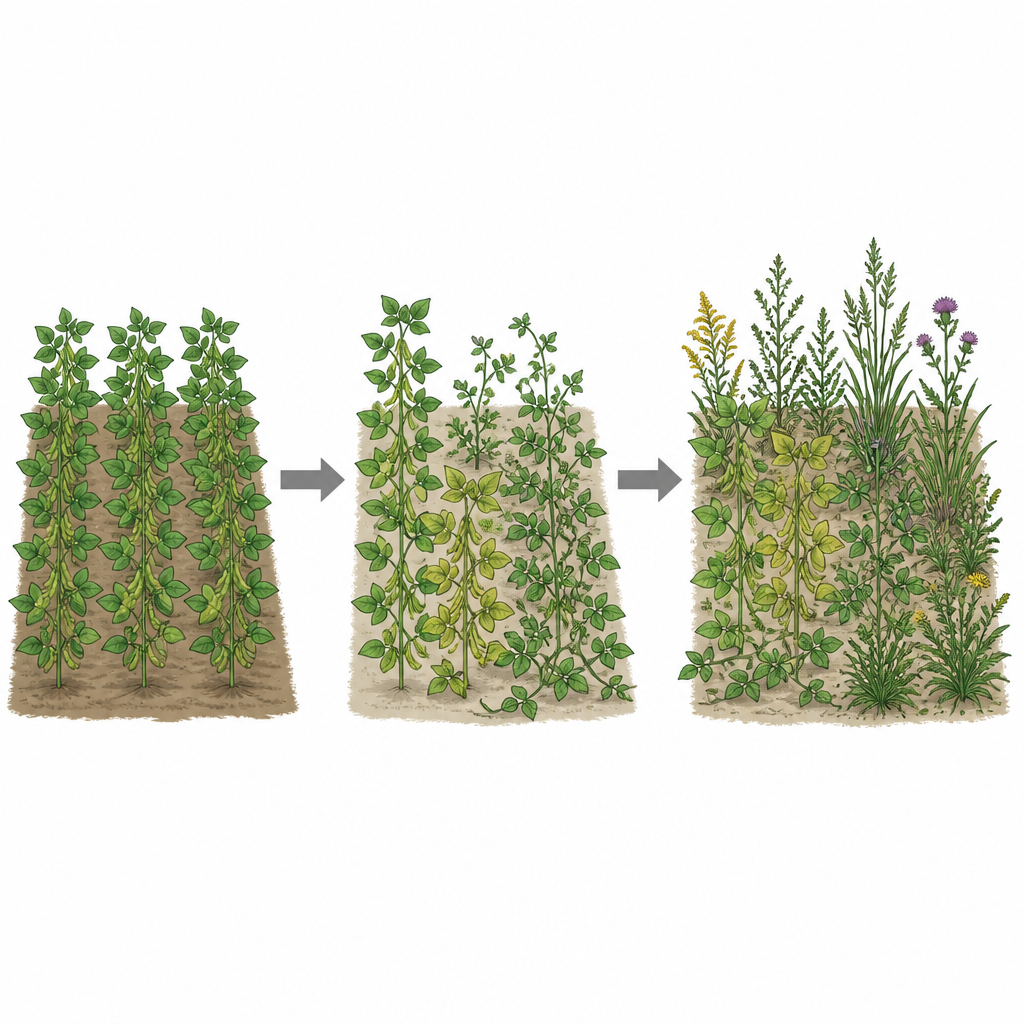
Modern glyphosate resistant soybeans were first grown widely in the 1990s and spread rapidly because they are easy to manage and work well with herbicide based weed control. Pollen from these crops can travel to nearby wild soybeans, producing hybrid offspring that mix wild traits with the resistance gene. The team studied one such line, called DT 1, found at a transgenic test base in northeastern China. They compared it with a standard glyphosate resistant variety, a common non modified crop variety, and a truly wild soybean, measuring their growth, appearance, physiology, seed traits, and ability to compete with weeds in field plots.
How this plant grows and survives
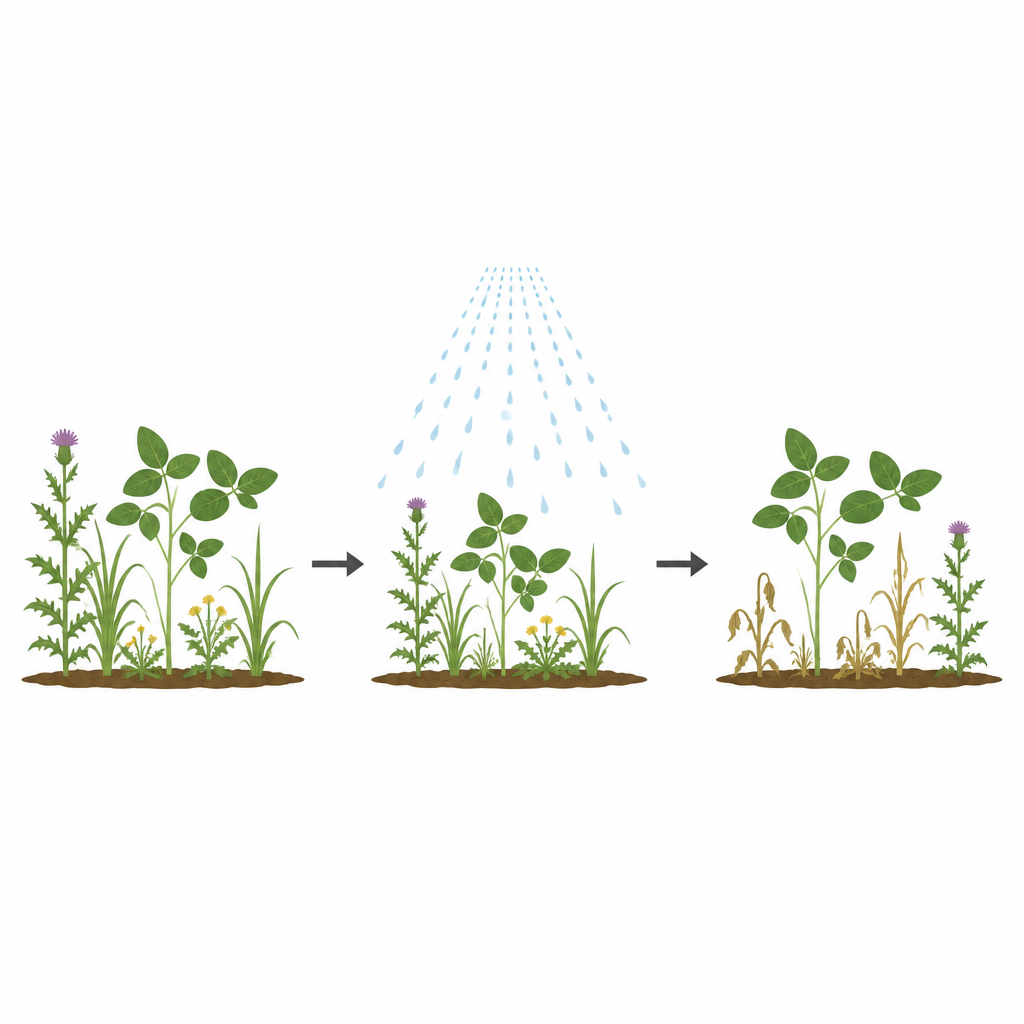
The semiwild soybean looked and grew more like wild soybean than like a compact crop plant. It had vining stems, shattering pods, and black seeds, and its final height sat between the tall wild plants and shorter cultivated types. Its total plant and root weight were generally lower than the two crop varieties, but similar to or slightly below the wild soybean, fitting an in between position. When sprayed with glyphosate at or above the usual field dose, both DT 1 and the regular resistant variety remained strongly tolerant, showing only modest height reduction and limited leaf injury. This confirms that the resistance gene in the semiwild line functions effectively under real field like applications.
Inner workings and seed traits
Inside the plant, the semiwild soybean showed a higher rate of photosynthesis than wild soybean and similar values to the crop varieties, suggesting efficient use of light despite its more wild like form. Its leaves contained enough chlorophyll to support this performance, and its roots showed strong early nitrogen fixing activity, which helps supply nutrient to the plant. Antioxidant enzymes that protect cells from stress were generally stable, with one key enzyme in the roots higher in both the wild and semiwild types. In terms of grain quality, DT 1 contained more protein and helpful isoflavone compounds than the common crop cultivar and more fat than the wild soybean, pointing to decent nutritional value. It produced more pods and seeds per plant than the cultivated soybeans, though fewer than wild soybean, while each seed was larger and heavier than wild seeds, giving it a yield per plant comparable to wild soybean.
Reproduction, winter survival, and weed competition
The semiwild soybean produced many pollen grains but a lower share of them were strongly viable compared with crop varieties, which may slightly limit its ability to spread genes. Its pods shattered less than wild soybean, meaning fewer seeds are flung far from the parent plant, but its seeds emerged more readily the following year, especially when buried a few to several centimeters deep. This combination points to good overwinter survival in soil. In field tests without herbicides, the researchers grew DT 1 and a common crop variety at different sowing dates and planting densities, allowing natural weeds to invade. When sown at the normal early season dates and at higher density, both soybeans were able to reduce weed cover, and DT 1 generally suppressed weeds as well as or better than the conventional cultivar. However, when planting was delayed into late June or early July, weeds quickly dominated regardless of soybean type, and weed species diversity remained similar in all plots.
What the findings mean for farms and fields
To a lay observer, this work shows that the semiwild glyphosate resistant soybean is neither a weak crop nor an unstoppable “superweed.” It combines several useful wild and cultivated traits: it resists glyphosate, uses light and nutrients efficiently, produces nutritious seeds, survives winter in soil, and can compete with weeds when planted at the right time and density. At the same time, it does not dramatically change the variety of weeds in the field and does not always outcompete them. These results suggest that while such plants merit careful monitoring because they can persist and spread under some conditions, they are also potential breeding resources that might improve future soybean varieties without causing obvious harm to farmland biodiversity under the conditions tested.
Citation: Dong, S., Gao, Y., Xin, L. et al. Biological characteristics of transgenic glyphosate-resistant semiwild soybean and its competitive ability against weeds for survival. Sci Rep 16, 15617 (2026). https://doi.org/10.1038/s41598-026-45274-x
Keywords: glyphosate resistant soybean, semiwild soybean, weed competition, gene flow, ecological risk