Clear Sky Science · en
Temporal dynamics in barrier-involved crashes: Determining shifts in driving behavior and injury risk across multi-year periods
Why roadside barriers matter more than you think
Most of us think of roadside barriers as silent guardians that keep cars from flying off the road. But these same structures can sometimes turn an ordinary crash into a life‑threatening event. This study looks at hundreds of barrier‑involved crashes across Texas from 2017 to 2022 to see how the risk of serious injury changed before, during, and after the COVID‑19 pandemic. By tracking how road conditions, driver behavior, and traffic patterns evolved, the researchers show that the “rules” governing crash severity are not fixed in time—and that safety policies must adjust as our driving habits change.
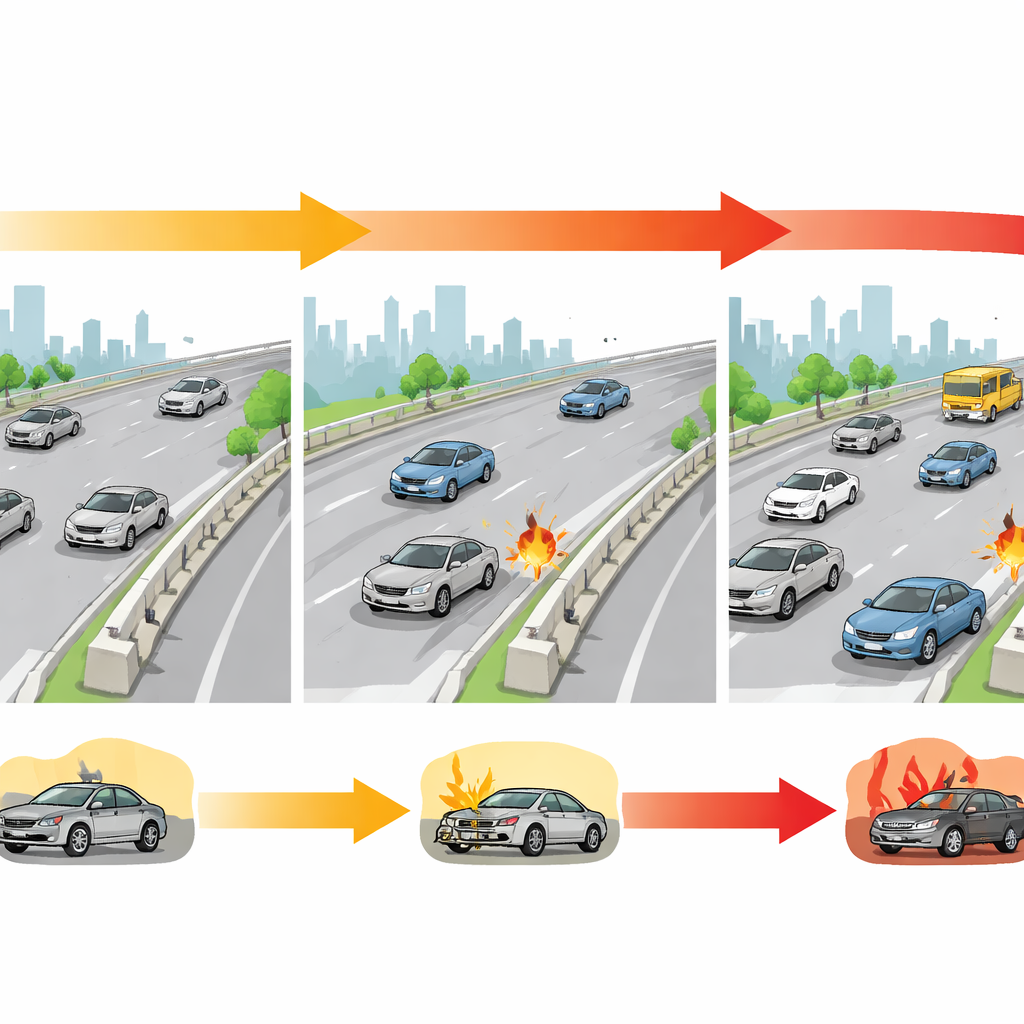
Looking at crashes across three very different eras
The team analyzed 63,745 crashes that happened on roads with median or concrete barriers, drawing on detailed records from the Texas Department of Transportation. They split the data into three distinct phases: a pre‑pandemic baseline (2017–2019), the heavily disrupted pandemic year (2020), and the recovery period (2021–2022). For each crash, they noted factors such as road type, speed limit, lighting, weather, vehicle type, and driver actions like drifting out of a lane. They then used advanced statistical models designed to capture hidden differences between crashes—recognizing that no two collisions share exactly the same mix of speed, angle, driver response, and surroundings.
How the road and surroundings shape injury risk
Several roadway and environmental features consistently influenced how bad barrier‑related crashes became. Crashes on rural roads and four‑lane divided highways were more likely to result in fatal or severe injuries, likely because vehicles travel faster and emergency help may arrive more slowly. Two‑lane undivided roads and narrow medians also tended to heighten risk. Rain made severe outcomes more likely by reducing visibility and grip, while darkness—even when streetlights were present—was linked to worse injuries than daylight. In contrast, high‑population urban areas usually saw less severe injuries, probably because heavy traffic keeps speeds lower and medical care is closer at hand.
When behavior turns a barrier into a danger zone
Driver choices played a major role in whether a barrier crash ended in a bruise or a tragedy. Sideswipe crashes between vehicles traveling straight, for example, were strongly tied to higher injury levels across all years. Striking a fixed object—such as the barrier itself—greatly increased the odds of serious harm, since the vehicle’s motion stops suddenly and energy has nowhere to go but into the occupants. Drivers who drifted out of their lane or whose attention was diverted were more likely to be involved in severe barrier crashes, reflecting the hazards of distraction and poor lane control at high speeds. Passenger cars and pickup trucks both showed elevated risks of serious injury compared with other vehicle types, highlighting how common everyday vehicles contribute heavily to severe barrier crashes.
COVID‑era shifts in traffic and risk
The pandemic acted like a natural experiment in how changing traffic patterns reshape danger on the road. With fewer vehicles on the road in 2020, many drivers appear to have driven faster and taken more risks. Some influences, such as the added danger of rainy weather or nighttime conditions, weakened slightly but did not disappear. Risks on rural roads and high‑speed divided highways shifted over time, sometimes easing during the height of COVID‑19 but then rebounding or worsening as traffic volumes returned. Importantly, crashes away from intersections—which typically occur at steadier, higher speeds—became more strongly associated with severe injuries in the later years, suggesting that a growing share of serious crashes is happening on open road segments rather than congested junctions.
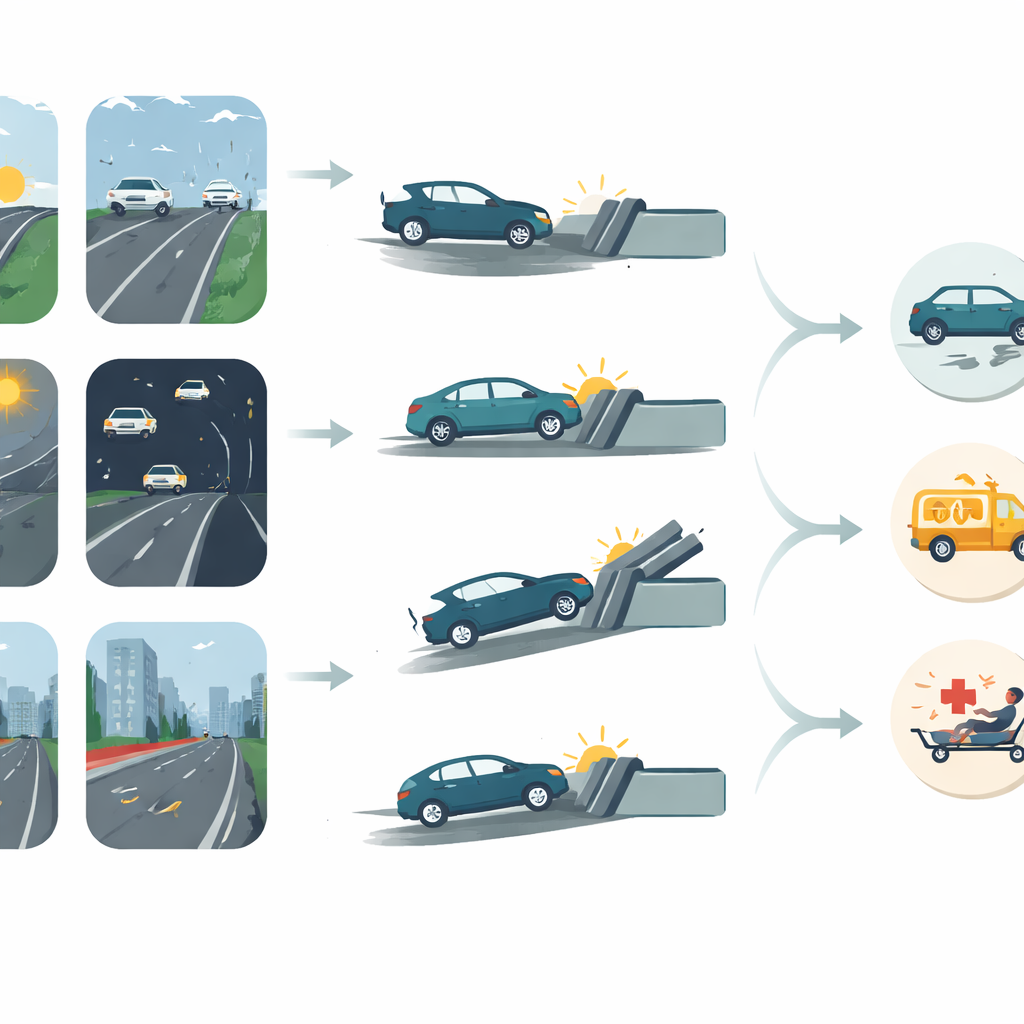
Designing smarter, adaptable road safety
The authors conclude that the factors driving severe barrier‑related injuries are not stable from year to year. Instead, they evolve with broader social changes, such as pandemic‑driven shifts in travel and behavior. This means safety strategies cannot rely on old assumptions about where and how bad crashes happen. Instead, transportation agencies need “living” safety policies that are regularly updated using fresh crash data and models that capture hidden differences between crashes. That could mean upgrading barriers on high‑speed divided roads, adding forgiving roadsides and better lighting in rural areas, tightening speed management, and targeting driver behaviors like lane‑drifting and inattention. In essence, barriers can be powerful lifesavers—but only if they are designed, placed, and managed in ways that keep pace with how we actually drive today.
Citation: Barua, S., Jafari, M., Starewich, M. et al. Temporal dynamics in barrier-involved crashes: Determining shifts in driving behavior and injury risk across multi-year periods. Sci Rep 16, 14561 (2026). https://doi.org/10.1038/s41598-026-45273-y
Keywords: roadside barriers, crash severity, driver behavior, traffic safety, COVID-19 pandemic