Clear Sky Science · en
mRNA profiling of mesenchymal stem cell-derived exosomes reveals their function in accelerating wound healing
Healing Faster with Tiny Natural Packets
When we cut or burn our skin, we rely on the body’s own repair crew to close the wound. But for people with slow or chronic wounds, that process can stall, leading to infections and long-lasting scars. This study explores whether tiny bubble-like packets released by stem cells in the umbilical cord can act as nature’s own healing boosters, carrying messages that tell skin cells to grow and move faster to repair damaged tissue.
Tiny Messengers from Baby’s First Lifeline
The researchers focused on umbilical cord mesenchymal stem cells, a type of cell known for helping tissues repair themselves. These cells release microscopic spheres called exosomes, which are much smaller than cells and packed with biological cargo. The team purified exosomes from stem-cell cultures and confirmed their size, shape, and identity using imaging and protein tests. Under the microscope, they looked like smooth, cup-shaped bubbles about one hundred nanometers across – thousands of times smaller than the width of a human hair.
Reading the Messages Hidden Inside
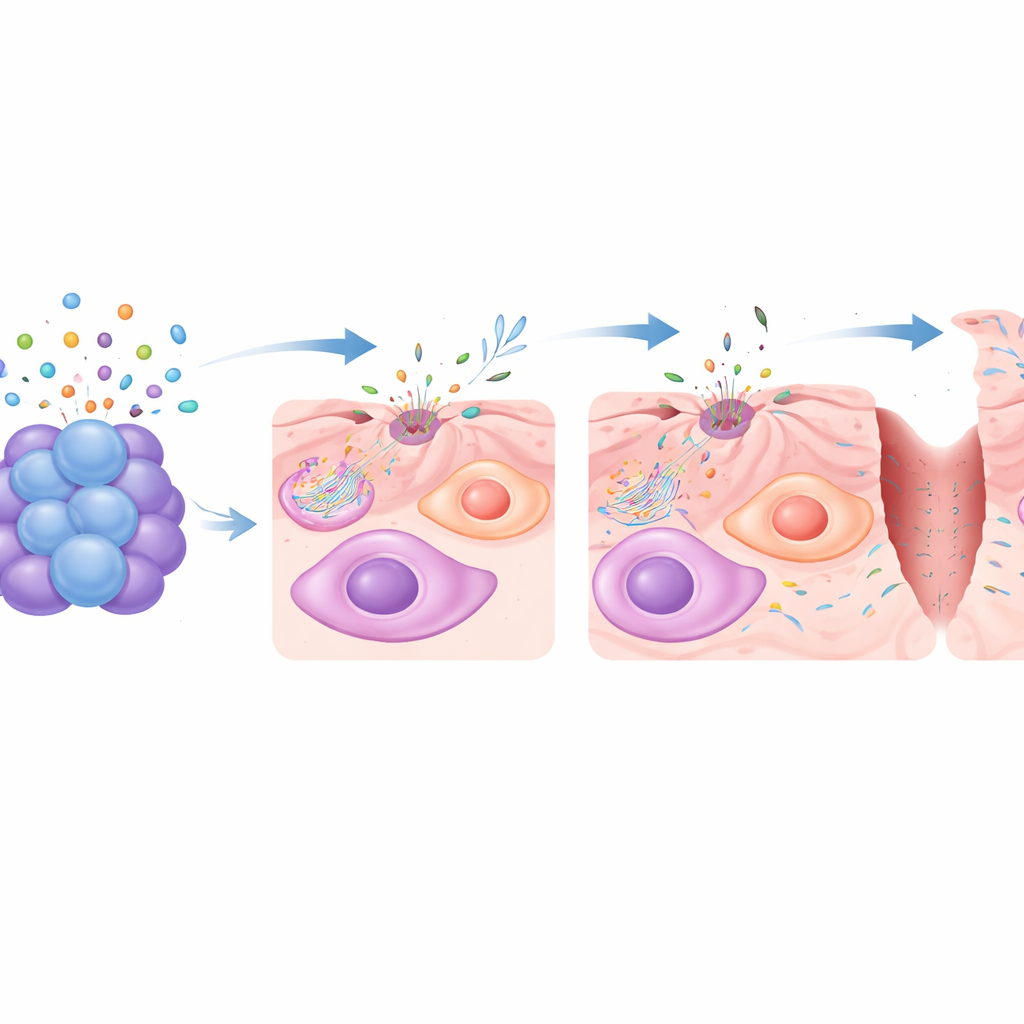
Inside these exosomes are molecules that can influence how other cells behave. The scientists used high-throughput RNA sequencing to read the messenger RNA (mRNA) content of the exosomes and compared it with that of their parent stem cells. They found 4,578 protein-coding genes represented in the exosomes, with roughly half showing higher levels than in the original cells. Many of the enriched mRNAs were linked to cell division, DNA copying, protein production, and the cell cycle – all activities that support rapid growth and repair. Network and pathway analyses suggested that these RNA messages are wired into systems that control how cells multiply, use energy, and reorganize their internal scaffolding, all of which are important during wound healing.
From Gene Patterns to Real-World Healing
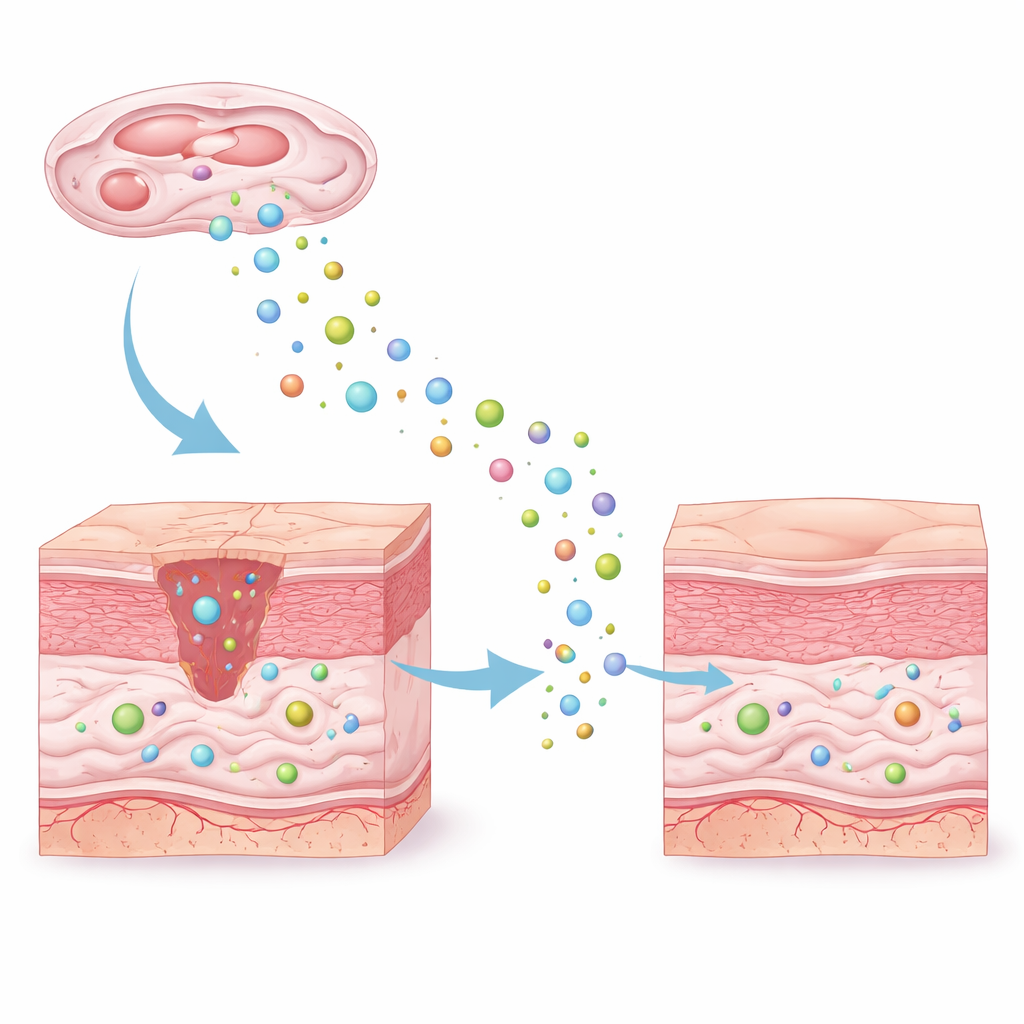
To see whether these molecular clues translate into real biological effects, the team tested the exosomes on different types of skin cells in laboratory dishes. When human skin fibroblasts, mouse fibroblasts, and human keratinocytes were exposed to umbilical cord exosomes, they divided more rapidly than untreated cells. In scratch-like “wound” tests on cell layers, the exosomes sped up the movement of some cell types into the empty gap, mimicking faster closure of a wound surface. The researchers also used human skin samples and fluorescent labels to track exosomes injected into the top skin layer. Within hours, the exosomes had spread into the deeper dermis and appeared inside cells, gathering near their nuclei, suggesting that their cargo could directly influence cell behavior.
Testing the Boost in Burned Skin
The ultimate question was whether these exosomes could help living tissue recover from injury. In a mouse model of burned skin, animals received injections of either exosomes, a simple salt solution, or no treatment. Over two weeks, the wounds of exosome-treated mice closed more quickly, particularly during the first ten days, which correspond to the early inflammatory and growth phases of healing. By day fourteen, overall closure was similar across groups, but exosome-treated wounds still showed signs of slightly faster repair. These results, together with the gene activity patterns, point to exosomes as active players that can enter skin cells, nudge them to grow and migrate, and thereby accelerate tissue repair.
What This Could Mean for Future Care
For non-specialists, the main takeaway is that umbilical cord stem cells may help heal wounds without needing to transplant whole cells. Instead, their tiny natural packets can deliver ready-made instructions that encourage skin cells to divide and move into damaged areas. While this study does not yet prove exactly how each RNA message is turned into a healing protein, it provides strong evidence that exosomes are rich in repair-related signals and can speed healing in animals. With further work to understand their precise actions, dose, and safety, such exosome-based approaches could one day become a cell-free, off-the-shelf treatment to help stubborn wounds close faster and more completely.
Citation: Than, U.T.T., Nguyen, H.T.T., Dang, Q.M. et al. mRNA profiling of mesenchymal stem cell-derived exosomes reveals their function in accelerating wound healing. Sci Rep 16, 14476 (2026). https://doi.org/10.1038/s41598-026-45267-w
Keywords: wound healing, exosomes, umbilical cord stem cells, skin regeneration, RNA sequencing