Clear Sky Science · en
Prediction of wear outcomes and mechanical characterization of innovative SiO2 incorporated aluminium matrix composites
Stronger metal for lighter machines
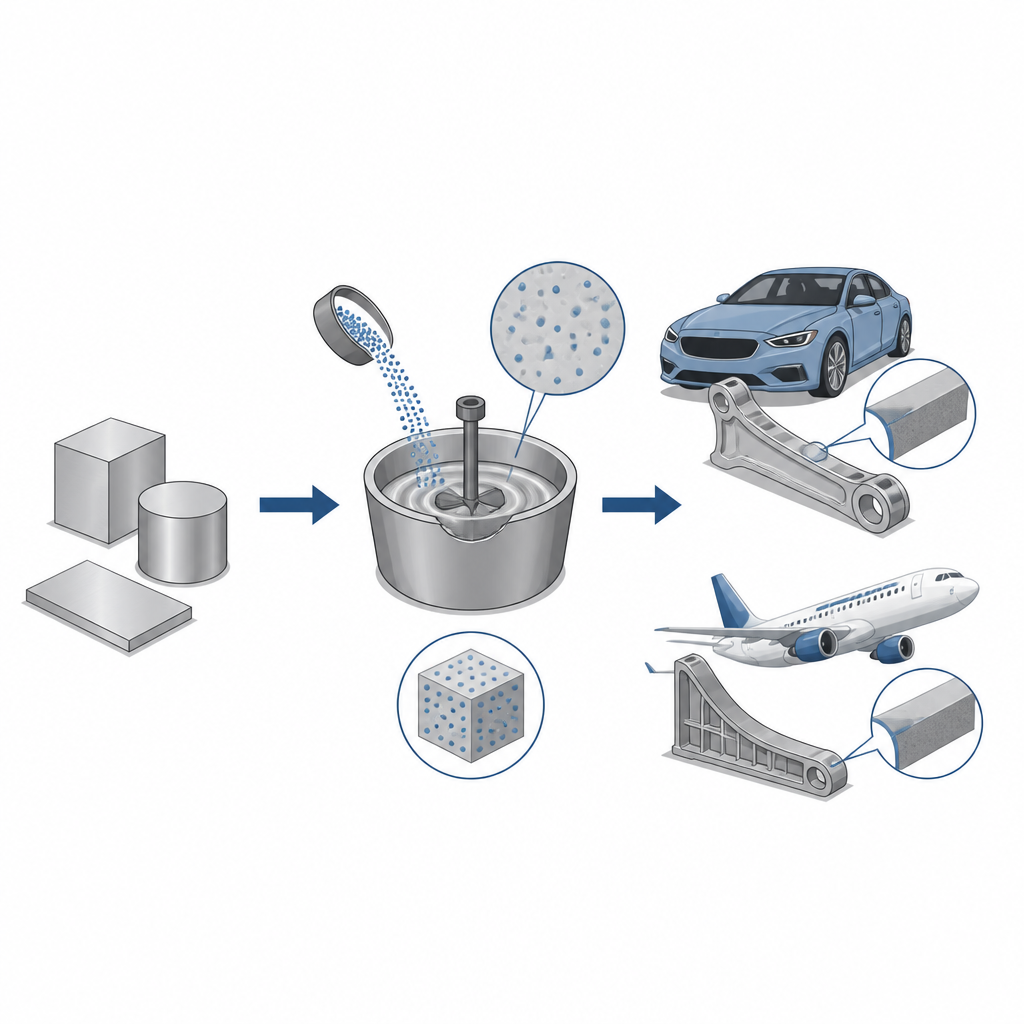
Cars, planes, and industrial machines all rely on metals that can stay strong while staying light. This study looks at a simple tweak to everyday aluminum that could make parts last longer, especially where surfaces rub together, without adding extra weight. By mixing small grains of common silica, the same basic ingredient as sand, into molten aluminum, the researchers show how to build tougher, more wear resistant pieces that still suit fuel saving designs.
Why mix sand with aluminum
Aluminum is already valued for being light, but it can wear down when two metal surfaces slide against each other. The team focused on a widely used alloy called AA8011 and added tiny silicon dioxide particles at different levels: none, a little, some, and more. Silica is hard, chemically stable, and less dense than the metal itself, so it promises extra strength and better surface durability without making the material heavier. The goal was to see how much silica gives the best balance between strength, toughness, and resistance to wear.
How the new metal mix was made and tested
The researchers used an industrially friendly method known as stir casting. They melted the aluminum alloy in a furnace, preheated the silica powder, and mixed it in while mechanically stirring the liquid metal, with a small amount of magnesium added to help the particles bond to the melt. The mixture was then poured into heated molds and solidified into test pieces. These samples were cut and polished, then put through standard tests of hardness, tensile strength, and impact strength. To judge how well the material would stand up to rubbing contact, pins made from the alloy were slid against a hardened steel disc under different loads, while their weight loss and friction were carefully measured.
What happens inside the metal
Microscope and X ray based imaging showed that the silica grains are fairly evenly spread through the aluminum, especially at moderate amounts, though some clumping appears at the highest loading. This fine, scattered structure breaks up the metal’s grains and limits the movement of internal defects that normally let metals deform. As a result, hardness rises steadily with more silica, and the ultimate tensile strength climbs from about 156 to 210 megapascals at the highest level tested. However, the material becomes less forgiving when struck, with impact strength dropping as more hard particles interrupt the metal’s ability to bend before breaking.
How the new mix stands up to wear
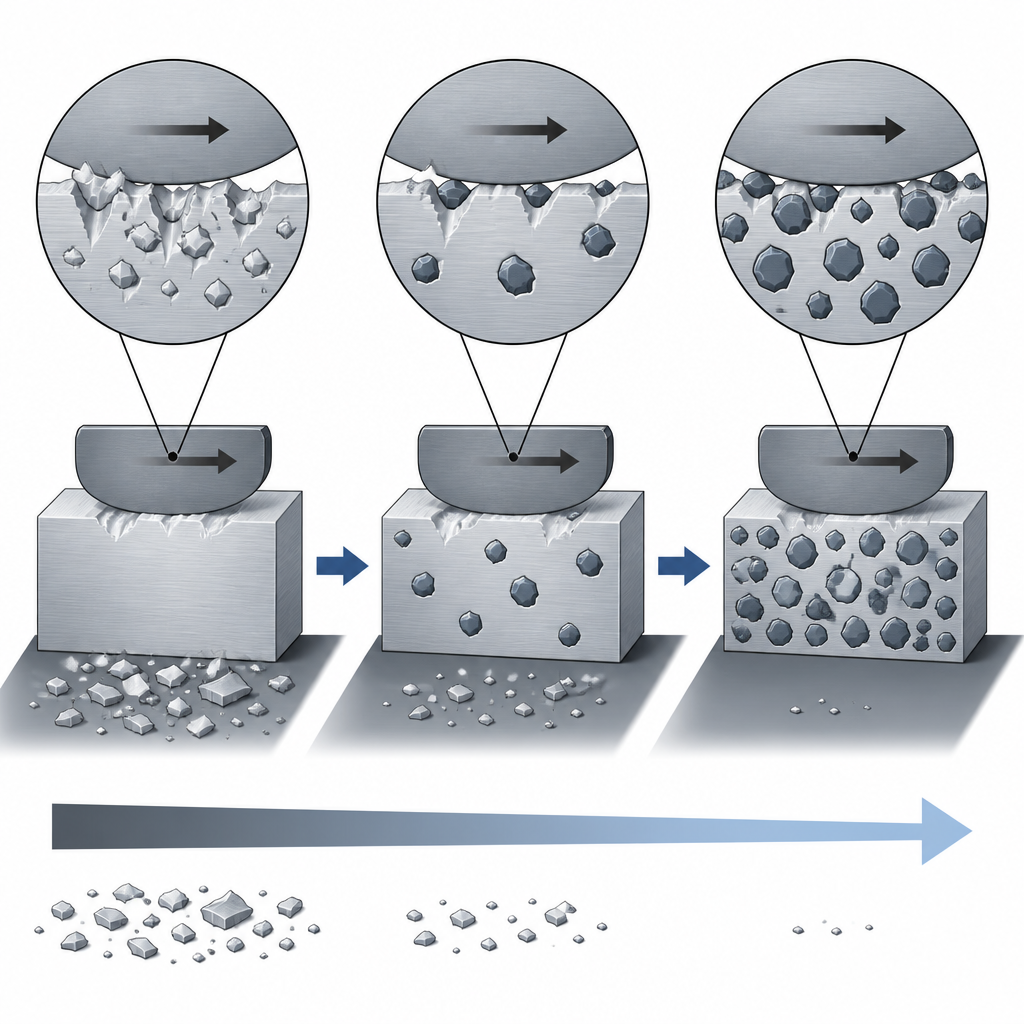
When the pins were run against steel, all versions wore faster as the contact load increased, but those with more silica consistently lost less material. The hard grains act like tiny supports inside the softer metal, sharing the load and blocking deep cutting by the counter surface. They also help form a protective mixed layer at the sliding interface that lowers friction, especially at higher particle contents. Tests of the worn surfaces revealed fewer and shallower grooves and less debris when silica was present, with the best performance at the highest level studied, although even this version still suffered under the most severe loading.
What this means for real world parts
For designers of lightweight vehicles and machinery, the findings suggest a practical way to make aluminum components that last longer wherever rubbing and sliding are an issue, from brake parts to structural connectors. Adding controlled amounts of silica powder through a standard casting route can boost strength and resistance to surface damage with little weight penalty, though at some cost in impact toughness. In plain terms, carefully dosing aluminum with a hard, sand like ingredient turns it into a more durable, wear resistant metal, well suited to parts that must be light yet able to endure repeated friction.
Citation: Bhowmik, A., Kumar, R., Sharma, K. et al. Prediction of wear outcomes and mechanical characterization of innovative SiO2 incorporated aluminium matrix composites. Sci Rep 16, 14779 (2026). https://doi.org/10.1038/s41598-026-45264-z
Keywords: aluminum composites, silica reinforcement, wear resistance, lightweight materials, stir casting