Clear Sky Science · en
Geochemical characterization of millions of individual atmospheric particles entrapped in Antarctic ice across the last glacial-interglacial transition
Dust Clues Hidden in Ancient Ice
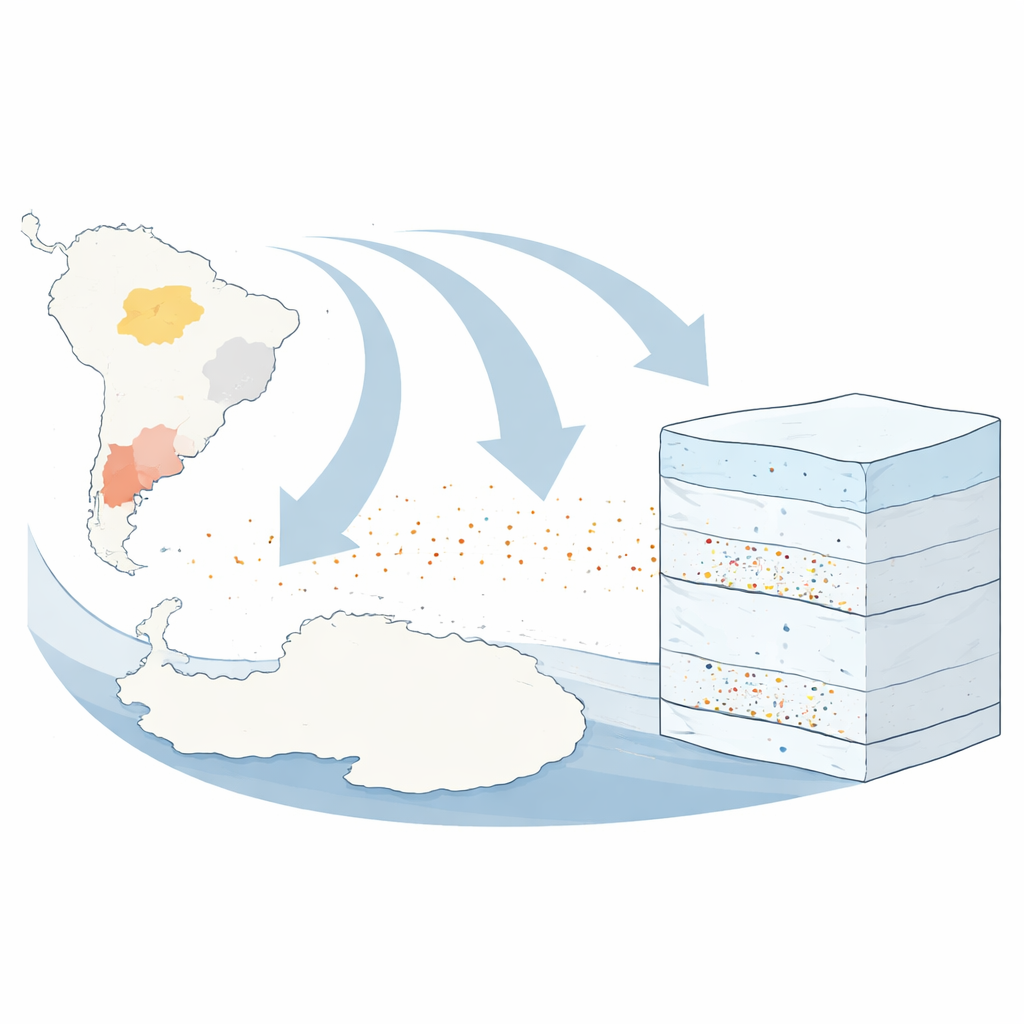
High above the Southern Ocean, tiny dust grains and volcanic ash swirl through the air, eventually settling onto Antarctica’s snow. Layer by layer, that snow turns into ice, locking away a detailed record of Earth’s past atmosphere. This study shows how scientists can now read that record grain by grain, using a cutting‑edge technique to analyze millions of individual particles from Antarctic ice. Their results shed light on how dust sources, volcanic activity, and even ocean life changed as the planet warmed from the last ice age into the relatively mild climate we enjoy today.
Frozen Time Capsules of the Air
Antarctic ice cores are like tree rings for the atmosphere. As snow falls, it traps tiny mineral particles carried by winds from distant deserts, exposed seabeds, and local ice‑free ground. Over tens of thousands of years, those particles become frozen in place, preserving information about where they came from and how much dust the air once carried. Earlier studies mostly measured the average chemistry of dust in bulk, or examined only a few hundred particles at a time. That made it hard to link dust quantity, composition, and source for individual grains, especially during the dramatic shift from the last glacial period to the warmer Holocene epoch.
A New Way to Count and Weigh the Dust
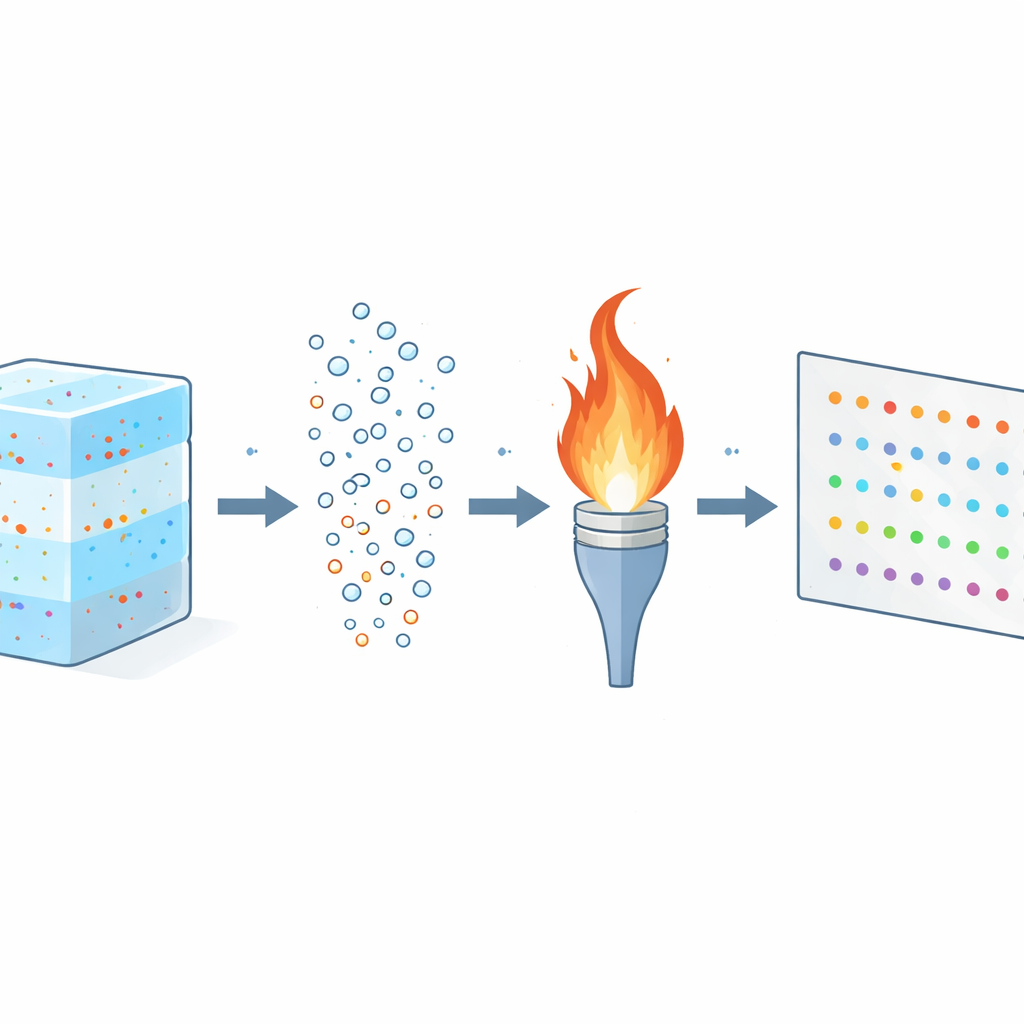
The authors sampled a “horizontal” ice core from Taylor Glacier in coastal East Antarctica. Because the glacier flows, old ice is exposed along the surface, allowing researchers to walk along a natural timeline. From small melted volumes of ice spanning 44,000 to 9,000 years before present, they used single‑particle Inductively Coupled Plasma Time‑of‑Flight Mass Spectrometry (spICP‑TOFMS). In simple terms, this method turns each particle into a brief flash of ions in a hot plasma and measures the full suite of elements in that flash. It allowed the team to detect more than two million particles smaller than 2.5 micrometers, determine their sizes, and record which elements—and thus which kinds of minerals—each particle contained.
Dusty Skies in a Colder World
The particle counts revealed just how dusty the atmosphere was during the last glacial maximum compared with the early Holocene. Samples from the coldest period contained, on average, about 100 times more particles than those from the early Holocene, confirming that glacial Antarctica sat under a much heavier haze of mineral dust. Yet the size distributions of the fine particles were remarkably consistent, suggesting that long‑distance winds and transport pathways stayed broadly similar even as climate changed. What shifted dramatically was the amount and chemistry of the dust. Glacial samples were richer in elements such as sodium and magnesium and contained more feldspar‑ and clay‑like minerals, while Holocene samples showed relatively more iron‑rich particles and fewer calcium‑bearing grains.
Changing Sources and a Volcanic Surprise
By comparing the elemental “fingerprints” of individual particles to typical continental crust and known source regions, the team inferred how dust sources evolved. During the glacial period, coastal Taylor Glacier and central East Antarctica likely shared a common dominant source, consistent with expanded dusty areas in southern South America and associated glacial outwash plains. As the climate warmed and ice retreated, the dust mix at coastal sites shifted, with a greater role for local Antarctic sediments and other Southern Hemisphere sources such as Australia. One sample, around 14,800 years old, stood out: it contained unusually large particles and distinctive combinations of elements that closely matched volcanic glass from nearby Antarctic volcanoes. Follow‑up electron microscope images confirmed shards of volcanic glass, pointing to a past eruption that sprinkled fine ash over the region.
Dust, Oceans, and Climate Feedbacks
The growing share of iron‑rich particles in early Holocene samples may have had consequences far beyond Antarctica. Iron carried by airborne dust is a key micronutrient for phytoplankton in the Southern Ocean, which draw carbon dioxide out of the atmosphere as they grow. During the icy past, large dust fluxes likely fertilized these waters; as dust amounts and composition changed through deglaciation, the supply of bioavailable iron may have declined or shifted, helping to shape the rise of atmospheric CO₂. By showing that both the amount and mineral makeup of fine dust changed sharply across the last glacial–interglacial transition, and by identifying volcanic contributions at the single‑particle level, this study demonstrates how next‑generation particle analysis can turn Antarctic ice into a high‑resolution map of past environmental change.
Citation: Kutuzov, S., Olesik, J.W., Lomax-Vogt, M.C. et al. Geochemical characterization of millions of individual atmospheric particles entrapped in Antarctic ice across the last glacial-interglacial transition. Sci Rep 16, 10556 (2026). https://doi.org/10.1038/s41598-026-45260-3
Keywords: Antarctic ice cores, atmospheric dust, glacial interglacial, mineral particles, volcanic ash