Clear Sky Science · en
Metagenomic profiling reveals distinct signatures of pathogens, antibiotic-resistance genes and human viruses in urban river mouths of the north-western Adriatic coast
Why coastal holiday waters matter
Every summer, crowded beaches promise sun and relaxation, but just offshore an invisible world of microbes can affect both health and local economies. This study looked beneath the surface of popular Italian resort waters to see which microbes are present, including germs that cause disease and genes that make bacteria resistant to antibiotics. Understanding what flows from cities into the sea can help keep swimmers safer and tourism more sustainable.
A busy coastline under pressure
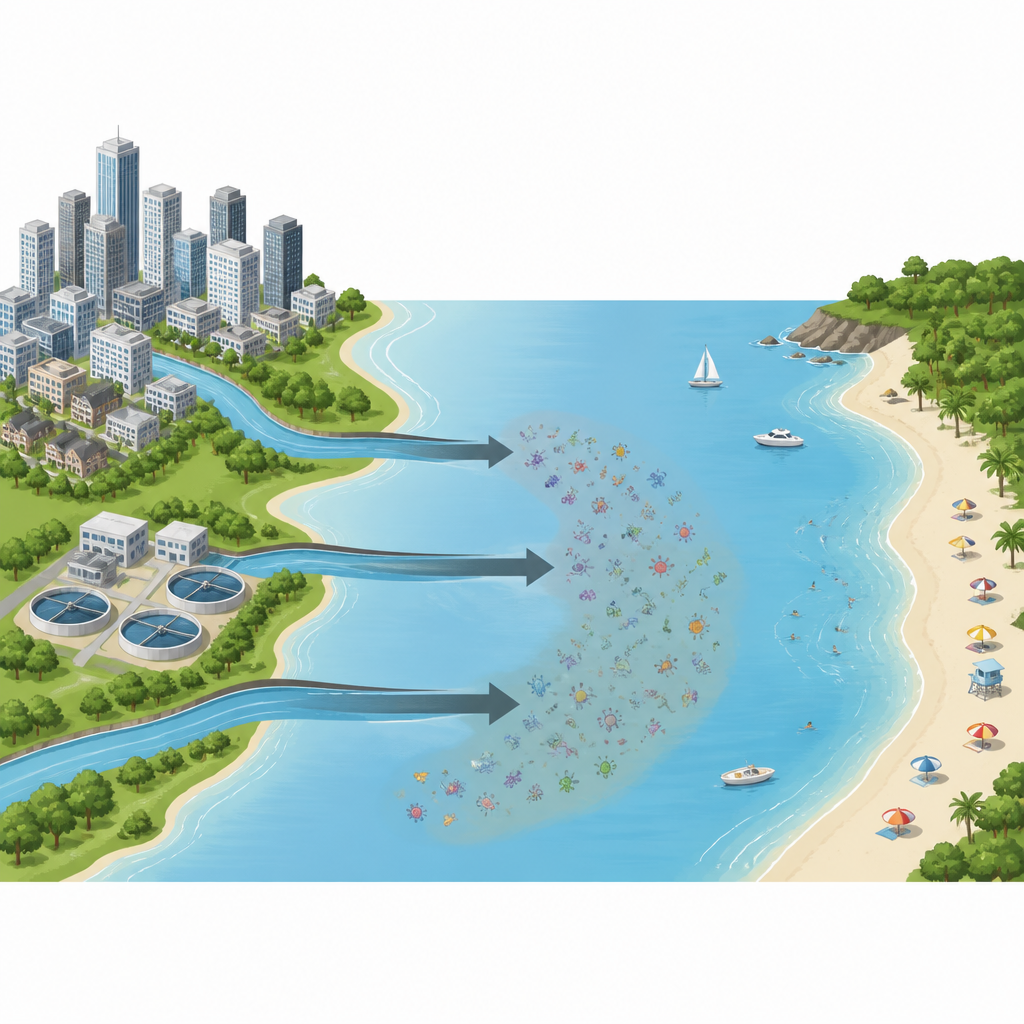
The research took place along a stretch of the north western Adriatic coast between the cities of Rimini and Riccione, one of the most densely built and touristic areas on the Mediterranean. Here, almost continuous urban development meets the sea, and the local population swells many times over during the peak holiday season. Wastewater from homes, hospitals, farms and tourist facilities travels through rivers and a major treatment plant before reaching the coast. The team chose three river mouths and the outlet of the main wastewater plant, plus two cleaner control sites, to see how this pressure shapes the coastal microbiome, the vast community of microscopic life in water and seafloor sediments.
Reading the microbial fingerprints
To capture this hidden world, scientists collected seawater and sediment at different distances from the river mouths during the height of summer. They used DNA based methods to identify bacteria, human viruses and genes that can make bacteria resistant to antibiotics. One method scanned a standard marker gene to map overall bacterial diversity, while another, called shotgun metagenomics, read many random DNA fragments to search specifically for human viruses and antibiotic resistance genes. Together, these tools provided a detailed fingerprint of the microbes present at each site.
What was found in the water
The river mouths showed clear signs of human impact in the seawater, while sediments appeared less affected. At the impacted sites, the water contained bacteria that are known to include disease causing strains, such as Vibrio, Enterococcus, Escherichia Shigella and Streptococcus, which are often linked to sewage and hospital environments. Human viruses were also detected, including several members of the herpes, papilloma and pox virus families and a small DNA virus called Torque teno virus that appeared at all impacted sites. Many of these viruses are already known to occur in wastewater, and some belong to official risk groups that can cause illness in people. Notably, such potentially risky microbes were not found exclusively at the cleaner control sites, highlighting the link to urban discharges.
Antibiotic resistance in the surf zone
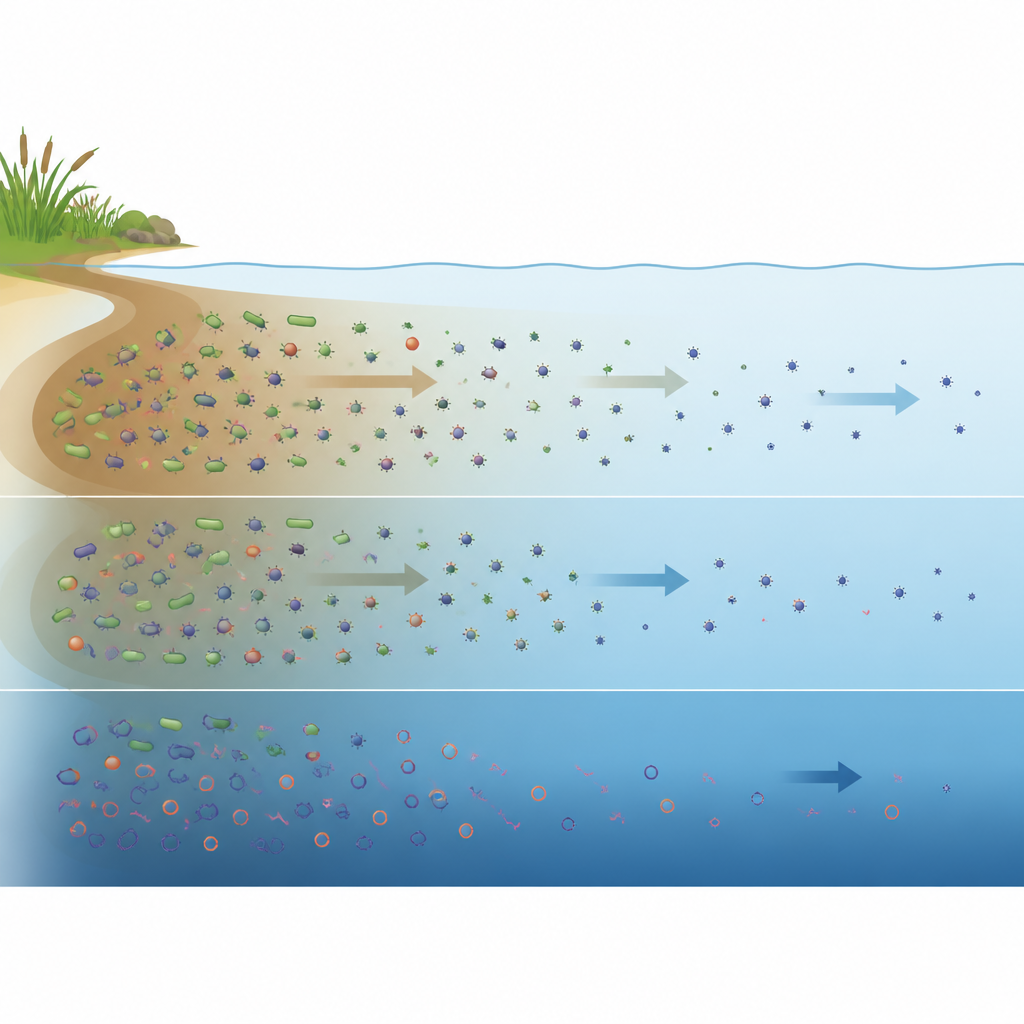
Beyond germs themselves, the study revealed a wide range of antibiotic resistance genes in coastal seawater. The researchers identified 99 different genes that help bacteria survive common medicines, 82 of which the World Health Organization classifies as critically important because they protect hospital associated bacteria from key drugs such as carbapenems, cephalosporins, fluoroquinolones and vancomycin. Many of these genes have been previously seen in hospital wastewater or intensive farming effluents, suggesting that health care and agriculture both contribute to the load washed downstream. These genes were most numerous at the mouths of the Marecchia River and the wastewater plant, but many were also present at the control sites, hinting that resistance traits can spread and persist in the wider coastal waters.
Different mouths, different microbial stories
Each river mouth displayed its own blend of bacteria, viruses and resistance genes, reflecting differences in river size, surrounding land use and how water flows and mixes with the sea. The Marecchia, a large river draining industrial and urban areas, carried the richest set of resistance genes, while smaller, more seasonal streams showed different combinations of contaminants. In contrast, the wastewater plant outlet did not show clear release of pathogenic bacteria in the sampled seawater, but still carried many resistance genes and viruses, confirming that modern treatment does not fully remove these more persistent elements.
What this means for swimmers and the sea
For beachgoers, the study does not provide direct measures of infection risk, and it cannot tell whether the detected microbes were alive or able to cause disease. However, it does show that popular bathing waters can carry complex mixtures of human linked bacteria, viruses and antibiotic resistance genes, especially near urban river mouths. The authors argue that regular DNA based monitoring can give a more complete picture of coastal water quality than traditional tests alone and can support the One Health idea that human, animal and environmental health are closely connected. Used alongside other measures, this approach could help coastal communities protect both tourism and marine ecosystems in a changing world.
Citation: Foresto, L., Radaelli, E., Leuzzi, D. et al. Metagenomic profiling reveals distinct signatures of pathogens, antibiotic-resistance genes and human viruses in urban river mouths of the north-western Adriatic coast. Sci Rep 16, 15553 (2026). https://doi.org/10.1038/s41598-026-45229-2
Keywords: coastal water quality, urban wastewater, antibiotic resistance genes, human viruses, metagenomics