Clear Sky Science · en
Mechanistic insights and process optimization of pristine corn husk biosorbent for sustainable and cost effective removal of cationic dyes from waste water
Turning Farm Waste into a Water Cleaner
Colorful synthetic dyes make our clothes and products bright, but when they end up in rivers and lakes, they can be toxic, long‑lasting, and hard to remove. This study explores an appealing idea: using discarded corn husks—the dry leaves peeled from corn cobs—as a simple, low‑cost material to pull dangerous dyes out of wastewater. By transforming an agricultural leftover into a natural filter, the work connects clean water, waste reduction, and affordable technology in a way that is relevant to communities and industries worldwide.
Why Dyed Water Is a Hidden Threat
Many factories that produce textiles, paper, plastics, and cosmetics discharge water laced with synthetic dyes. Two such dyes, Crystal Violet and Basic Fuchsin, give vivid purple and magenta colors and are widely used in laboratories and industry. They are also persistent, toxic, and potentially cancer‑causing, and do not break down easily in the environment. Conventional treatment methods can be expensive, energy‑intensive, or create new waste. A promising alternative is adsorption: letting polluted water flow over a solid material whose surface grabs and holds contaminant molecules. Natural "biosorbents" made from plant waste offer an especially attractive route because they are cheap, abundant, and biodegradable.
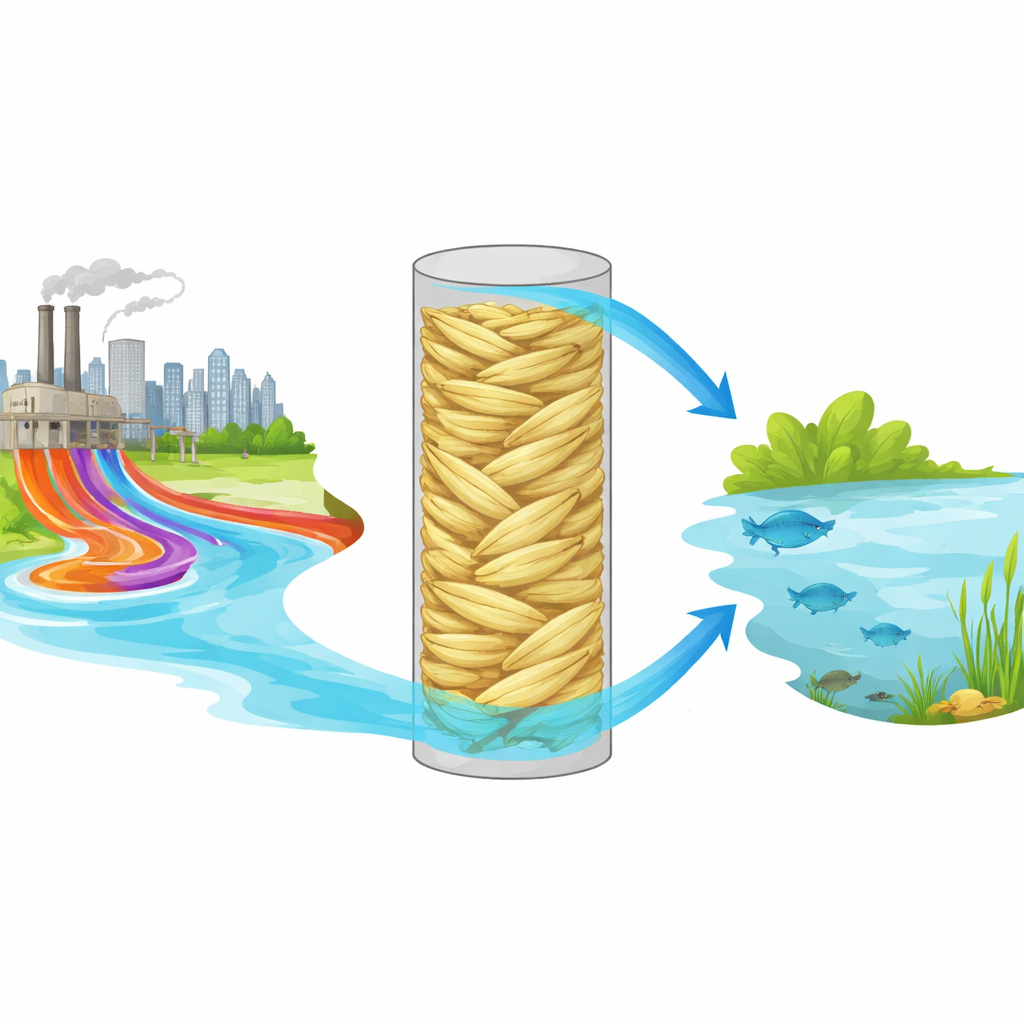
Corn Husks as a Natural Sponge
The researchers collected ordinary corn husks from a local market, cleaned, ground, and sieved them, and then used this untreated material directly as a biosorbent. They carefully examined its structure and composition with several techniques normally used in materials science. Microscopy images revealed a fibrous, porous surface, while gas adsorption measurements showed that the internal pores are much larger than the dye molecules, allowing them to diffuse inside. Infrared spectroscopy and elemental analysis confirmed the presence of many oxygen‑rich groups—such as those from cellulose and lignin—that can interact with positively charged dyes. Thermal tests showed that the husks are reasonably stable up to several hundred degrees Celsius, supporting their use in water‑treatment conditions.
How Well the Corn Husk Filter Works
To measure performance, the team shook known amounts of corn husk with water containing Crystal Violet or Basic Fuchsin and varied conditions such as pH, temperature, contact time, dye concentration, and husk dosage. They then used statistical modeling to map how these factors work together and to pinpoint optimal settings. Under mildly neutral to slightly basic conditions, a small amount of corn husk removed large quantities of dye, reaching capacities of about 77 milligrams of Crystal Violet and 89 milligrams of Basic Fuchsin per gram of husk. The data showed that dye molecules form a single, orderly layer on the husk surface and that the overall process is spontaneous and slightly more effective at higher temperatures. Importantly, the material kept working well through at least five reuse cycles and removed more than 90 percent of both dyes from real tap water, seawater, and wastewater samples.
What Happens at the Molecular Level
At the microscopic scale, several forces cooperate to make the dyes stick to the corn husk. Above a certain pH, the husk surface becomes negatively charged, which attracts the positively charged dye molecules. The flat aromatic rings of the dyes can stack against similar regions in the plant material, adding another layer of attraction. Hydrogen bonds and more subtle electronic interactions help lock the molecules in place, while the husk’s pores let them travel inward rather than just coating the outer surface. Tests with dissolved salts showed that adjusting the water chemistry, for example with sodium carbonate, can further enhance these interactions by increasing the surface’s negative charge. Together, these effects explain why an untreated, natural material performs comparably to many engineered adsorbents.
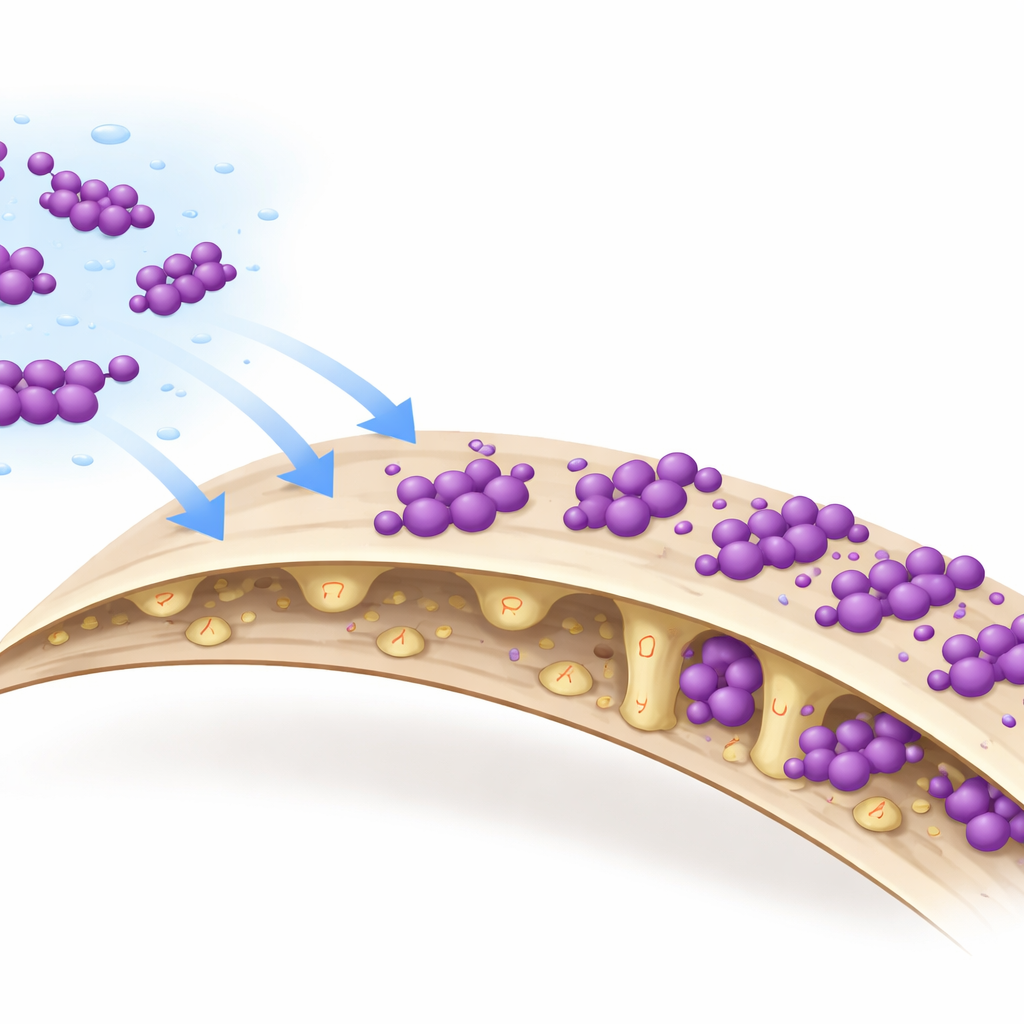
From Waste Leaves to Cleaner Water
For a non‑specialist, the central message is straightforward: the dry husks that usually end up as farm waste can act as an efficient, reusable sponge for some of the most troublesome industrial dyes. Without any chemical modification, ground corn husk can capture and hold toxic colorants from both laboratory solutions and real‑world water samples, and then be regenerated and used again. This approach offers a low‑cost, environmentally friendly tool that could help smaller industries and resource‑limited communities clean their wastewater while also finding value in agricultural residues that would otherwise be discarded.
Citation: Akl, M.A., Mostafa, A.G., Serage, A.A. et al. Mechanistic insights and process optimization of pristine corn husk biosorbent for sustainable and cost effective removal of cationic dyes from waste water. Sci Rep 16, 12220 (2026). https://doi.org/10.1038/s41598-026-45206-9
Keywords: corn husk biosorbent, dye-contaminated wastewater, Crystal Violet, Basic Fuchsin, low-cost water treatment