Clear Sky Science · en
Efficacy and limitations of the A2O process in simultaneous removal of surfactants and nutrients from municipal wastewater
Why cleaner wastewater matters
Every time we wash dishes, do laundry, or flush the toilet, we send a mixture of food scraps, soap, and nutrients like nitrogen and phosphorus down the drain. If these substances are not removed in treatment plants, they can fuel toxic algal blooms, harm wildlife, and threaten drinking water. This study looks at how well a common treatment design, called the A2O process, cleans municipal wastewater from both detergents and nutrients, and where its weak points lie in real-world operation over an entire year. 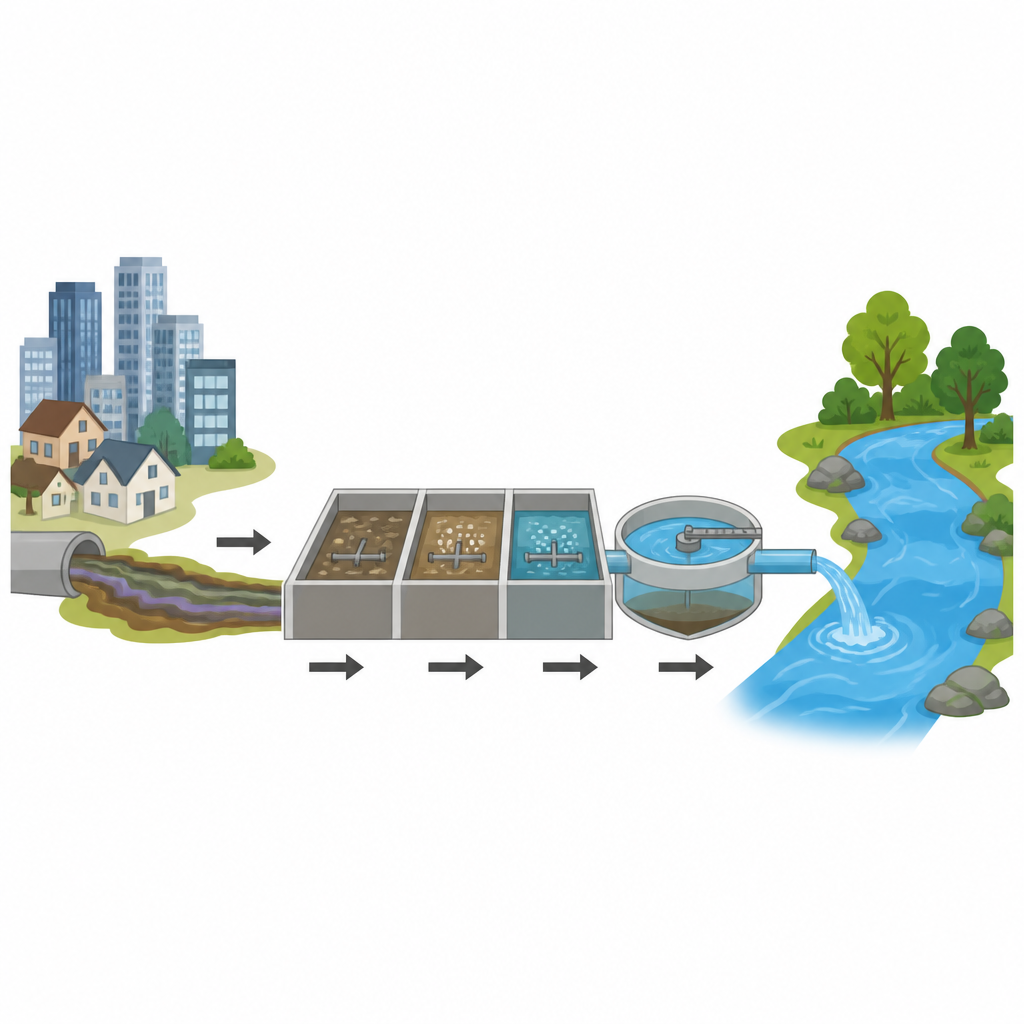
How this treatment line is set up
The treatment plant studied is in Yazd Province in Iran and uses a three-step biological system: one tank without oxygen, a second with very little oxygen, and a third with air pumped in. Wastewater first passes through screens and grit removal, then flows through these tanks in sequence, before solids settle out in a clarifier and the cleaned water is disinfected. Each month for a year, the researchers sampled water at several points along this path, testing how much organic matter, detergents, nitrogen, and phosphorus remained at each stage.
What the system does very well
The plant proved highly successful at removing general organic pollution, which is measured by parameters known as COD and BOD that reflect how much oxygen the water would consume if left untreated. Across all seasons, these values were cut by about 96 to 98 percent, leaving final levels well below national limits for discharge and reuse. Detergents, represented by a widely used household surfactant called LAS, were also removed very efficiently, with more than 92 percent reduction in all seasons and the lowest remaining levels in the final effluent. Most of this cleanup happened in the oxygen-rich tank, where active microbes break down soap-like molecules. 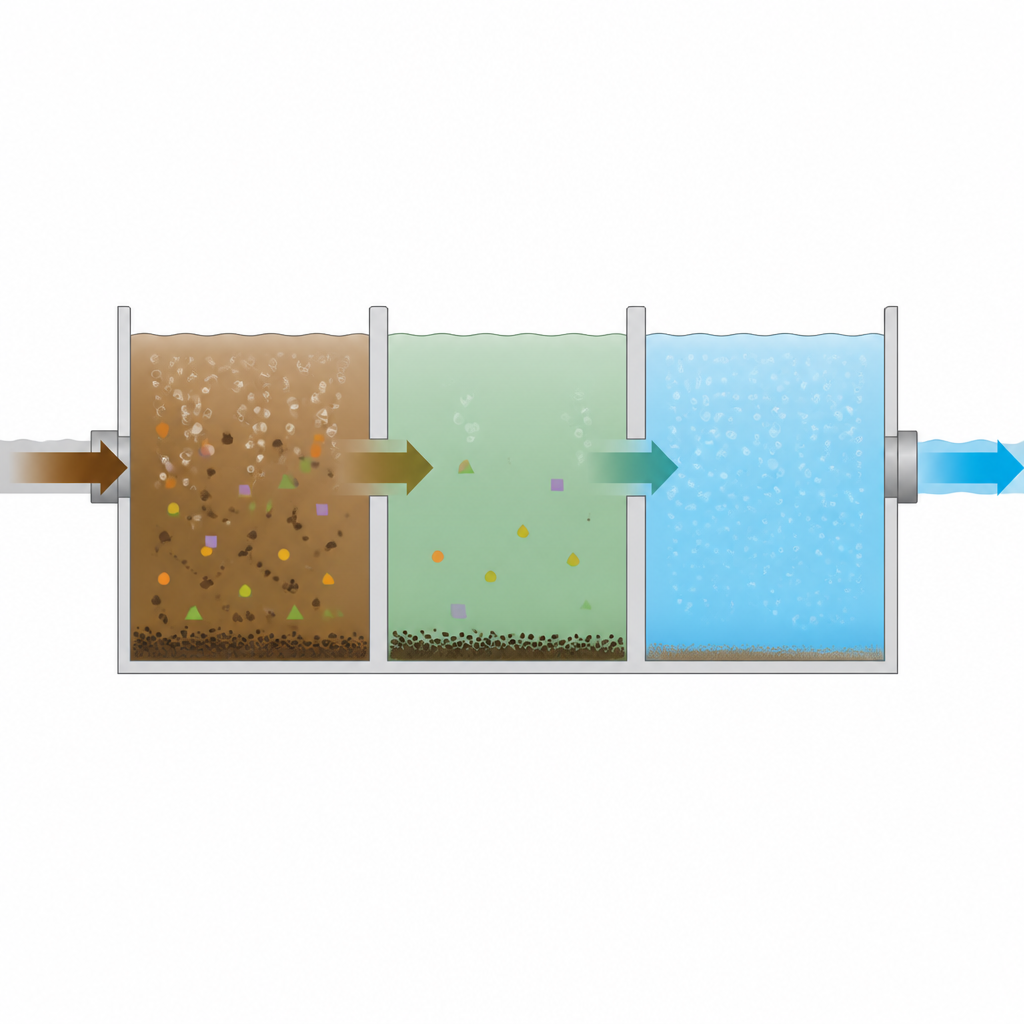
Where the system struggles
In contrast, the same system performed less well for nutrients, especially nitrogen in the form of nitrate. Inside the line, ammonia from waste is converted into nitrate in the aerated tank, but not enough of that nitrate is turned into harmless nitrogen gas in the low-oxygen tank. As a result, the nitrate concentration in the final effluent was slightly above the strictest national limit for discharge into underground absorption wells, although it met the standard for surface waters. Phosphorus removal was also modest overall, with only about a quarter of the incoming phosphorus removed, despite the process being designed to support phosphorus-storing bacteria.
Why phosphorus remains hard to remove
The study points to several reasons why phosphorus removal lagged behind. Sludge from the clarifier is dried in beds and then partly returned to the start of the biological line. In these drying beds, conditions favor the release of stored phosphorus back into the water, so the recycled flow brings an extra phosphorus load into the first tank. At the same time, some nitrate is also recycled, quietly turning the first tank from truly oxygen-free into a low-oxygen zone that does not fully support the microbes that normally take up and store phosphorus. Detergents themselves may also stress these helpful bacteria at certain concentrations, further limiting phosphorus capture.
What this means for future wastewater plants
Overall, the findings show that the A2O process can reliably strip out organic waste and detergents from municipal wastewater to levels that meet or beat environmental standards, but it is less consistent for nitrate and phosphorus. For communities, this means that simply installing an A2O system is not enough; careful adjustment of aeration, sludge recycling, and carbon sources is needed so beneficial microbes can remove nutrients as intended. With such fine-tuning, existing plants could better protect rivers, lakes, and drinking water while continuing to handle the everyday mix of soaps and waste from modern life.
Citation: zarei Mahmoudabadi, T., Teimouri, F., Bagheri, A.H. et al. Efficacy and limitations of the A2O process in simultaneous removal of surfactants and nutrients from municipal wastewater. Sci Rep 16, 16196 (2026). https://doi.org/10.1038/s41598-026-45194-w
Keywords: wastewater treatment, A2O process, detergent removal, nutrient pollution, municipal sewage