Clear Sky Science · en
Cortical firing dynamics during micro-arousals vary with sleep/wake history and micro-arousal duration
Why tiny sleep jolts matter
Most of us think good sleep means long, unbroken hours of rest. Yet even the best sleepers experience countless brief jolts of activity each night that never reach awareness. This study looks inside the brains of mice to understand what happens during these tiny "micro-arousals" and how they relate to how long the animals have been awake. The findings suggest that not all brief awakenings are harmful and that some may be tightly woven into how sleep restores the brain. 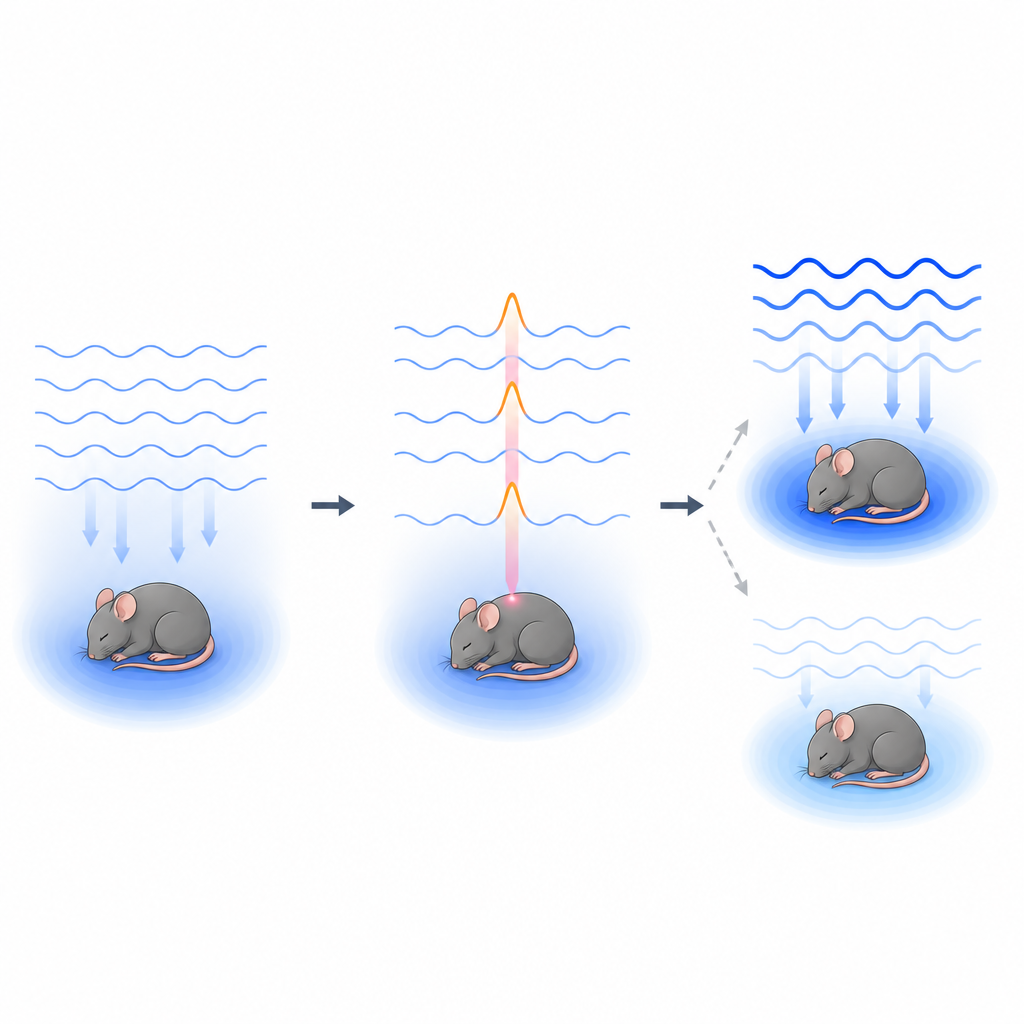
Brief awakenings during deep sleep
Non-rapid eye movement (NREM) sleep is often described as quiet and stable, but in reality it is punctuated by very short bursts of wake-like muscle activity called micro-arousals. These episodes last only a few seconds and usually end with a direct return to sleep. Using sleeping mice, the researchers built an automated method to detect these events from neck muscle signals and then examined electrical activity in the motor cortex, a brain region involved in movement. This allowed them to link the timing and duration of micro-arousals to patterns of brain cell firing across different layers of the cortex.
Short jolts and longer stirrings
When the team grouped micro-arousals by length, a striking pattern emerged. Very short events lasting less than five seconds were tied to an overall drop in brain firing, more reminiscent of quiet deep sleep than true wakefulness. In contrast, slightly longer episodes lasting five to ten seconds were linked to a jump in firing, resembling the shift seen when the animals fully woke up. Looking at individual recording sites, some showed a brief rise in activity just before a micro-arousal began, while others fell silent during the event. These sites were scattered through the cortex rather than clustered in one layer, hinting that different groups of neurons play different roles in starting and shaping each brief awakening.
Sleep pressure and the brain’s rebound
Sleep need, sometimes called sleep pressure, builds up the longer an animal stays awake and is reflected in slow, high-amplitude brain waves during NREM sleep. The researchers compared micro-arousals when sleep pressure was low, moderate, or high after a period of enforced wakefulness. Short micro-arousals still led to lower firing overall, but cells that ramped up their activity just before the jolt did so more strongly under high sleep pressure. The slow waves just after these short events were especially telling: in well-rested mice they dipped below typical levels, but in sleep-deprived mice they rebounded to levels even higher than during surrounding NREM sleep. This rebound closely tracked how little the animals had slept in the hours before, making these post-jolt slow waves a sensitive marker of sleep need. 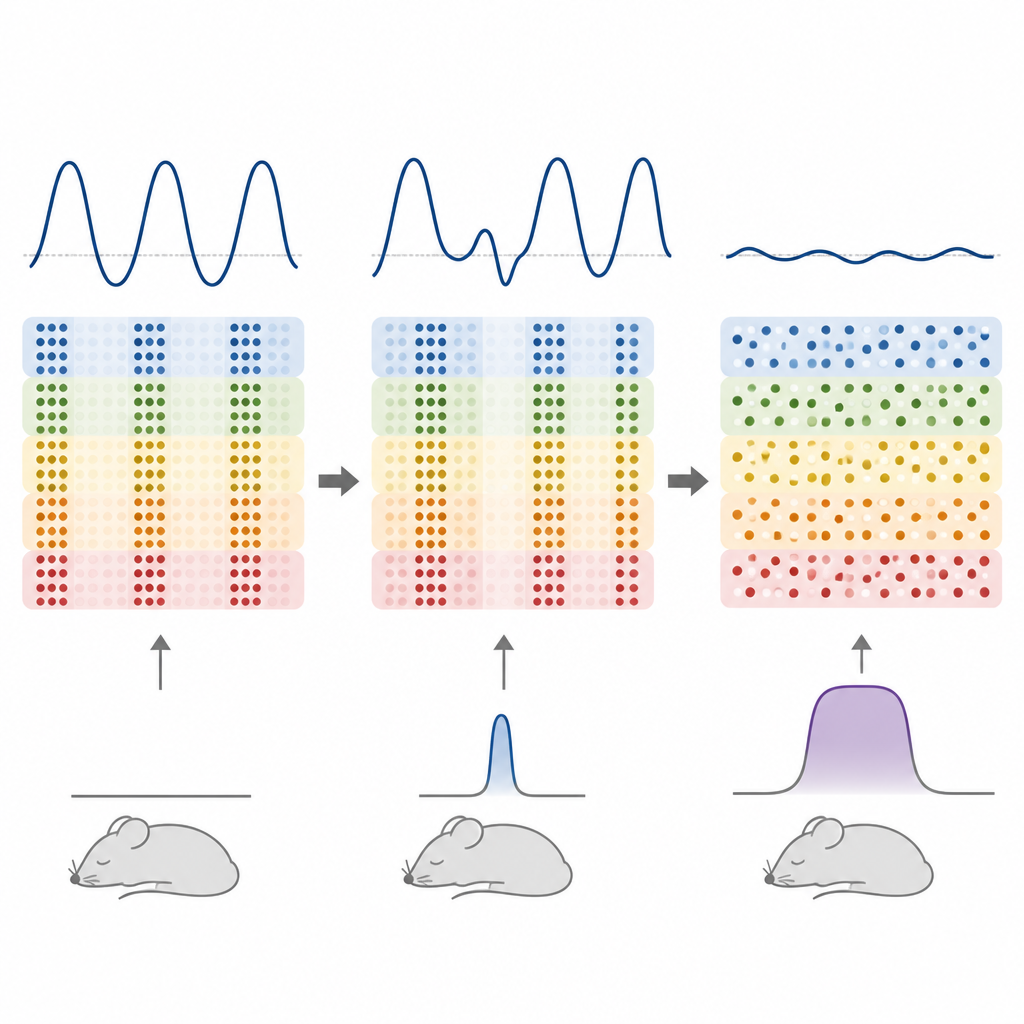
Not all awakenings are the same
The study also compared micro-arousals that occur within NREM sleep to similar brief events that happen as rapid eye movement (REM) sleep ends. Although both likely involve bursts of a brain chemical called noradrenaline, their electrical signatures differed. REM-ending micro-arousals showed lower slow-wave power and a weaker link to sleep pressure than those arising within NREM sleep itself. This reinforces the idea that micro-arousals are a family of related but distinct events rather than a single uniform phenomenon.
What this means for everyday sleep
To a lay observer, micro-arousals might look like tiny flaws in an otherwise smooth night of sleep. This work suggests a more nuanced picture. Very short stirrings often come with a temporary quieting of brain cells, while longer ones resemble brief steps into wakefulness. After short NREM micro-arousals, especially when sleep need is high, the brain can show a strong surge in deep-sleep waves that signal a drive to continue recovery. In simple terms, not every brief awakening is a sign of poor sleep: some may be built into the way the brain tracks how long we have been awake and fine-tunes the depth of sleep to meet its needs.
Citation: Hauglund, N.L., Krone, L.B., Kahn, M. et al. Cortical firing dynamics during micro-arousals vary with sleep/wake history and micro-arousal duration. Sci Rep 16, 15391 (2026). https://doi.org/10.1038/s41598-026-45192-y
Keywords: micro-arousals, NREM sleep, slow wave activity, sleep deprivation, cortical firing